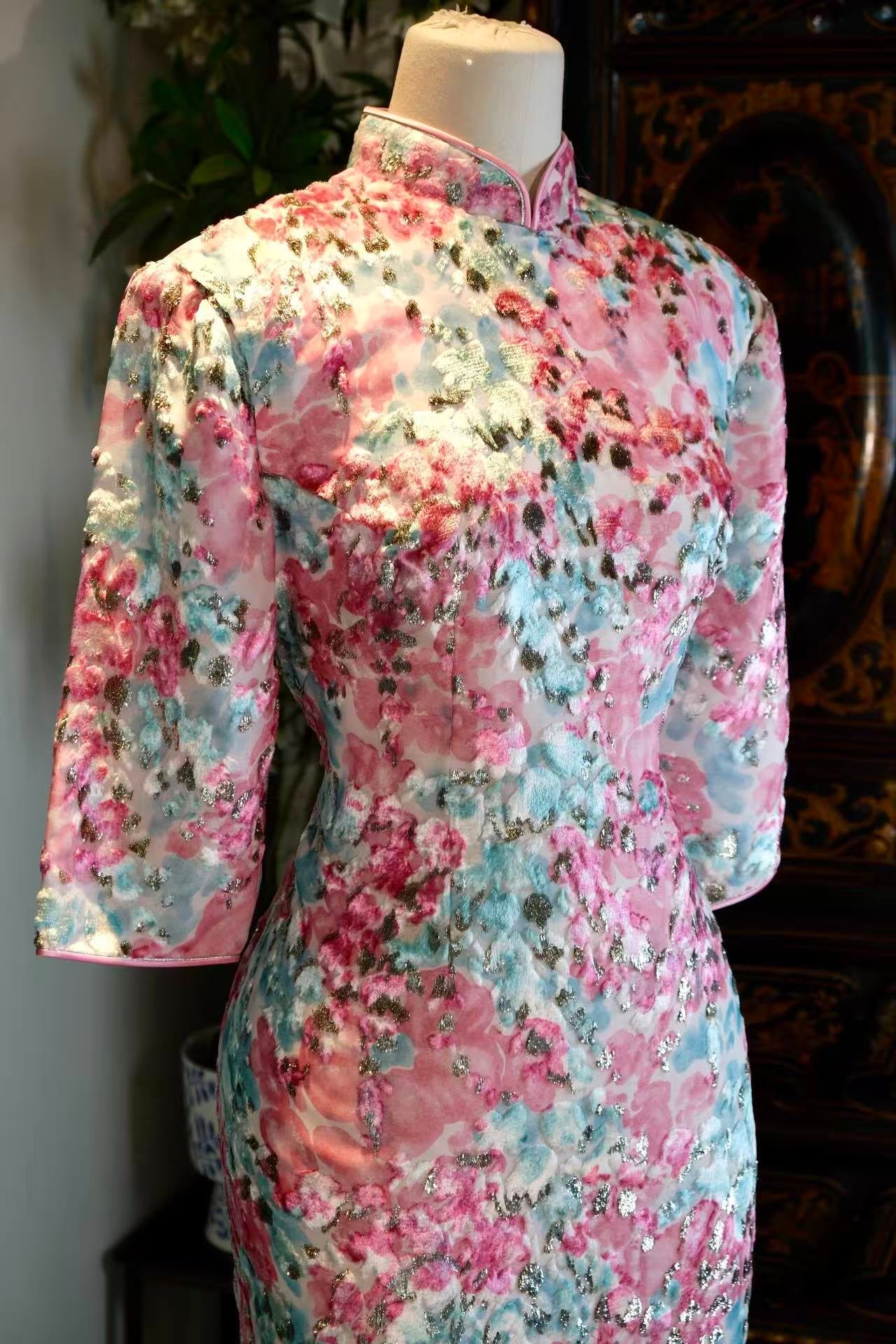
六十年代香港产意大利进口织金烧花丝绒古董旗袍
这是一件产于上世纪六十年代的珍罕旗袍,它承载着东西方美学交融的独特韵味。这件旗袍选用意大利进口的织金烧花丝绒面料,由香港工匠精心剪裁而成,每一处细节都彰显着那个时代的精湛工艺与审美追求。
面料与工艺:东西方技艺的完美融合
这件旗袍的面料尤为珍贵,源自上世纪六十年代的意大利进口织金烧花丝绒。丝绒本身便以其温润的光泽和柔软的触感著称,而“烧花”工艺则是在丝绒表面通过化学腐蚀或高温处理,去除部分绒毛,形成凹凸有致的图案,再以金线织入,使图案在光影下熠熠生辉。这种工艺不仅考验面料的品质,更对工匠的技术有着极高的要求。意大利作为文艺复兴的发源地,其纺织工艺向来以精细和奢华闻名,而这件旗袍正是将意大利的顶级面料与东方的传统剪裁完美结合的典范。
图案解析:诗意与自然的交织
旗袍上的图案以粉色与淡蓝色为主调,仿佛春日里盛开的繁花,又似晨曦中轻柔的云霞。粉色的花朵如桃花般娇艳,淡蓝色的点缀则似丁香般清雅,二者交织在一起,构成了一幅充满诗意的自然画卷。图案中还点缀着细碎的金色线条,如同阳光洒落在花瓣上,闪烁着微光,为整件旗袍增添了几分华贵之气。
这种图案设计不仅体现了中国传统美学中对自然的崇尚,也融入了西方现代艺术的抽象表现手法。正如唐代诗人杜甫在《丽人行》中所描绘的“态浓意远淑且真,肌理细腻骨肉匀”,这件旗袍的图案恰似一位温婉的佳人,既有自然的灵动,又不失典雅的气质。
艺术风格:复古与现代的对话
上世纪六十年代,正是东西方文化碰撞与融合的黄金时期。这件旗袍的设计既保留了传统旗袍的立领、斜襟等经典元素,又在面料和图案上大胆创新,展现出一种独特的现代感。它的剪裁贴合身形,线条流畅,既突显了女性的柔美曲线,又不失端庄大方。这种“复古与现代”的对话,正是六十年代时尚界的一大特色。
稀缺性:时光沉淀的珍宝
由于年代久远,且制作工艺复杂,这类意大利进口织金烧花丝绒旗袍存世量极少。每一件都堪称孤品,承载着那个时代的记忆与情感。它不仅是一件衣物,更是一件艺术品,见证了六十年代香港作为东西方文化交汇点的独特地位。
这件上世纪六十年代的意大利进口织金烧花丝绒香港产古董旗袍,以其精湛的工艺、诗意的图案和独特的艺术风格,成为了时尚史上的一颗璀璨明珠。它不仅展现了东西方美学的完美融合,更以其稀缺性成为了收藏家们梦寐以求的珍宝。正如清代词人纳兰性德所言:“人生若只如初见,何事秋风悲画扇。”这件旗袍,正是那“初见”时的美好,历经时光沉淀,愈发显得珍贵动人。
1960s Hong Kong Antique Qipao: Imported Italian Metallic Burn-out Velvet
This is an extraordinary antique Qipao from the 1960s, a rare vessel for the unique fusion of Eastern and Western aesthetics. Crafted from imported Italian metallic burn-out velvet and meticulously tailored by Hong Kong master artisans, every detail epitomizes the exquisite craftsmanship and aesthetic pursuits of that golden era.
I. Fabric & Craft: The Perfect Convergence of East and West
The fabric is exceptionally precious—a genuine 1960s Italian import. While velvet is renowned for its warm luster and soft touch, the "burn-out" (Devoré) technique elevates it by using chemical or thermal processes to partially remove the pile, creating a multi-dimensional, recessed pattern. These motifs are then interlaced with gold threads (metallic brocade), causing the design to shimmer brilliantly under the light. As the cradle of the Renaissance, Italy’s textile heritage is synonymous with luxury and precision. This Qipao stands as a textbook example of integrating world-class Italian textiles with traditional Oriental silhouettes.
II. Iconography: An Interweaving of Poetry and Nature
The palette is dominated by soft pinks and pale blues, reminiscent of blossoms in spring or the ethereal clouds of dawn. The pink flowers possess the delicate charm of peach blossoms, while the pale blue accents offer the refined elegance of lilacs, together forming a poetic tapestry of the natural world. Delicate golden lines are sprinkled throughout like sunlight dancing on petals, adding an air of opulence to the entire piece.
This design honors the reverence for nature found in traditional Chinese aesthetics while embracing the abstract expressionism of Western modern art. As the Tang Dynasty poet Du Fu once wrote in The Ballad of the Beautiful Women: "Demure and distant, virtuous and true; with delicate skin and well-proportioned frame." The pattern of this Qipao is much like a gentle lady—possessing both natural vitality and dignified grace.
III. Artistic Style: A Dialogue Between Vintage and Modern
The 1960s marked a golden age of cultural collision between East and West. This Qipao preserves classic elements such as the standing collar and diagonal bodice, yet dares to innovate through its choice of fabric and motifs, exuding a unique sense of modernity. Its silhouette contours the body with fluid lines, highlighting feminine curves while maintaining a stately poise. This dialogue between "vintage and modern" is a hallmark of 1960s high fashion.
IV. Scarcity: A Treasure Refined by Time
Due to its age and the complexity of its production, surviving examples of Italian metallic burn-out velvet Qipaos are exceedingly rare. Each piece is essentially a "unique survivor" (孤品), carrying the memories and emotions of a bygone era. It is more than a garment; it is a work of art that witnessed Hong Kong’s unique status as the crossroad of global cultures.
Conclusion This 1960s masterpiece is a brilliant pearl in fashion history. It is not only a testament to the perfect marriage of Eastern and Western aesthetics but also a dream for collectors due to its extreme scarcity. As the Qing Dynasty poet Nalan Xingde famously mused: "If only life were always as it was when we first met." This Qipao represents that exquisite beauty of the "first meeting," growing more precious and moving as it is refined by the passage of time.