1960s Taiwan Rose-Textured Antique Qipao: A Timeless Tale of Elegance
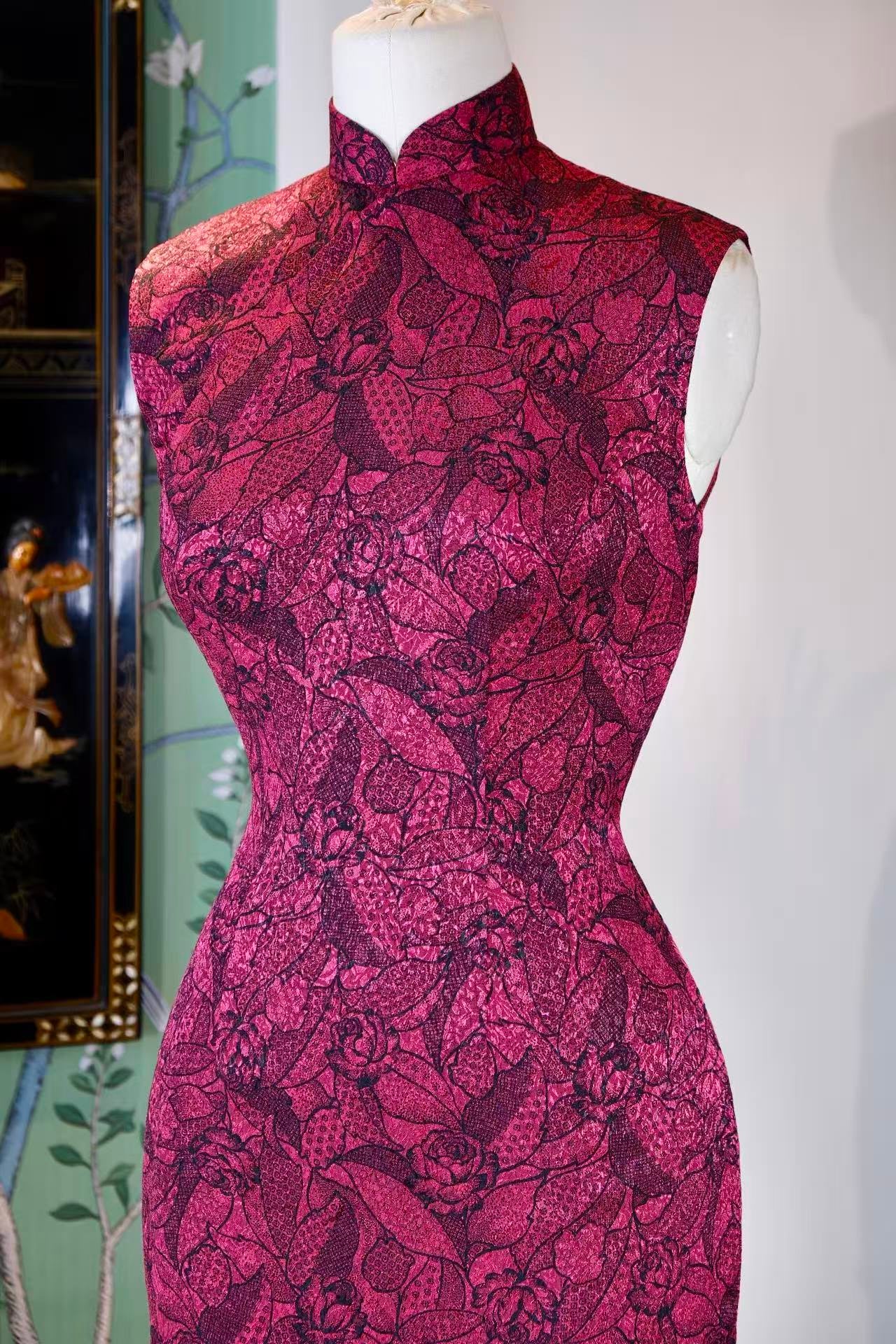
This rose-textured Qipao, crafted in 1960s Tai Wan, resembles an elegant lady stepping out from the depths of time. Every fold is engraved with the marks of years, and every thread of its texture narrates stories of the past.
I. Pattern and Texture: A Synthesis of Nature and Art
The patterns on this Qipao represent a perfect fusion of nature and artistry. The rose texture unfolds like a flowing scroll; the petals are layered and overlapping, appearing to tremble slightly in a breeze. The veins of each petal are clearly visible, evoking the grand scene of "The peach tree is young and elegant; brilliant are its flowers" from The Classic of Poetry, yet infused with the fervor and mystery of the rose. The leaves stretch with interlacing veins, mirroring the grace of "Cloud-like hair, flower-like face, and golden dangling hairpins" from the Song of Everlasting Regret, merging natural vitality with feminine softness. The overall layout possesses both the freehand (Xieyi) charm of traditional Chinese painting and the exquisite delicacy of Western floral motifs—much like the "gorgeous robe" in Eileen Chang's prose, radiating a unique artistic allure through the passage of time.
II. Artistic Style: The Crystallization of East-West Fusion
The artistic style of this garment is a testament to the collision of Eastern and Western cultures. In the 1960s, Tai Wan was in a golden age of cultural exchange, and Qipao design flourished under this wave. The use of rose texture preserves the restraint and grace of the traditional Chinese Qipao while integrating the romance and boldness of Western fashion. The tailoring fits the feminine silhouette, evoking the posture of "As light as a startled swan, as graceful as a swimming dragon" from the Ode to the Nymph of the Luo River. The choice of fabric is equally ingenious; the tactile rose texture feels like the warmth of time itself, reminiscent of the poignant beauty in Dream of the Red Chamber—"Flowers fade and fly, filling the sky"—yet added with a touch of modern warmth.
III. Scarcity and Cultural Value: A Witness to the Golden Age
Its scarcity lies in the historical and cultural values it carries. During the 1960s in Tai Wan, Qipao craftsmanship reached its pinnacle, with each piece being a work of art meticulously crafted by master tailors. This rose-textured Qipao is not only technically superb but also a rare antique treasure due to its unique design and historical background. It witnessed the glorious years of the Tai Wan Qipao and carried the youth and dreams of countless women. Today, such garments are hard to find; each is as precious as the "Foremost Calligraphy under Heaven"—the Lantingji Xu—and is deeply worthy of collection.
Conclusion: A Heritage of Culture and Memory This 1960s rose-textured Qipao is more than a piece of clothing; it is a witness to history and a carrier of cultural heritage. Through its unique artistic language, it speaks of past prosperity and beauty, allowing us to experience the perfect fusion of tradition and modernity within the flow of time.