深圳溯源
Couldn't load pickup availability
衣服尺寸:
胸围/腰围/臀围:100/86/110 厘米
衣长:112 厘米
细节描述:
一、衣上纹样:素雅中的灵动诗意
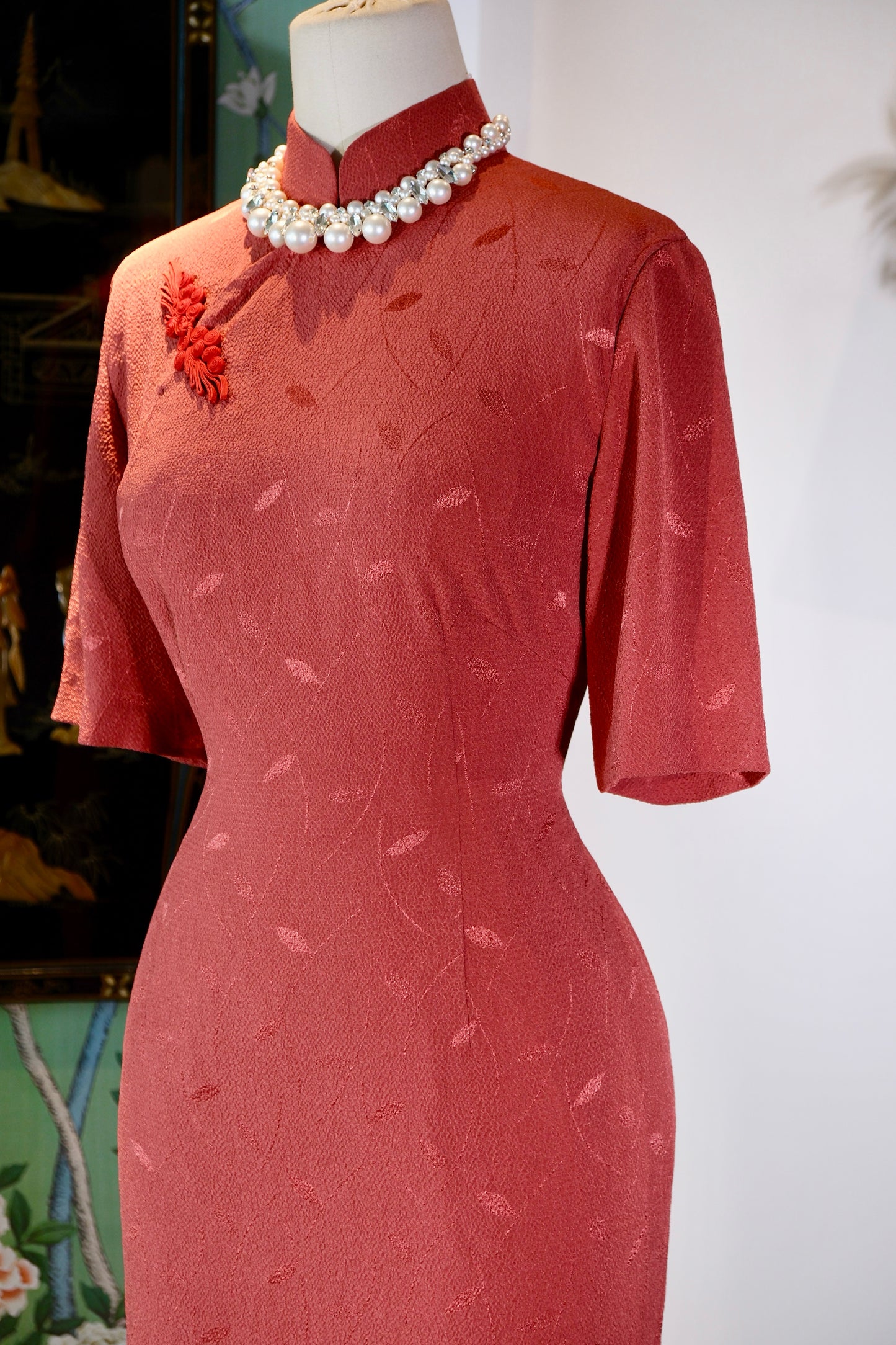
此件旗袍以珊瑚红为底色,面料采用上世纪六十年代香港特有的花呢织造工艺,经纬间交织出细腻的肌理感。衣身布满若隐若现的藤蔓纹样,枝蔓以银灰色丝线勾勒,如春蚕吐丝般纤细婉转,叶片则点缀着浅金与米白,似晨露未晞时的光影摇曳。藤蔓自领口斜襟处蜿蜒而下,至腰际自然舒展,既呼应了旗袍修身的曲线,又暗合中国传统纹样中“生生不息”的吉祥寓意。
领口处的手工盘扣尤为精妙,以同色系丝线盘结成如意云纹造型,缀以细密的珠粒,与颈间珍珠项链相映成趣,尽显六十年代香港名媛的精致品味。袖口微喇的设计,既保留了传统旗袍的端庄,又融入了当时西方时装的流行元素,堪称中西合璧的典范。
二、衣载时光:香江旧梦里的华服传奇
上世纪六十年代的香港,正处于东西方文化激烈碰撞的黄金年代。彼时的中环街头,旗袍仍是名媛淑女的日常着装,而花呢面料的引入,则让传统旗袍焕发出新的生机。这件旗袍的主人,或许是一位穿梭于兰桂坊与太平山顶之间的商界女强人,亦或是一位在邵氏片场流连的电影明星——她穿着它出席晚宴,在霓虹灯下留下惊鸿一瞥;也或许曾穿着它漫步于浅水湾的沙滩,任海风拂过衣袂,将东方女性的温婉与独立娓娓道来。
据《香港服饰史》记载,六十年代的香港旗袍工坊多以“量身定制”闻名,从选料、剪裁到刺绣,需经十余道工序,耗时月余方能成衣。此件旗袍的针脚细密均匀,侧缝处的暗线处理至今仍平整如初,足见当年工匠的精湛技艺。如今,随着机械化生产的普及,这般纯手工制作的古董旗袍已极为罕见,每一道褶皱里都藏着半个世纪前的香江往事。
三、艺术风格:传统与现代的优雅对话
从艺术风格而言,这件旗袍完美诠释了“新中式美学”的早期形态。其廓形延续了民国旗袍的修身特点,强调“腰、臀、腿”的曲线美,却摒弃了繁复的刺绣,转而以素雅的藤蔓纹样和面料本身的肌理感取胜,暗合宋代美学中“大道至简”的意境。而花呢面料的选择,则体现了六十年代香港人对西方时尚的大胆借鉴——花呢原为欧洲贵族服饰常用面料,将其与传统旗袍结合,既保留了东方的含蓄,又增添了西方的干练,正如张爱玲所言:“旗袍是理性的,是把女人的身体用线条勾勒出来,像一幅画。”
稀缺性方面,此件旗袍的保存状态堪称完美:面料无明显磨损,颜色依旧鲜亮,盘扣无一脱落,实属难得。据香港古董服饰收藏界统计,六十年代原产的花呢旗袍现存不足百件,且多为博物馆级藏品。它不仅是一件衣物,更是一段流动的历史,是东方美学与现代设计碰撞的见证,是“衣以载道”的生动注脚。
四、结语:穿在身上的时光博物馆
当指尖拂过这件旗袍的藤蔓纹样,仿佛能触摸到六十年代香港的繁华与温情。它曾见证过香江的霓虹闪烁,也承载过东方女性的优雅与坚韧。如今,它以古董之姿重现于世,不仅是对传统工艺的致敬,更是对“慢时尚”的呼唤——在这个快消时代,唯有这般经得起时光打磨的衣物,方能成为真正的“传家宝”,让后人得以透过一针一线,窥见那个风华绝代的年代。
Measurements / Size Guide:
Bust / Waist / Hips: 100/86/110 cm
Total Length: 112 cm
Detailed Description:
This cheongsam (qipao) features a vibrant coral red as its base, crafted from the unique tweed-weaving process characteristic of 1960s Hong Kong, creating a delicate texture between the warp and weft. The body is adorned with faint vine motifs; the vines are outlined in silver-gray silk thread, as slender and winding as silk spun by spring silkworms, while the leaves are dotted with pale gold and off-white, resembling the shimmering light and shadow of early morning dew. The vines meander down from the standing collar and diagonal bodice, stretching naturally toward the waist—not only echoing the slim-fit curves of the qipao but also subtly aligning with the traditional Chinese auspicious meaning of "endless vitality."
The handcrafted frog buttons (Pankou) at the collar are particularly exquisite, knotted with tone-on-tone silk into Ruyi cloud shapes and adorned with fine beads. They complement a pearl necklace perfectly, showcasing the refined taste of a 1960s Hong Kong socialite. The slightly flared sleeves preserve the dignity of the traditional qipao while integrating popular Western fashion elements of the time, serving as a paragon of East-meets-West design.
In the 1960s, Hong Kong was in a golden age of intense collision between Eastern and Western cultures. On the streets of Central, the cheongsam remained the daily attire for ladies and socialites, while the introduction of tweed fabrics breathed new life into the traditional garment. The owner of this piece might have been a business leader navigating between Lan Kwai Fong and Victoria Peak, or perhaps a movie star lingering at the Shaw Brothers studio—she might have worn it to a gala, leaving a breathtaking silhouette under the neon lights, or strolled along the sands of Repulse Bay, letting the sea breeze brush her sleeves as she narrated the gentleness and independence of the Eastern woman.
According to the History of Hong Kong Costume, qipao workshops in the 1960s were famous for "bespoke tailoring." From material selection and cutting to embroidery, each garment required over a dozen processes and took more than a month to complete. The stitches on this piece are fine and even, and the hidden seams at the side slits remain as flat as ever, testifying to the superb skill of the artisans. Today, with the prevalence of mechanized production, such handcrafted antique cheongsams are extremely rare; every fold hides a story of the Fragrant River from half a century ago.
Artistically, this cheongsam perfectly interprets the early form of "New Chinese Aesthetics." Its silhouette continues the slim-fit characteristics of the Republican era, emphasizing the curves of the waist, hips, and legs, yet it discards heavy embroidery in favor of elegant vine patterns and the natural texture of the fabric itself—aligning with the Song Dynasty aesthetic of "greatest simplicity." The choice of tweed reflects the bold adoption of Western fashion by Hong Kong people in the 1960s; tweed, originally a common fabric for European aristocratic attire, adds a sense of Western crispness to Oriental reserve. As Eileen Chang said: "The qipao is rational; it outlines a woman's body with lines, like a painting."
In terms of scarcity, the preservation of this cheongsam is near-perfect: no obvious wear on the fabric, vibrant color, and all frog buttons intact. According to statistics from Hong Kong’s antique fashion circles, fewer than a hundred original 1960s tweed cheongsams remain, most of which are museum-grade pieces. It is more than just a garment; it is a fluid history, a witness to the collision of Eastern aesthetics and modern design.
When fingertips brush across the vine motifs of this cheongsam, it feels like touching the prosperity and warmth of 1960s Hong Kong. It has witnessed the shimmering neon of the Fragrant River and carried the elegance and resilience of the Eastern woman. Today, reappearing as an antique, it is not only a tribute to traditional craftsmanship but also a call for "slow fashion." In this era of fast consumption, only garments like this—tempered by time—can truly become "family heirlooms," allowing future generations to glimpse that era of incomparable grace through every stitch and thread.