深圳溯源
Couldn't load pickup availability
一、面料:流动的孔雀羽衣
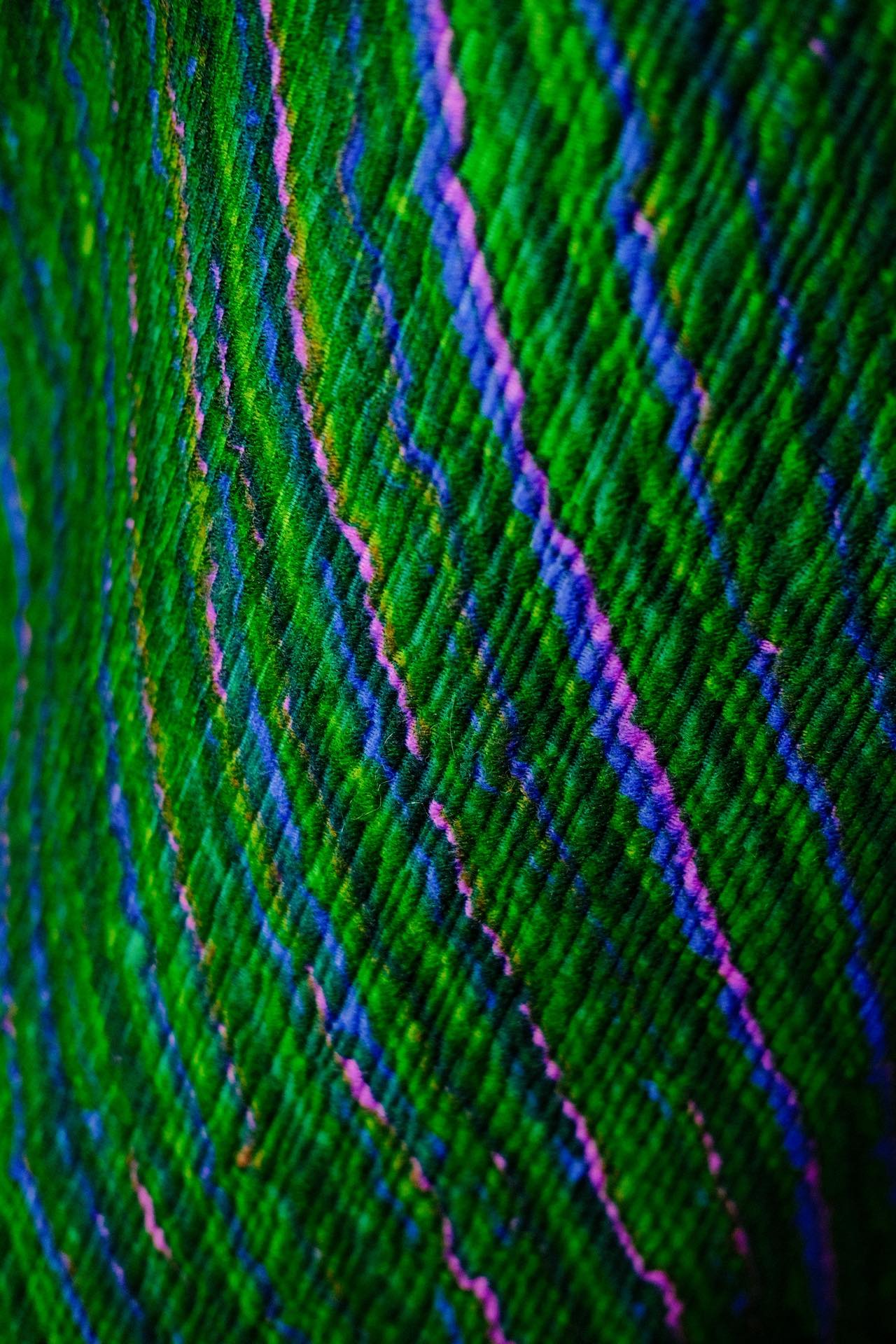
这套旗袍套装的面料,是上世纪六十年代意大利进口的粗花呢。
- 色彩:面料以浓郁的孔雀绿为主调,间杂着宝蓝与淡紫的细条纹,
- 肌理:粗花呢的织造工艺赋予了面料独特的立体感,
二、形制:中西合璧的“海派”变奏
套装由无袖立领旗袍与波浪襟线香绲圆领外套组成,
- 内搭旗袍:采用无袖、肩开、无盘扣的极简设计,立领挺括,
- 外搭外套:波浪襟线香绲圆领设计,借鉴了西方套装的廓形,
三、故事:Woo女士的“双城记”
这套衣服的主人Woo女士,是加拿大Super Store的老板之一,亦是六十年代“全球买手”的先驱。
- 在六十年代,像Woo女士这样的海外华商,每年必赴欧洲(
- 这套衣服就是这种生活方式的见证:
四、稀缺性:消逝的“港产高定”生态
如今这套套装的珍贵,不仅在于面料与工艺,
- 六十年代的香港,曾有数百家旗袍工坊,师傅们以“一人一版”
- 这套套装,便是那个黄金时代的绝唱。它不仅是一件衣服,
The structural foundation of this two-piece ensemble resides in a premium, high-relief tweed fabric imported from Italy during the 1960s. Diverging sharply from traditional flat or slick woven materials, this textile possesses a dramatic, dimensional texture that functions like a living sculpture draped gracefully over the posture:
The Chromatic Spectrum: The palette commands immediate visual authority with a deep, saturated peacock green foundation, punctuated by intricate, woven pinstripes of royal blue and soft lavender. This configuration mimics the iridescent brilliance of a peacock's fan, yielding a subtle, shifting rainbow effect under shifting gallery lamps. Such a daring color theory was exceptionally progressive for 1960s design, masterfully bridging classical Eastern mysticism with the graphic modernity of the West.
The Dimensional Topography: The complex weaving mechanics of the Italian tweed yield an exceptional tactile relief, where tight twill structures interlace with low-relief botanical patterning. This creates a "fluid fresco" phenomenon across the surface. This deep topography not only heightens the luxurious hand-feel of the textile but allows the garment to catch and fragment ambient light across rich shadow-gradients with every movement of the body.
The structural framework of this ensemble comprises an integrated sleeveless qipao paired with a coordinating wave-placket, round-neck jacket—representing the absolute pinnacle of the iconic 1960s Hong Kong "qipao suit" format:
The Foundation Qipao: The interior gown adopts a radically minimalist, sleeveless design featuring a side-shoulder opening that completely sets aside traditional decorative frog closures in favor of clean, continuous structural lines. The standing mandarin collar remains impeccably crisp and upright, drawing a smooth, unbroken line that contours the silhouette flawlessly. This streamlined approach to pattern drafting reflects the mid-century shift among intellectual women who demanded structural simplicity over ornamental noise.
The Coordinating Outerwear: The matching round-neck jacket introduces a sophisticated, Western-inspired straight-cut silhouette, yet incorporates meticulous artisanal details. The front closure is engineered with a undulating wave-front placket, framed by micro-scale, ultra-fine corded piping (Xianxianggun). This stylized wave edge establishes a brilliant geometric dialogue with the high standing collar of the qipao beneath, multiplying the ensemble's formal weight while maintaining a highly professional, sharp-angled composure.
The custodian of this artifact, Ms. Woo, operated as a co-director of a major Canadian enterprise, standing as a definitive visionary within the early network of global luxury textile procurement:
During the 1960s, elite international Chinese merchants made regular, calculated sourcing journeys across Europe—specifically targeting the premier heritage mills of Italy and France—to secure advanced, trend-setting fabric volumes. These precious materials were subsequently routed back to Hong Kong, where master tailors transformed the raw textiles into bespoke, one-of-a-kind garments.
This specific ensemble stands as an absolute historical marker of that exact transoceanic lifestyle: the Italian tweed records the pinnacle of European material luxury; the precision-engineered custom tailoring tracks the absolute mastery of Hong Kong's artisan craftsmanship; and its ultimate presentation within the executive landscapes of Canada highlights a profound narrative of identity. As the fashion historian Anne Hollander noted, "Dress is an extension of the body." Ms. Woo’s selection functions beautifully as a material expression of personal refinement and a concrete manifestation of cultural authority on the global stage.
The modern rarity of this two-piece set extends far beyond its raw material worth or its complex mineral aesthetics; it stands as a pristine archive of a highly specialized, completely vanished sartorial ecosystem:
During the 1960s, Hong Kong’s custom apparel trade thrived across hundreds of master ateliers who engineered garments based on a strict "one person, one pattern" blueprint philosophy, where senior artisans meticulously draped rare European imported fabrics to match individual anatomical requirements down to the millimeter. Archival records from the Hong Kong textile industry indicate that during this entire decade, the total volume of premium Italian tweed imported to the region amounted to fewer than one hundred bolts. Master tailors possessing the technical capability to successfully adapt such heavy, textured Western wools to the precise margins of a qipao were exceptionally rare.
This ensemble survives as a peerless, one-of-a-kind monument—a living fragment of fashion history, recording the romance, industry, and uncompromising artistry of a golden era.