深圳溯源
Couldn't load pickup availability
衣服尺寸:
胸围/腰围/臀围:94/80/98 厘米
衣长:109 厘米
细节描述:
一、纹样考释:海岛春色与水墨留白的交响
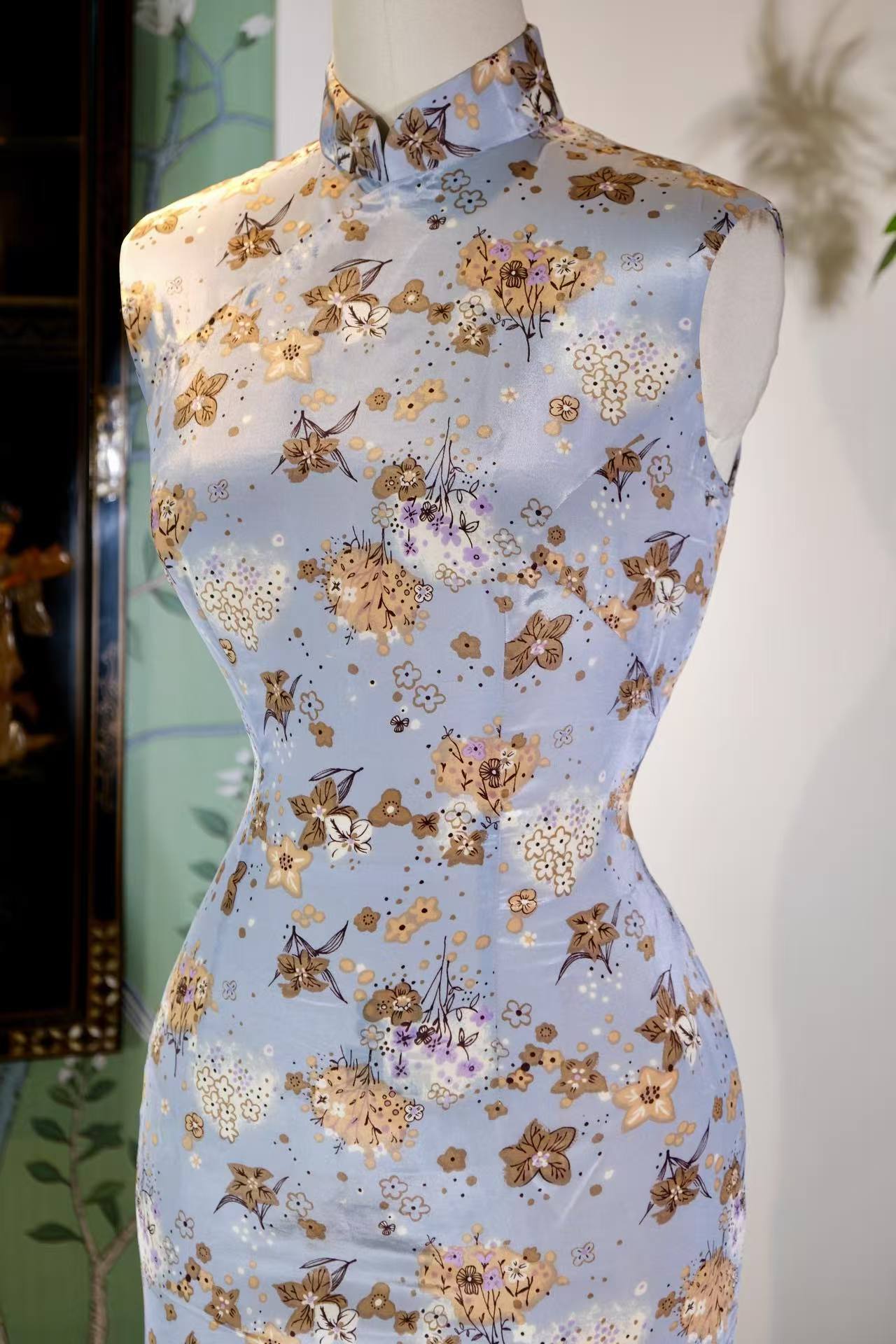
此件旗袍以冰裂纹天青缎为地,其上铺陈的印花图案,实为1960年代台湾纺织业黄金时期的经典设计。花簇以“没骨法”晕染,棕褐、米白、淡紫三色交织,暗合《芥子园画谱》中“点染生春”的笔意。细观纹样:
- 主花:形似宝岛特有的杜鹃与绣球,花瓣边缘以金线勾边,仿若晨露未晞;
- 辅纹:散落的细碎花点如《诗经》“零露漙兮”之态,暗喻海岛湿润气候孕育的蓬勃生机;
- 布局:疏密相间的“攒三聚五”构图,既承袭明清织绣“满地娇”传统,又融入现代平面设计的节奏感,恰似张大千泼彩山水中的“破墨”技法,于无序中见章法。
二、衣史钩沉:海岛旗袍的“在地化”美学革命
1949年后,随国民政府迁台的江浙裁缝,将海派旗袍的“贴体曲线”与台湾本土审美碰撞融合。此件旗袍正是这一历史进程的物质见证:
- 形制:无袖设计与改良立领,呼应1960年代台湾都市女性对“清凉雅致”的追求,较之同期香港旗袍的“低领露臂”,更显含蓄端庄;
- 工艺:采用台湾早期“滚筒印花”技术,色彩层次较大陆同期“木模印花”更为细腻,却因染料配方独特(含天然植物靛蓝),历经半世纪仍鲜亮如初;
- 文化符号:图案中隐现的“蝶恋花”母题,既是对江南故土的乡愁投射,亦暗合台湾民间“蝶为花魂”的吉祥寓意,堪称“离散美学”的纺织标本。
三、艺术价值:稀缺性与“不可复制性”的双重印证
- 风格定位:其图案设计融合了“中国文人画”的写意精神与“波普艺术”的重复美学,较之同时期大陆“革命题材”印花、香港“龙凤呈祥”传统纹样,展现出独特的“中间态”艺术价值——既非纯粹复古,亦非全盘西化,而是海岛文化“兼容并蓄”的生动注脚;
- 文献佐证:1965年《台湾纺织月刊》曾载:“本地产印花绸旗袍,以‘春郊试马’‘蝶舞花间’等图案最受知识女性青睐”,此件旗袍的“野花闲草”主题,恰与文献记载的“去政治化”审美倾向相契合,为研究冷战时期台湾社会心态提供了物质实证。
四、结语:穿在身上的“时光琥珀”
这件旗袍不仅是蔽体之衣,更是一部“纺织史书”:天青底色是1960年代台湾海峡的天空,花簇是离散者的乡愁,而流畅的剪裁则是现代性浪潮中女性身体的觉醒。正如张爱玲所言:“衣服是一种言语,随身带着的袖珍戏剧”,当指尖抚过那些半世纪前的印花,我们触摸到的,是海岛旗袍在历史夹缝中绽放的,那一抹倔强的春色。
Measurements / Size Guide:
Bust / Waist / Hips: 94/80/98 cm
Total Length: 109 cm
Detailed Description:
This qipao utilizes a celestial-blue satin with an "ice-crack" weave as its base. The printed patterns spread across it are classic designs from the golden era of the 1960s Taiwanese textile industry. The flower clusters are shaded using the "Boneless Method" (Mogu), weaving together brownish-umber, cream-white, and pale purple, subtly echoing the brushwork of "creating spring through dots and washes" found in the Manual of the Mustard Seed Garden. Observing the motifs closely:
Primary Flora: Shaped like the azaleas and hydrangeas unique to the island, the petal edges are outlined in gold thread, appearing as if the morning dew has not yet dried.
Supporting Motifs: The scattered, fine floral dots mirror the imagery of "heavy falling dew" from the Classic of Poetry, metaphorically representing the vigorous vitality nurtured by the island's humid climate.
Layout: The "clustered in threes and gathered in fives" composition—varying in density—inherits the Ming and Qing embroidery tradition of "full-ground delicacy" while integrating the rhythm of modern graphic design. It resembles the "broken ink" (Pomo) technique in Zhang Daqian’s splashed-color landscapes, finding profound order within apparent disorder.
After 1949, tailors from the Jiangsu and Zhejiang regions who moved to Taiwan brought the "form-fitting curves" of the Shanghai-style (Haipai) qipao into a collision and fusion with Taiwanese local aesthetics. This qipao is a physical witness to this historical process:
Form: The sleeveless design and reformed standing collar echo the pursuit of "cool elegance" by 1960s Taiwanese urban women. Compared to the "low collars and exposed arms" of contemporaneous Hong Kong qipaos, this style appears more subtle and dignified.
Craftsmanship: It utilizes early Taiwanese "roller printing" technology. The color layers are more delicate than the "woodblock printing" common in mainland China during the same period. Due to a unique dye formula (containing natural plant indigo), the colors remain as vibrant as new after half a century.
Cultural Symbols: The "Butterfly Loving the Flower" motif hidden within the pattern is both a projection of nostalgia for the Jiangnan homeland and an alignment with the Taiwanese folk auspicious meaning of "the butterfly as the soul of the flower"—a textile specimen of "diaspora aesthetics."
Style Positioning: Its pattern design fuses the expressive spirit of "Chinese Literati Painting" with the repetitive aesthetics of "Pop Art." Compared to the "Revolutionary themes" of mainland prints or the "Dragon and Phoenix" traditions of Hong Kong from the same era, it showcases a unique "intermediate" artistic value—neither purely retro nor entirely Westernized, but a vivid footnote to the "inclusive and eclectic" nature of island culture.
Documentary Evidence: The 1965 Taiwan Textile Monthly recorded: "Locally produced printed silk qipaos, with patterns such as 'Spring Outing' and 'Butterflies Among Flowers,' are most favored by intellectual women." The "wildflower and idle grass" theme of this piece perfectly aligns with the "depoliticized" aesthetic trends documented, providing material evidence for the study of Taiwanese social psyche during the Cold War.
This qipao is not just a garment for covering the body; it is a "textile history book." The celestial-blue base is the sky over the Taiwan Strait in the 1960s, the flower clusters are the nostalgia of the displaced, and the fluid tailoring is the awakening of the female body amidst the waves of modernity. As Eileen Chang said, "Clothing is a language, a pocket drama carried with oneself." When our fingertips brush over these half-century-old prints, we touch that stubborn glint of spring color that bloomed in the cracks of history.