深圳溯源
Couldn't load pickup availability
衣服尺寸:
第一件:
胸围/腰围/臀围:104/82/104 厘米
衣长:97 厘米
第二件:
胸围/腰围/臀围:98/84/100 厘米
衣长:100 厘米
第三件:
胸围/腰围/臀围:100/84/104 厘米
衣长:100 厘米
价格:
$755 加元/件
细节描述:
这三件旗袍,是来自上世纪六十年代台湾的印花古董珍品。
第一件:岁月斑驳中的温柔绽放
这件旗袍,仿佛是从一首老诗中走出的意象。
这件旗袍的主人,或许是一位热爱生活、心思细腻的女性。
从艺术风格上看,这件旗袍的印花工艺精湛,色彩过渡自然,
第二件:抽象几何里的现代诗篇
与第一件的写实花鸟不同,
这件旗袍的主人,在穿着它时,或许正走在时代的前沿。
从艺术价值来看,这件旗袍的图案设计极具现代感,
第三件:繁花似锦中的古典回响
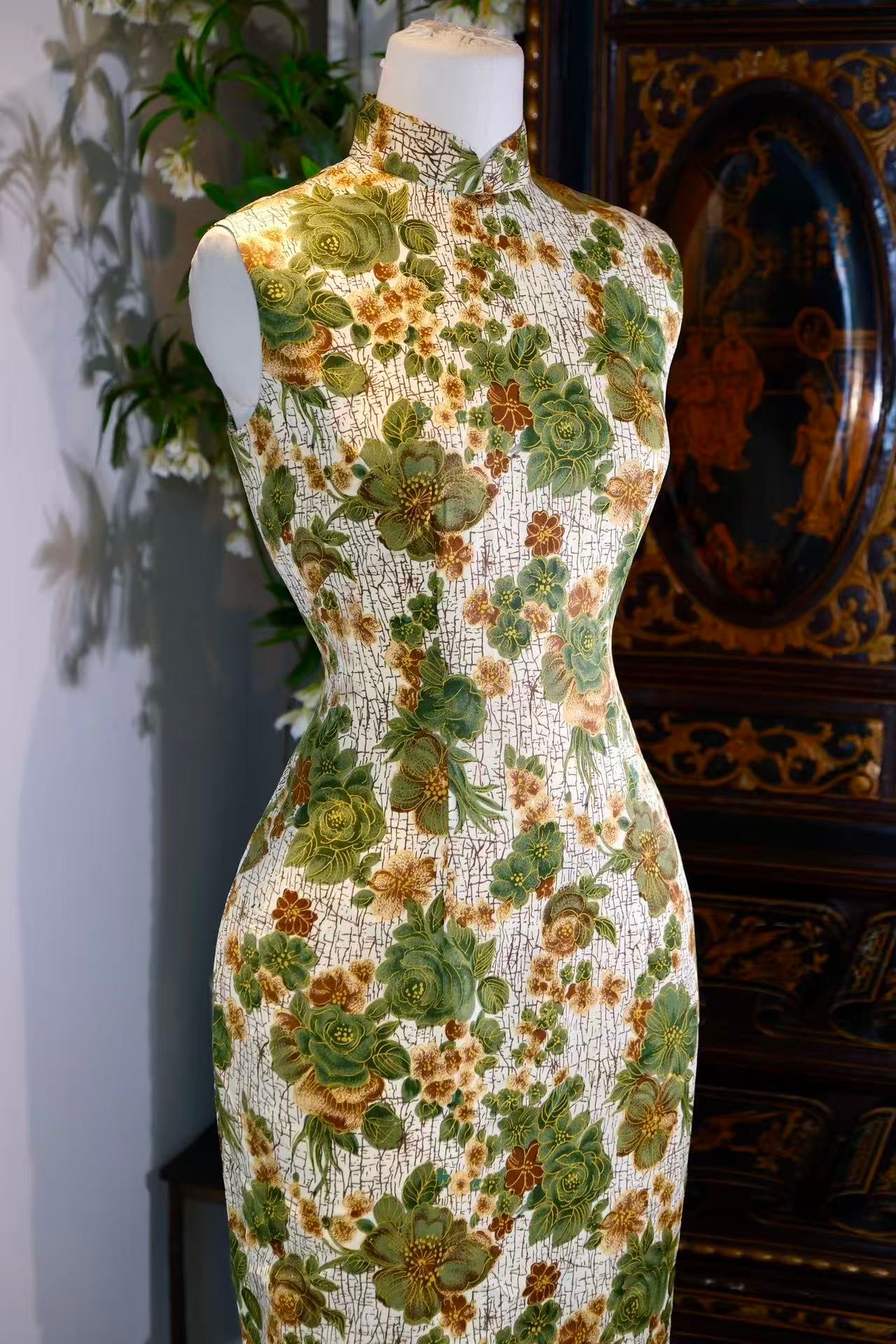
这件旗袍,仿佛是一幅繁花似锦的古典画卷。
这件旗袍的主人,在穿着它时,或许正出席一场重要的社交活动,
从艺术风格上看,这件旗袍的印花工艺精湛,图案细节丰富,
这三件旗袍,虽然风格各异,却都来自同一位女性的衣橱。
Measurements / Size Guide:
The first dress:
Bust / Waist / Hips: 104/82/104 cm
Total Length: 97 cm
The second dress:
Bust / Waist / Hips: 98/84/100 cm
Total Length: 100 cm
The third dress:
Bust / Waist / Hips: 100/84/104 cm
Total Length: 100 cm
Price:
$755 CAD/Piece
Detailed Description:
These three qipaos are rare floral antique treasures from 1960s Taiwan. They carry more than just the elegance of an era; they are witnesses to a woman's unique taste and the trajectory of her life.
This qipao appears as an image stepped out of an old poem. The base fabric possesses a unique mottled texture, like ink marks left by time on Xuan paper, with light and dark tones intertwining as if narrating the passage of years. Atop this, orange blossoms and green foliage are laid out in an orderly yet staggered fashion. The floral forms are full, and the veins of the leaves are crisp; each bloom seems to sway gently in the breeze, exuding a gentle yet resilient vitality. This printing style possesses both the artistic conception of traditional Chinese flower-and-bird painting and the modern aesthetics unique to 1960s Taiwan. Its harmonious and layered color palette evokes the "beauty precipitated by time" often described by Eileen Chang.
The owner of this qipao was perhaps a woman who loved life and possessed a delicate mind. During those turbulent years, she wore it through the streets of Taipei, to family gatherings, or while spending afternoons with friends. It witnessed the fragments of her daily life and carried her joys and sorrows. As written in Dream of the Red Chamber: "Flowers fade and fly, filling the sky; their beauty withers and fragrance fades—who is there to pity them?" While these flowers will never wither, they have left a unique mark on the long river of time, becoming an irreplaceable historical memory.
From an artistic perspective, the printing craftsmanship is exquisite, with natural color transitions showcasing the superb level of Taiwan’s textile industry. The tailoring contours the female curve, while the classic mandarin collar and the detailed treatment of the cuffs and hem highlight the artisan's ingenuity. Its scarcity lies in the fact that such well-preserved 1960s Taiwanese antique qipaos with unique patterns are increasingly rare; each is a one-of-a-kind work of art.
In contrast to the realistic style of the first piece, this qipao’s pattern resembles an abstract modern painting. The base is a warm ochre yellow, covered with circles and ovals of varying sizes and shapes. These motifs, primarily in shades of yellow, green, and brown, interweave and layer upon one another, resembling mottled light and shadow filtering through leaves or smooth pebbles polished by a stream. This abstract geometric pattern is filled with 1960s Modernism—bold and creative—showcasing the keen fashion sense and unique pursuits of Taiwanese women at the time.
The owner of this qipao likely stood at the forefront of her era. She may have been a woman engaged in art or design with a unique perspective on beauty. This qipao was more than daily wear; it was a medium for self-expression and individuality. It witnessed how she interpreted independence and confidence in her own way during a time of reform and innovation. As Marcel Proust wrote in In Search of Lost Time: "The real voyage of discovery consists not in seeking new landscapes, but in having new eyes." This qipao symbolizes the "new eyes" of that era’s women, revealing the diversity and inclusivity of 1960s Taiwan.
In terms of artistic value, the pattern design is highly modern, with a bold yet harmonious color palette reflecting the innovative spirit of Taiwanese designers. The fabric texture is delicate and the tailoring fluid, offering comfort without sacrificing elegance. Its scarcity lies in the low production volume of abstract geometric qipaos at the time; those preserved in pristine condition today are few and far between. It is a collection piece of significant historical and artistic value.
This qipao unfolds like a classical scroll of flourishing blossoms. Set against a pure white base, it is covered with green peonies, brown branches, and golden stamens. The flowers vary in form—some in bud, others in full bloom—with branches intertwining to form a vibrant sea of flowers. This complex floral pattern is rich with traditional Chinese auspicious symbolism: the peony represents wealth and prosperity, the foliage represents vitality and hope, and the golden stamens add a touch of magnificence and nobility. The composition is full and the colors vivid, carrying a strong classical charm that brings to mind the lines of Tang poet Liu Yuxi: "Only the peony is truly the country's beauty; its blooming moves the capital."
The owner may have worn this qipao to important social events or family weddings. It witnessed the pivotal moments of her life and carried her yearnings for a beautiful future. In an era where tradition and modernity were intertwined, wearing this classically charming qipao allowed her to demonstrate respect for cultural heritage while expressing a unique understanding of fashion. It serves as a bridge between the past and present, showing how women in 1960s Taiwan found balance between tradition and modernity.
Artistically, the printing is sophisticated, with rich details and harmonious layering. The classic tailoring and elegant mandarin collar, alongside the meticulous cuff and hem details, showcase the maker's dedication. Its scarcity is paramount; such intricately patterned and vividly colored 1960s Taiwan antique qipaos are now extremely rare, making each an invaluable artistic treasure.