暗纹提花绸上的东方美学叙事
在时光的褶皱里,这件六十年代香港产古董旗袍悄然绽放,暗纹提花与印花技艺的精妙融合,是那个年代纺织工艺的缩影,更是东方美学的诗意表达。
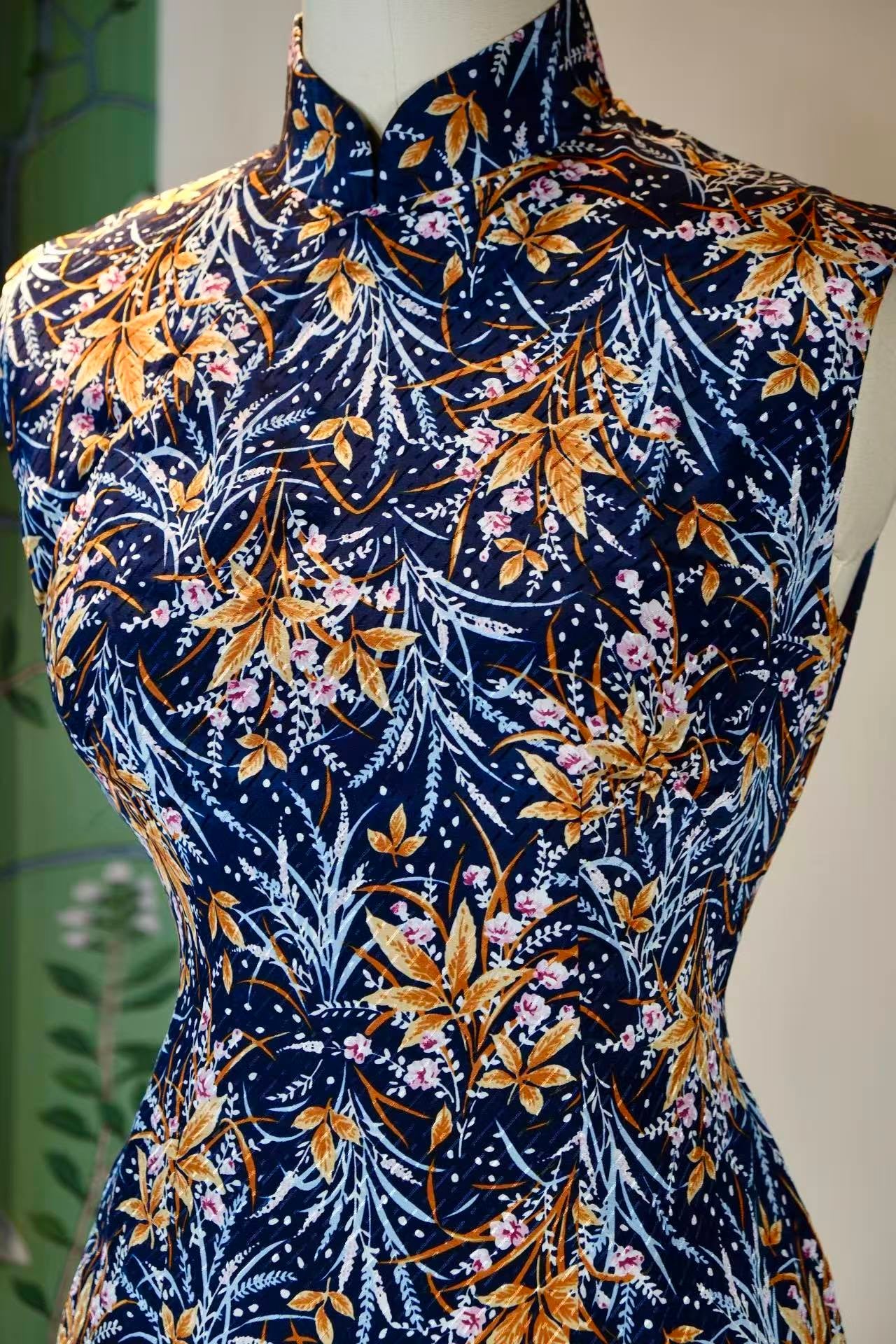
旗袍以深蓝为底,恰似夜幕低垂,静谧而深邃。其上,橙黄叶片如秋枫般热烈,或舒展如掌,或纤细如羽,脉络清晰可辨,仿佛能触摸到叶脉中流淌的生命力。其间点缀着粉白小花,或含苞待放,或粲然盛开,恰似《楚辞》中“扈江离与辟芷兮,纫秋兰以为佩”的幽芳意象,将草木之华织入衣裳,暗合古人“以自然为饰”的审美哲学。
白色枝蔓如流云般蜿蜒,勾勒出“疏影横斜”的意境,与叶片花朵交织成一幅动态的自然图卷。这种图案设计,既承袭了中国传统织物“图必有意,意必吉祥”的理念——枫叶寓“金秋硕果”,小花象征“四季常青”,又融入了岭南地区对自然生灵的细腻观察,形成独特的视觉叙事。
作为暗纹提花绸旗袍,其面料工艺堪称一绝。提花机织就的暗纹在深蓝底色中若隐若现,似水墨晕染后的余韵,又如月华下的暗纹,需在光线下细细端详,方能窥见其精妙。这种“暗藏乾坤”的设计,既保留了旗袍的典雅质感,又通过光影变化赋予面料呼吸感,与清代《木棉谱》中“织必有纹,纹必有意”的工艺追求一脉相承。
而印花技艺的加持,更让图案层次分明:橙黄、粉白、浅蓝三色交织,却不显繁杂,反而在深蓝底色的衬托下,呈现出“万绿丛中一点红”的视觉张力。这种色彩搭配,暗合明代《天工开物》所载“青黛染帛,朱砂点翠”的配色智慧,将传统染织技艺的精髓凝于一衣。
当指尖抚过这深蓝底色上的橙黄枫叶,仿佛能听见六十年代香港街头的粤语歌声,看见旗袍女子款款而行的风姿。它不仅是衣物,更是一首穿在身上的诗,以图案为笔,以工艺为墨,书写着东方美学的永恒魅力。这般孤品,值得被珍藏,更值得被讲述——因为每一件古董旗袍,都是时光留给我们的,最温柔的信物。
🌙 Oriental Aesthetic Narrative on Jacquard Silk: A 1960s Hong Kong Vintage Cheongsam
In the folds of time, this 1960s Hong Kong vintage cheongsam blooms quietly. The subtle fusion of jacquard weaving and printing techniques is a microcosm of the textile craftsmanship of that era and a poetic expression of Oriental aesthetics.
The cheongsam features a deep navy base, akin to the falling night—quiet and profound. Upon it, orange-yellow leaves are as vibrant as autumn maples; some unfurl like palms, while others are slender as feathers, with clear veins that seem to pulse with life. Interspersed among them are pinkish-white florets, some in bud and others in full bloom, echoing the fragrant imagery of "wearing fragrant plants and threading autumn orchids" from the Songs of Chu. By weaving the essence of flora into the garment, it aligns with the ancient aesthetic philosophy of "using nature as adornment."
White vines meander like drifting clouds, sketching a scene of "sparse shadows slanting," weaving together with the leaves and flowers into a dynamic natural scroll. This pattern design inherits the traditional Chinese textile concept that "every pattern must have a meaning, and every meaning must be auspicious"—maple leaves symbolize "golden autumn fruits," and small flowers represent "everlasting seasons." It also incorporates the delicate observation of nature typical of the Lingnan region, forming a unique visual narrative.
As a jacquard silk cheongsam, its fabric craftsmanship is superb. The patterns woven by the jacquard loom appear and disappear against the deep navy base, like the lingering charm of ink wash painting or hidden textures under moonlight; one must examine it closely under the light to glimpse its intricacy. This "hidden universe" design preserves the elegant texture of the cheongsam while granting the fabric a sense of "breath" through the interplay of light and shadow, following the same lineage as the craft pursuit in the Qing Dynasty's Cotton Manual: "weaving must have patterns, and patterns must have intent."
The addition of printing techniques adds distinct layers to the design: the trio of orange-yellow, pink-white, and light blue interweave without appearing cluttered. Instead, against the deep navy background, they present a visual tension akin to "a splash of red amidst a sea of green." This color scheme resonates with the wisdom found in the Ming Dynasty's Tiangong Kaiwu (The Exploits of Creatures and Nature): "dyeing silk with indigo and dotting emerald with cinnabar," condensing the essence of traditional dyeing and weaving into a single garment.
When your fingertips brush over these orange-yellow maple leaves on the deep navy base, you can almost hear the Cantonese songs from 1960s Hong Kong streets and see the graceful silhouette of a woman walking by. It is not just clothing, but a poem worn on the body, using patterns as the brush and craftsmanship as the ink to write the eternal charm of Oriental aesthetics. Such a singular piece deserves to be cherished and told—because every vintage cheongsam is the gentlest keepsake left to us by time.