梅子凝香录:六十年代台湾机绣喷绘旗袍的姊妹风华
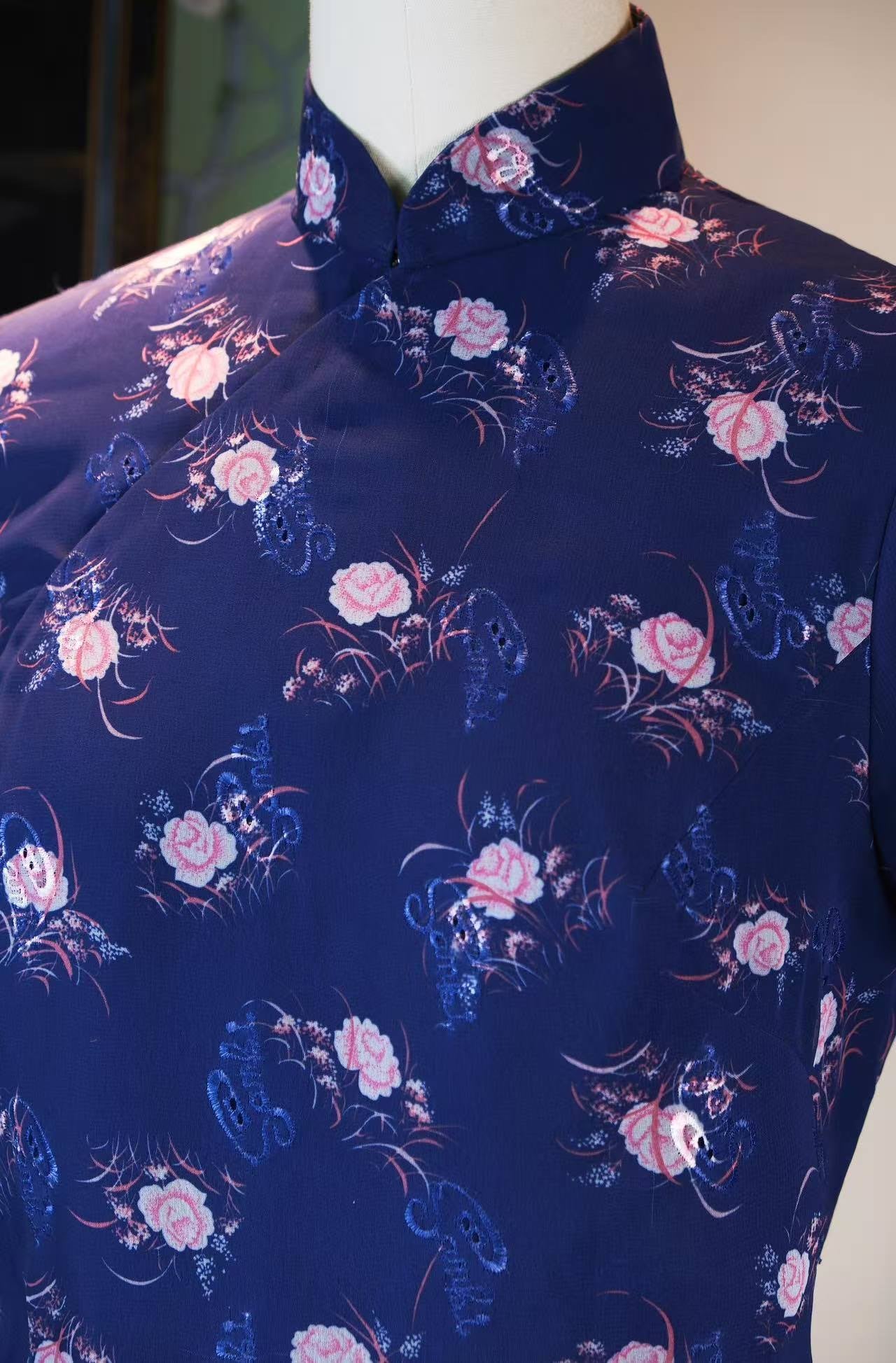
立领斜襟的剪影里,梅子色如暮春果实的外皮,泛着酒渍浸染后的浓郁紫红。当目光滑过衣身,才发现那并非单纯的底色,而是时光在丝缎上沉淀出的温润光泽。三百六十度环抱的喷绘印花,恰似文人墨客挥毫泼墨后,将笔触定格在绢本上的写意。
旗袍上的花卉图案,打破了传统工笔的拘谨。粉白的月季于梅子色底子上恣意绽放,花瓣边缘晕染着水墨特有的“燥锋”效果。这种喷绘印花工艺,实则是将水墨画的“墨分五彩”原理融入纺织技艺——通过不同浓度的染料喷洒,让花瓣呈现出从粉白到玫红的渐变层次,枝叶则带着飞白般的笔触,仿佛八大山人笔下“白眼向人”的孤傲花枝,在衣料上舒展成疏朗的文人画境。
细看花枝的脉络,可见细密的机绣针脚如游丝般游走。台湾六十年代的机绣技术,继承了闽南刺绣“针法细腻如发”的传统,又融入了现代机械的精准。
当视线转向同款的阴丹士林蓝旗袍,仿佛穿越到宋代汝窑的天青釉世界。“雨过天青云破处”的幽蓝底色上,粉色花卉如晨露中的木芙蓉,清雅中透着灵动。这种“蓝底粉花”的配色,暗合中国传统色彩观中的“相生相克”:蓝色属水,粉色属火,水火既济,方成“中和之美”。两件旗袍,一暖一冷,一浓一淡,恰似《诗经》中“既明且哲,以保其身”的智慧,在色彩的对话中演绎着东方美学的辩证关系。
衣摆垂落处,仿佛听见六十年代台北街头的留声机,正播放着周璇的《夜上海》。梅子色与阴丹士林蓝的姊妹款,如同时光的双生花,在丝绸与针线间,凝固着一个时代的风华。它们不仅是旗袍,更是一卷会呼吸的“ textile painting”,让观者在每一针每一线中,触摸到东方美学的脉搏。
The Chronicle of Plum-Stained Fragrance: The Sisterhood of 1960s Taiwan Airbrushed and Embroidered Qipaos
A Palette of Ripened Plums and Ink-Wash Dreams Within the silhouette of the high collar and slanted bodice, the plum purple hue mirrors the skin of a late-spring fruit—a rich, wine-stained magenta. As one’s gaze glides over the fabric, it becomes clear that this is no simple base color, but a gentle luster precipitated by time upon the silk. The 360-degree airbrushed floral motifs resemble the "Xieyi" (freehand) strokes of a literati painter, freezing the movement of the brush upon a silk scroll.
The Art of Airbrushed Vitality The floral patterns break away from the rigid constraints of traditional "Gongbi" (meticulous) painting. Pale pink roses bloom wantonly against the plum-colored backdrop, their petal edges blurring with the "dry brush" effect unique to ink-wash art. This airbrushing technique integrates the principle of "Ink divided into five colors" into textile craft. Through varying concentrations of dye, the petals transition seamlessly from pale pink to rose, while the stems carry the "Feibai" (flying white) brushwork reminiscent of the aloof branches painted by the master Bada Shanren.
The Precision of Taiwan’s Embroidered Heritage Observing the veins of the flowers reveals fine machine-embroidery stitches that wander like gossamer threads. The machine-embroidery technology of 1960s Taiwan inherited the Minnan tradition of "stitching as fine as hair" while incorporating modern mechanical precision.
The "Indanthrene Blue" Counterpart: A Dialectic of Color Turning to the sister piece in Indanthrene Blue is like stepping into the world of Song Dynasty Ru Kiln celadon. Against the "sky blue after the rain" backdrop, pink blossoms appear like hibiscus in the morning dew—elegant and ethereal. This "pink on blue" palette aligns with the traditional Chinese philosophy of "mutual generation and restriction": Blue represents Water, while Pink represents Fire. The harmony of Water and Fire achieves the "Beauty of Neutrality." One warm and one cool, one bold and one serene—these two qipaos evoke the wisdom of the Classic of Poetry, performing a dialectical dance of Oriental aesthetics.
Conclusion: Breathing Textile Paintings At the hem's fall, one can almost hear a gramophone on a 1960s Taipei street playing Zhou Xuan’s Night Shanghai. These sister qipaos are like twin flowers of time, freezing the splendor of an era within silk and thread. They are more than garments; they are "breathing textile paintings," allowing the observer to touch the pulse of Oriental beauty in every stitch.