深圳溯源
Couldn't load pickup availability
衣服尺寸:
胸围/腰围/臀围:106/94/110 厘米
衣长:110 厘米
细节描述:
一、衣上竹影:东西方美学的交织
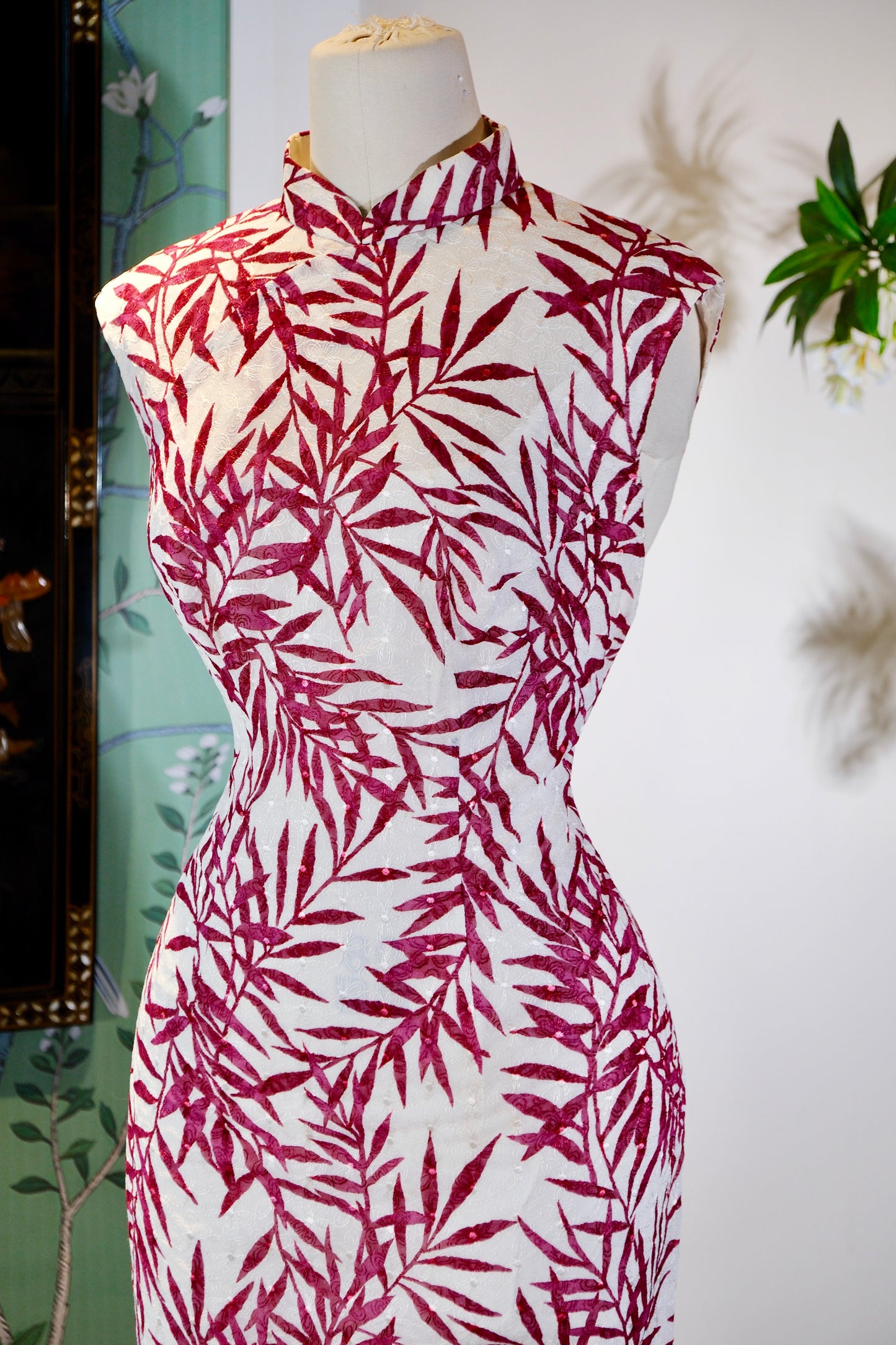
这件旗袍的面料以米白为底,暗红色竹叶纹样如泼墨般肆意铺展,叶片或聚或散,枝干若隐若现,恰似郑板桥笔下“一枝一叶总关情”的写意。竹叶纹样在中国传统文化中象征君子之风,而意大利进口的机绣工艺则赋予其细腻的肌理感——每片竹叶边缘的亮片点缀,在光线下流转如晨露,既保留了东方水墨的留白意境,又融入了西方装饰艺术的华丽。
二、古董衣的故事:1960s香港的黄金时代
1960年代的香港,是东西方文化碰撞的熔炉。彼时旗袍作为“国服”,在裁剪上大胆革新:收腰设计凸显女性曲线,无袖剪裁呼应西方晚礼服的优雅,而立领与斜襟仍坚守着中式礼仪的端庄。这件旗袍诞生于香港裁缝的黄金时代,面料由意大利进口,机绣技术突破了传统手工刺绣的局限,让繁复的竹叶纹样得以精准复刻。
三、艺术风格:新古典主义的东方诠释
这件旗袍的设计,堪称“新古典主义”在东方服饰上的绝妙实践。竹叶纹样的抽象化处理,暗合了20世纪60年代西方抽象表现主义的艺术思潮,而面料的光泽感则让人联想到同时期意大利设计师Emilio Pucci的几何印花——东西方美学在此达成微妙的平衡。
四、稀缺性:时光淬炼的孤品
如今,1960年代的香港产旗袍已属罕见,而采用意大利进口机绣面料的更是凤毛麟角。据《香港纺织史》记载,当时香港虽有“东方好莱坞”之称,但高端面料仍依赖欧洲进口,且机绣工艺因成本高昂,多用于出口订单。正如张爱玲所言:“衣服是一种言语,随身带着的袖珍戏剧。”这件旗袍不仅是一件衣物,更是一部穿在身上的文化史,它的稀缺性,在于它承载了一个时代的美学密码,以及东西方文明对话的珍贵记忆。
五、结语:穿在身上的文化史诗
这件旗袍,是1960年代香港时尚的缩影,是意大利工艺与东方美学的结晶,更是时光留给我们的“袖珍戏剧”。当你穿上它,仿佛能听见旧上海百乐门的爵士乐,看见香港半山别墅的晚宴灯火,感受到那个时代女性对自由与优雅的永恒追求。它不仅是衣橱中的珍品,更是一件值得传世的文化遗产。
注明:下摆有脏需要手绘
Measurements / Size Guide:
Bust / Waist / Hips: 106/94/110 cm
Total Length: 110 cm
Detailed Description:
The fabric of this qipao features a creamy-white base, with dark crimson bamboo leaf patterns spreading as freely as ink wash. The leaves cluster and scatter, their stems appearing and vanishing like the expressive brushwork of Zheng Banqiao, where "every branch and leaf conveys deep emotion." While the bamboo motif symbolizes the "gentlemanly spirit" in traditional Chinese culture, the imported Italian machine embroidery grants it a delicate texture. Each leaf edge is accented with subtle sequins that shimmer like morning dew, preserving the "white space" (Liu Bai) of Oriental ink painting while integrating the opulence of Western Decorative Arts.
Hong Kong in the 1960s was a melting pot where Eastern and Western cultures collided. During this era, the qipao—serving as the "National Dress"—underwent bold innovations: the cinched waist emphasized feminine curves, and the sleeveless cut echoed the elegance of Western evening gowns, while the standing collar and diagonal closure maintained the dignity of Chinese etiquette. This piece was born during the golden age of Hong Kong tailoring; using imported Italian fabric, the machine embroidery bypassed the limitations of traditional hand-stitching, allowing for the precise replication of complex bamboo motifs.
The design of this qipao is a brilliant practice of "Neoclassicism" in Oriental fashion. The abstracted treatment of the bamboo leaves aligns with the Western Abstract Expressionist movement of the 1960s, while the luster of the fabric recalls the iconic geometric prints of contemporary Italian designer Emilio Pucci. Here, Eastern and Western aesthetics achieve a subtle, sophisticated balance.
Today, 1960s Hong Kong-made qipaos are rare, and those featuring imported Italian machine embroidery are truly exceptional. According to the History of Hong Kong Textiles, while Hong Kong was known as the "Hollywood of the East," high-end fabrics still relied on European imports, and expensive machine embroidery was primarily reserved for high-value export orders. As Eileen Chang noted: "Clothing is a language, a pocket drama carried with oneself." This qipao is not just a garment but a wearable history, carrying the aesthetic codes of an era and the precious memories of a dialogue between civilizations.
This qipao is a microcosm of 1960s Hong Kong fashion—a crystallization of Italian craftsmanship and Oriental aesthetics. When you wear it, you can almost hear the jazz from Old Shanghai's Paramount and see the dinner lights of Hong Kong’s Mid-Levels villas, feeling the eternal pursuit of freedom and elegance by the women of that era.
PS: The hem of this qipao will feature custom hand-painted motifs to artistically conceal age-related staining.