深圳溯源
Couldn't load pickup availability
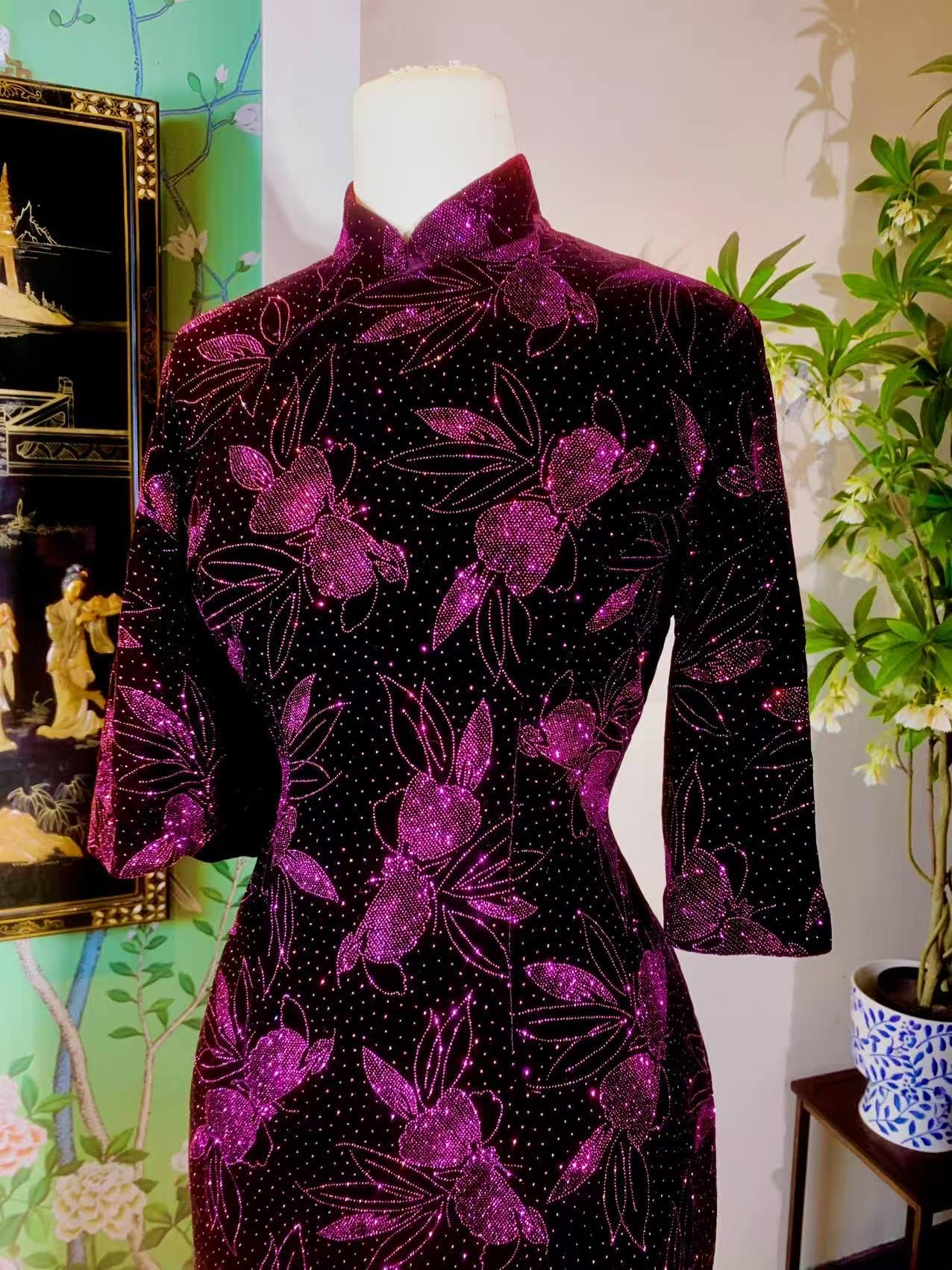
“深紫为夜幕,闪片作星河,手绘兰卉间,旧时光如歌。”
这件上世纪六十年代的台湾产手绘闪片金丝绒旗袍,
一、图案考释:闪片“手绘”的兰花图腾
旗袍的图案以兰花为主题,却突破了传统刺绣或印花的技法,改用“
二、工艺探微:指尖上的“星河工程”
“手绘闪片”工艺的难度,在于“精准”与“耐久”的平衡。
三、古董衣叙事:六十年代台湾旗袍的“黄金时代”
上世纪六十年代,台湾旗袍产业正值“黄金期”。受西方时尚影响,
四、稀缺性与收藏价值
作为一件六十年代的台湾产古董旗袍,它的稀缺性体现在三重维度:
- 工艺绝版:“闪片手绘”工艺因耗时过长、成本过高,
- 年代久远:历经半个多世纪的保存,金丝绒面料未褪色、
- 文化价值:它不仅是服饰,更是一个时代的缩影——
正如《考工记》所言:“知者创物,巧者述之,守之世,谓之工。”
"Deep purple as the night curtain, sequins as the galaxy; orchids hand-painted amidst the folds, old times sing like a melody."
This Taiwan-made hand-painted sequined golden velvet qipao from the 1960s is like a "fluid poem" stepping out from the depths of time. With a deep purple golden velvet base, it features orchid motifs "hand-painted" using tens of thousands of tiny sequins—each flower and leaf meticulously adhered one by one with silver needles by master craftsmen. Amidst the shifting light and shadows, it is as if one is wearing the entire galaxy.
I. Pattern Exegesis: The Orchid Totem "Hand-Painted" with Sequins
While the qipao’s pattern centers on the orchid, it breaks away from traditional embroidery or printing techniques in favor of a "sequin hand-painting" craft. Craftsmen first outlined the contours and veins of the orchids with ultra-fine silver thread, then adhered purple sequins—less than 1mm in diameter—one by one onto the golden velvet, following the bloom of the petals and the veins of the leaves. The dense stacking of sequins on the petals creates a gradient luster, while the rhythmic spacing on the veins outlines a dynamic elegance. This "sequins-as-ink" approach grants the orchids the freehand charm of traditional painting, while the refraction of the sequins presents a fantastical visual effect of "blooming in the dark night"—echoing the grace of "steaming cress and laying orchids" from the Songs of Chu, while adding a touch of modern sartorial splendor.
II. Craftsmanship Exploration: The "Galaxy Project" on Fingertips
The difficulty of "hand-painted sequins" lies in the balance between "precision" and "durability." In 1960s Taiwan, craftsmen had to first categorize sequins by size and luster, fix them with specialized adhesive onto the golden velvet, and finally set them individually with fine needles. A single orchid could take hours, and the total count for the entire qipao could reach tens of thousands. The slightest slip could cause sequins to detach or misalign. More subtly, craftsmen utilized the "reflectivity" of the sequins to allow the pattern to present a dynamic "floating floral shadow" effect from different angles—a serene orchid from the front, yet a cascading galaxy from the side. This is the pinnacle of the "East meets West" craftsmanship found in 1960s Taiwanese qipaos.
III. Antique Narrative: The "Golden Age" of 1960s Taiwanese Qipaos
During the 1960s, Taiwan's qipao industry was in its "Golden Age." Influenced by Western fashion, designers began integrating modern elements into traditional silhouettes, such as modified cuts, innovative fabrics, and decorative techniques. This qipao is a quintessential representative of that era: it retains the classic high collar, diagonal placket, and side slits, while showcasing a unique style of "Oriental elegance + Western opulence" through golden velvet and hand-painted sequin craft. At that time, Taiwanese qipaos were mostly bespoke and unique; masterpieces like this, requiring immense labor and extreme skill, were found only in the wardrobes of high-society women and are now rare "antique-grade" collectibles.
IV. Scarcity and Collectible Value
As a vintage qipao from 1960s Taiwan, its scarcity is manifested in three dimensions:
Extinct Craftsmanship: The "hand-painted sequin" technique has long been replaced by industrial production due to high costs and time intensity; few craftsmen today can replicate it.
Historical Longevity: Having survived over half a century with the golden velvet unfaded and the sequins intact is a rare feat of preservation.
Cultural Value: It is not merely a garment but a microcosm of an era—the aesthetic taste, craftsmanship levels, and lifestyle of 1960s Taiwanese society are condensed into every inch of fabric and every single sequin.
As stated in the Kao Gong Ji: "The wise create things, the skillful narrate them, and those who preserve them through generations are called craftsmen." This qipao is a masterpiece of "creation by the wise" from 1960s Taiwanese artisans—it is "wearable art history" and a worthy "keepsake of time."