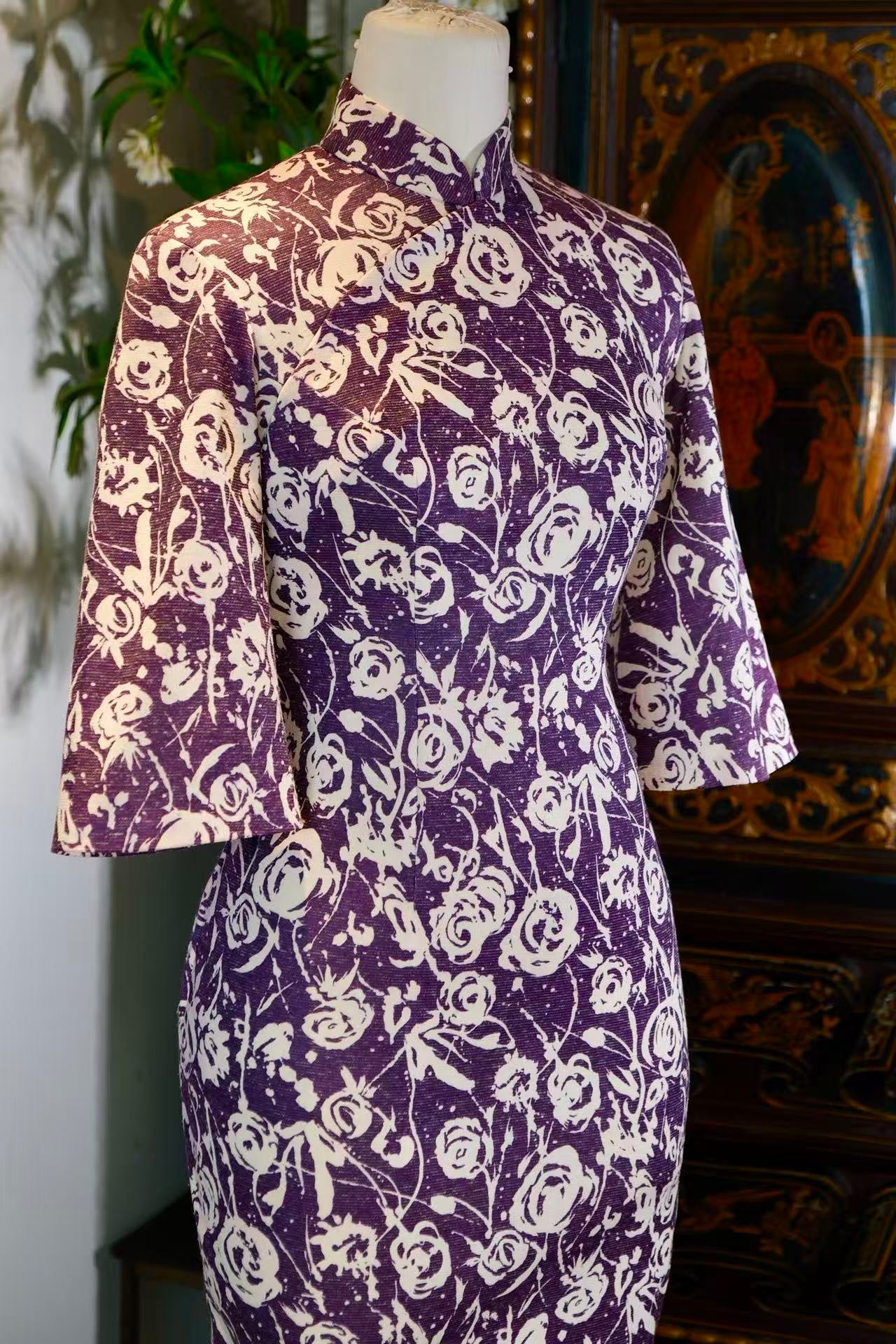
紫底白玫瑰弹力棉旗袍:六十年代台湾风华的织物诗篇
衣服尺寸:
胸围/腰围/臀围:94/78/104 厘米
衣长:102 厘米
细节描述:
这件诞生于上世纪六十年代的台湾产古董旗袍,是时代美学与工艺智慧的结晶。紫色底布如暮色中的紫藤花瀑,白玫瑰印花似月光裁就的云朵,花瓣层叠如卷轴展开,枝叶缠绕若藤蔓攀援,每一朵玫瑰都带着东方写意的留白与西方浪漫的饱满,在弹力横纹棉的肌理间流转。这种面料是六十年代的“黑科技”——横纹棉的经纬交织赋予衣物柔韧弹性,让旗袍首次真正“贴合”女性身体曲线,既保留传统旗袍的立领、斜襟、开衩的骨架,又以现代织物的延展性,让穿着者行走时如流水般自然,是实用主义与审美追求的完美平衡。
在六十年代的台湾,旗袍是都市女性的“第二层皮肤”。这件旗袍或许曾属于一位台北永康街的咖啡馆老板娘,她穿着它在梧桐树影下招待文人墨客,玫瑰的浪漫与弹力棉的舒适,恰是那个时代台湾女性“外柔内刚”的写照——既承袭着东方的温婉,又拥抱西方的自由。彼时,台湾纺织业正从传统棉纺向现代工艺转型,这件旗袍的弹力横纹棉技术,正是当时“台湾制造”走向国际的缩影,每一根纱线都织进了时代的野心与温度。
《诗经·卫风》有言:“有美一人,清扬婉兮。”这件旗袍,正是“清扬婉兮”的物化。它的稀缺性,不仅在于六十年代台湾产古董旗袍的存世量稀少,更在于弹力横纹棉与玫瑰印花的工艺组合——这种将西方浪漫花卉与东方旗袍形制结合的设计,在当时堪称“先锋”,如今已成为服饰史上的“活化石”。每一道缝线都藏着匠人的心血,每一朵玫瑰都凝固着时代的呼吸,它不是一件衣服,而是一部可穿戴的历史,一首织在布料上的诗,等待着懂它的人,轻轻拂去岁月的尘埃,让六十年代的台湾风华,重新在衣香鬓影间流转。
The Stretch Cotton Qipao in Violet and White Roses: A Fabric Poem of 1960s Taiwan
Measurements / Size Guide:
Bust / Waist / Hips: 94/78/104 cm
Total Length: 102 cm
Detailed Description:
This antique qipao, born in 1960s Taiwan, is a masterpiece of era-specific aesthetics and technical ingenuity. The violet base evokes a cascading waterfall of wisteria at dusk, while the white rose prints appear as clouds tailored from moonlight. Each petal unfurls like a scroll, and the foliage intertwines like climbing vines. Carrying both the evocative "white space" of Oriental ink painting and the lush romanticism of the West, every rose flows seamlessly across the texture of the ribbed stretch cotton. This fabric was the "high tech" of the 1960s—the unique horizontal ribbing and weave granted the garment a flexible elasticity, allowing the qipao to truly "contour" the female silhouette for the first time. While retaining the skeletal structure of the traditional mandarin collar, diagonal closure, and side slits, it utilizes the extensibility of modern textiles to let the wearer move as naturally as flowing water—a perfect balance of utilitarianism and aesthetic pursuit.
In 1960s Taiwan, the qipao was the "second skin" of the urban woman. This piece might have belonged to a café owner on Taipei’s Yongkang Street, hosting literati and artists under the shadows of plane trees. The romance of the roses combined with the comfort of stretch cotton perfectly mirrors the "soft exterior, strong interior" character of Taiwanese women of that era—inheriting Oriental gentleness while embracing Western freedom. At the time, Taiwan's textile industry was transitioning from traditional cotton spinning to modern industrial processes; the stretch-ribbed technology of this qipao is a microcosm of "Made in Taiwan" reaching out to the world, with every thread woven with the ambition and warmth of the age.
As the Book of Songs (Shijing) says: "There is a beautiful lady, with clear eyes and a graceful brow." This qipao is the physical manifestation of such grace. Its scarcity lies not only in the dwindling number of surviving 1960s Taiwanese antique qipaos but also in the specific craft combination of ribbed stretch cotton and rose prints. This design, merging Western romantic floral motifs with the Eastern qipao form, was considered "avant-garde" at the time and has now become a "living fossil" in fashion history. Every seam hides the artisan’s dedication, and every rose freezes the breath of an era. It is not merely a garment, but a piece of wearable history—a poem woven into fabric—waiting for a connoisseur to gently brush away the dust of time and let the elegance of 1960s Taiwan bloom once more.