深圳溯源
Couldn't load pickup availability
衣服尺寸:
胸围/腰围/臀围:88/78/96 厘米
衣长:108 厘米
细节描述:
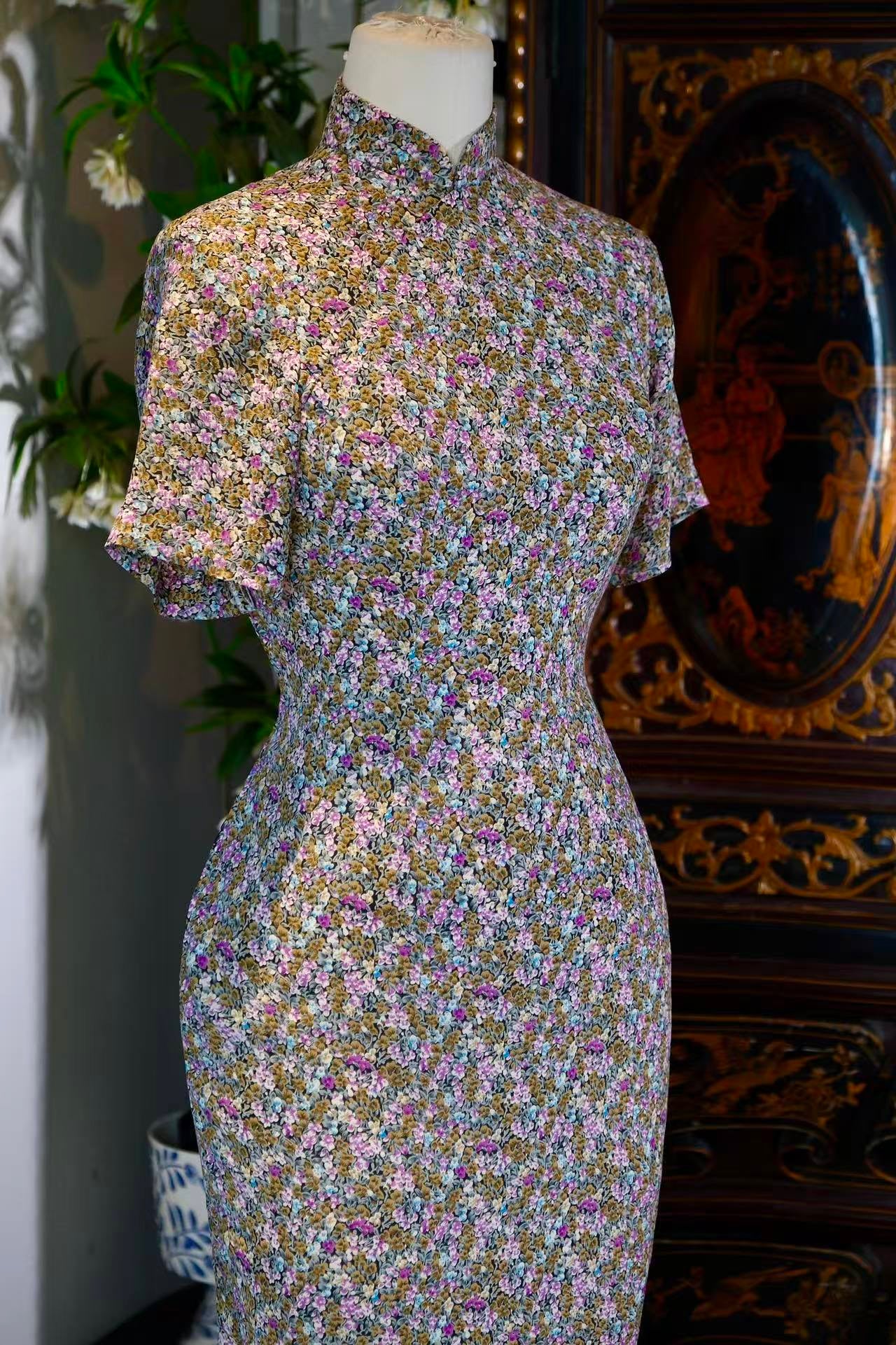
一、 图案的微观宇宙:碎花中的“万花筒”意象
这件旗袍最引人入胜之处,在于其布面上的繁复碎花图案。
- 色彩的交响:底色呈现出一种沉静的灰蓝色或灰绿色,
- 图案的隐喻:细看之下,这些花朵并非单一品种,
二、 古董衣的岁月回响:六十年代台湾的时尚侧影
这件旗袍不仅仅是一件衣服,它是一枚来自过去的时光胶囊,
- 海派遗韵与在地新生:1949年后,大量上海裁缝南下,
- 经济起飞前的优雅:六十年代的台湾,正处于经济起飞的前夕。
- 一段被遗忘的时尚史:相比于上海旗袍的盛名,
三、 引经据典:衣香鬓影间的文学意象
当我们凝视这件旗袍,仿佛能听见张爱玲在《更衣记》中的低语:“
- “花自飘零水自流”:这件旗袍上的碎花,让人联想到李清照的词。
- “一袭华美的袍”:张爱玲著名的“虱子”
四、 结语:稀缺的艺术品
在当代快时尚泛滥的今天,
它是一件可以穿在身上的艺术品,每一步摇曳,
Measurements / Size Guide:
Bust / Waist / Hips: 88/78/96 cm
Total Length: 108 cm
Detailed Description:
The most captivating aspect of this qipao lies in the intricate floral patterns across its fabric—less a simple print and more a microscopic "kaleidoscope" canvas.
A Symphony of Colors: The base presents a serene grayish-blue or grayish-green, reminiscent of misty distant mountains in a Southern Chinese rain. Upon this backdrop, tiny blossoms of magenta, pale purple, goose-yellow, and off-white scatter like stars. This palette preserves the Republican-era pursuit of elegance while integrating the lively modernism of the 1960s, serving as a visual manifestation of Eileen Chang’s "magnificent yet desolate" aesthetic.
Pattern Metaphors: Upon closer inspection, these flowers are not of a single species but an abstract mosaic of various wildflowers. This "all-over floral" composition aligns with the traditional Chinese aesthetic principle of "dense enough to stop the wind, yet sparse enough for a horse to gallop through." Within a minimal space, the layered blossoms feel like a secret garden stumbled upon in spring, brimming with vitality and rustic charm.
This qipao is more than a garment; it is a time capsule from the past, sealing the collective memory of 1960s Taiwanese society.
Shanghainese Legacy and Local Rebirth: After 1949, a large number of Shanghainese tailors migrated south, bringing exquisite "Hong Bang" craftsmanship to Taiwan. The tailoring of this piece—high collar, short sleeves (variants of ruffled or bell sleeves), and a cinched waist—perfectly inherits the essence of the Shanghai-style qipao: emphasizing the soft curves of the female silhouette. However, the choice of fabric and the style of the floral print integrate local Taiwanese aesthetic tastes, presenting a "localized" rebirth.
Elegance Before the Economic Takeoff: Taiwan in the 1960s was on the eve of an economic takeoff. People began to pursue quality of life and fashionable expression. This qipao represents the ideal image of middle-class women at the time: dignified, gentle, and possessing a zest for life. It is not as extreme in its form-fitting nature as the qipaos of the 1930s, nor as pursuit of looseness as those in the 1970s; it captures the restrained yet confident beauty of women from that era just right.
A Forgotten Fashion History: Compared to the fame of the Shanghai qipao, Taiwanese qipaos of the 1960s are often obscured by the dust of history. Yet, it was during this period that the qipao completed its metamorphosis in Taiwan from a "national dress" to "daily fashion," laying the foundation for modern design. This piece is a precious witness to that forgotten history.
Gazing at this qipao, one can almost hear Eileen Chang’s whisper in Chronicle of Changing Clothes: "To those who cannot speak, clothes are a language; what one carries with them is a pocket drama."
"Flowers Fall and Water Flows": The scattered flowers on this qipao evoke the lyrics of the Song Dynasty poet Li Qingzhao. Though small, the blossoms bloom unrestrainedly, symbolizing the resilient and independent vitality of women amidst the torrent of time. Taiwanese women of the 1960s, like the flowers on this fabric, found their own place in the gap between tradition and modernity.
"A Magnificent Robe": Chang’s famous "lice" metaphor is often misunderstood as a belittlement of the qipao; in fact, she saw the complexity of the garment as a cultural carrier. The magnificence of this qipao lies in its craft; its "lice" (or stories) lie in the years it has weathered. Every subtle sign of wear is a kiss left by time, narrating a story of beauty, memory, and inheritance.
In today’s world of ubiquitous fast fashion, a 1960s Taiwanese antique qipao like this is exceptionally precious. It is rare not only due to its limited survival but because of the cultural information and handcrafted value it carries.
It is a wearable piece of art; every swaying step is a tribute to that elegant era. It is not merely a combination of fabric and thread, but a solidified piece of history—a silent poem about beauty. To collect it is to collect a tender memory of Oriental women and the shifts of an era.