深圳溯源
Couldn't load pickup availability
衣服尺寸:
胸围/腰围/臀围:86/78/94 厘米
衣长:104 厘米
细节描述:
这件旗袍,不仅仅是一件衣物,它更像是一封来自六十年代香江的、未被拆封的情书。
岁月的低语:香江旧梦
在时尚史的长河中,20世纪60年代是旗袍的“黄金时代”。彼时的香港,东西方文化激烈碰撞又完美融合,正如张爱玲在《更衣记》中所言:“各人住在各人的衣服里。”这件产自香港的古董旗袍,正是那个流金岁月的见证者。
它诞生于一个手工艺尚未被工业化完全吞噬的年代。你可以想象,在半个世纪前的香港裁缝铺里,一位老练的裁缝师傅,对着灯光细细审视这块珍贵的面料,手中的剪刀咔嚓作响,每一针每一线都倾注了对美的极致追求。它曾或许穿行于中环的写字楼,或许摇曳在湾仔的晚宴上,如今,它带着岁月的包浆,静默地诉说着那个时代的优雅与从容。
艺术风格与稀缺性:低调的奢华
这件旗袍最迷人之处,在于其面料的“隐秀”之美。
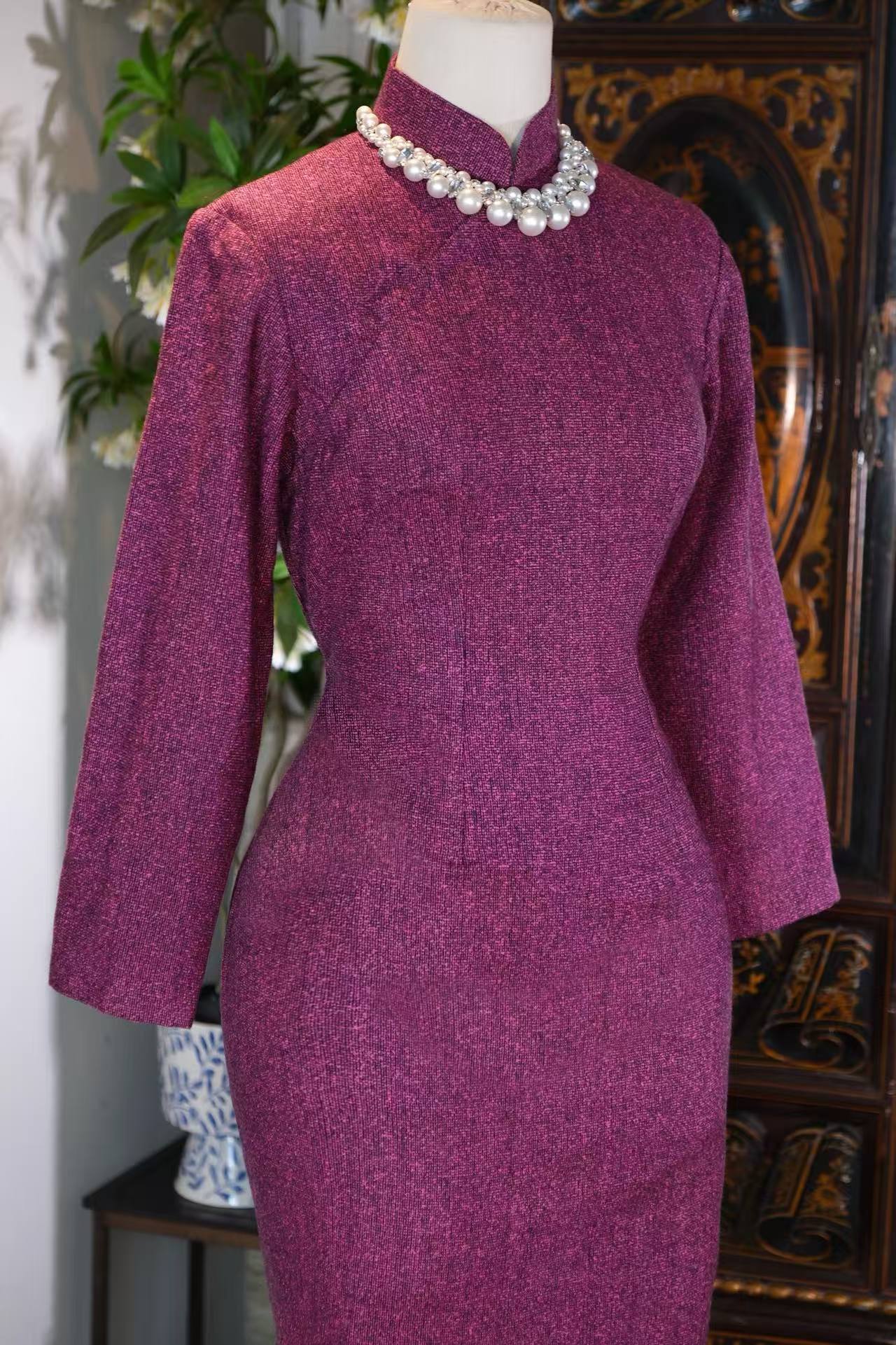
- 花呢羊毛的肌理: 不同于常见的丝绸锦缎,这件旗袍选用了极为考究的花呢羊毛材质。在60年代,羊毛是相对昂贵且难以驾驭的面料,它要求穿着者保持挺拔的身姿。面料表面呈现出一种紫红色的混色花呢纹理,远看如暮色中的紫罗兰,近看则有细密的经纬交织,闪烁着微光。这种面料不仅保暖,更赋予旗袍一种类似西方高级定制套装的挺括感与厚重感。
- 剪裁的雕塑感: 它的剪裁极具立体感,收腰设计精准地勾勒出女性的S型曲线,既保留了东方的含蓄,又大胆吸收了西方的立体剪裁美学。领口是经典的港工领,高度适中,既修饰颈部线条,又不失端庄。
- 稀缺性: 羊毛材质的旗袍极难保存,容易虫蛀或变形。能历经半个世纪依然保持版型挺括、色泽如新,实属凤毛麟角。这种将粗花呢的质朴与旗袍的精致结合的尝试,在当时的成衣中也属于先锋之作。
图案与细节:无画处皆成妙境
这件旗袍并未采用传统的具象花卉或龙凤纹样,而是选择了一种“抽象的肌理美”。
- 色彩: 这种紫红(Magenta/Purple) 是一种非常显白的颜色,带有一种神秘而高贵的气质。它不是刺眼的大红,也不是沉闷的深紫,而是一种在光影下会流动的色泽。
- 纹理: 所谓的“图案”,其实是由羊毛纱线本身的深浅交织而成的微缩几何纹理。这种“无图案”的设计,恰恰是最高级的图案。它如同水墨画中的留白,给人以无限的遐想空间。这种面料在光线下会呈现出一种磨砂般的哑光质感,低调中透着奢华,正如古人所云:“大音希声,大象无形”。
结语
这不仅仅是一件衣服,这是一段可以被触摸的历史。
当你穿上它,你穿上的不是布料,而是那个年代香港女性的独立与风情。它适合搭配一条温润的珍珠项链(如图中所示),配上一双黑色丝绒高跟鞋,在某个复古的晚宴上,你就是那个从旧时光里走出来的女主角。
“衣不如新,人不如故。”但这件旧衣,却能让新人胜却人间无数。
Measurements / Size Guide:
Bust / Waist / Hips: 86/78/94 cm
Total Length: 104 cm
Detailed Description:
This qipao is more than just a garment; it is an unopened love letter from 1960s Hong Kong.
In the vast river of fashion history, the 1960s were the "Golden Age" of the qipao. At that time, Hong Kong was a place where Eastern and Western cultures collided fiercely yet merged perfectly. As Eileen Chang wrote in Notes on Fashion: "Each person lives in their own clothes." This antique qipao, made in Hong Kong, is a witness to those gilded years.
It was born in an era before craftsmanship was completely swallowed by industrialization. One can imagine, in a Hong Kong tailor shop half a century ago, an experienced master tailor meticulously examining this precious fabric under the light. With the rhythmic snip of scissors, every stitch and thread was poured with an ultimate pursuit of beauty. It might have once traversed the office buildings of Central or swayed through a dinner party in Wan Chai. Today, carrying the patina of time, it silently speaks of the elegance and composure of that era.
The most enchanting aspect of this qipao lies in the "hidden beauty" of its fabric.
The Texture of Wool Tweed: Unlike the common silks and brocades, this qipao utilizes an extremely sophisticated wool tweed material. In the 1960s, wool was a relatively expensive and difficult fabric to master, requiring the wearer to maintain an upright and elegant posture. The surface presents a purplish-red mixed tweed texture—resembling violets in the twilight from afar, while revealing intricate interlacing of warp and weft up close, shimmering with a faint light. This fabric not only provides warmth but also endows the qipao with the crisp structure and weightiness characteristic of Western Haute Couture suits.
Sculptural Tailoring: Its cut is highly three-dimensional. The cinched waist precisely outlines a woman’s S-curve, preserving Oriental modesty while boldly absorbing the Western aesthetic of 3D tailoring. The collar is a classic Hong Kong-style standing collar of moderate height, which both elongates the neckline and maintains dignity.
Scarcity: Wool qipaos are notoriously difficult to preserve, as they are prone to moth damage or losing their shape. For one to remain as crisp in silhouette and vibrant in color as if it were new after half a century is truly rare. This attempt to combine the rusticity of tweed with the refinement of the qipao was considered a pioneering work in ready-to-wear at the time.
This qipao does not employ traditional concrete floral or dragon-and-phoenix motifs; instead, it chooses an "abstract textural beauty."
Color: This purplish-red (Magenta/Purple) is a very flattering color that carries a mysterious and noble temperament. It is neither a jarring bright red nor a dull dark purple, but a hue that seems to flow under light and shadow.
Texture: The so-called "pattern" is actually a microscopic geometric texture formed by the varying depths of the wool yarns themselves. This "patternless" design is, in fact, the most sophisticated pattern of all. It is like the "white space" in ink wash painting, offering infinite room for imagination. Under the light, the fabric presents a frosted, matte texture—luxury revealed in low profile, echoing the ancient proverb: "The greatest sound is hard to hear; the greatest image has no form."
This is not just a piece of clothing; it is a segment of history that can be touched. When you wear it, you are not donning fabric, but the independence and charm of Hong Kong women from that era. It is perfectly paired with a warm string of pearls (as shown in the image) and a pair of black velvet high heels. At a vintage dinner party, you become the leading lady stepping out of time.
"Clothes are better when new, but people are better when old." Yet, this old garment allows a "new person" to outshine all others in the world.