深圳溯源
Couldn't load pickup availability
The structural foundation of this breathtaking qipao suit resides in its magnificent material canvas—an aesthetic triumph balancing absolute textile purity with high-contrast artisan detailing:
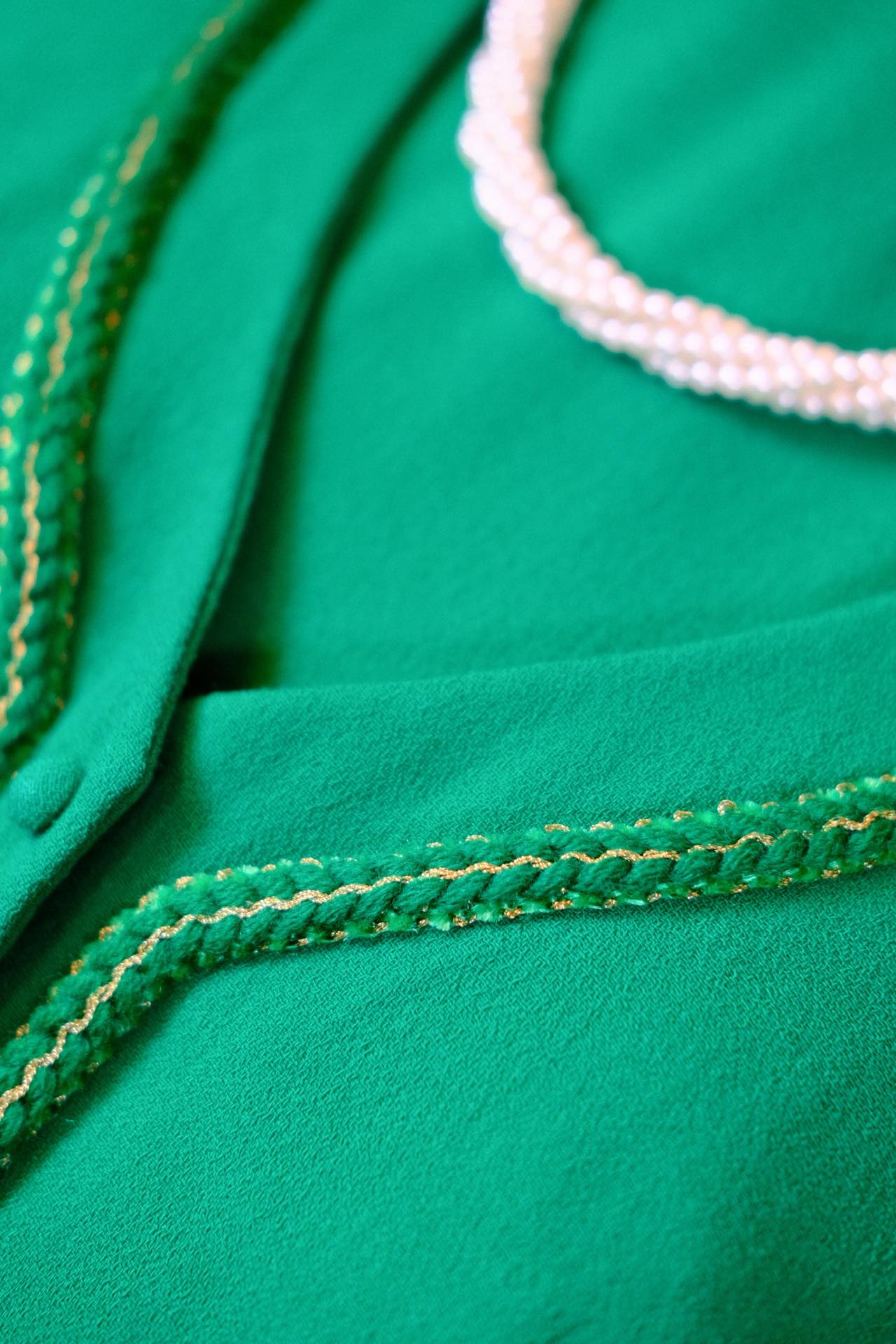
The Chromatic Depth of French Wool: The entire ensemble is crafted from premium, worsted pure wool imported from France during the mid-1960s. The coloration is an exceptionally saturated, deep "emerald" or "peacock green"—evoking the quiet serenity of a still pool or the warm luminescence of heirloom jade. This pure wool fabrication grants the garment an immaculate, natural drape and outstanding thermal performance, while its delicate surface loft catches directional light to emit a low-glare, high-end matte luxury.
The Fluid Order of Gilded Trim: Breaking completely away from traditional frog closures or dense pictorial embroidery, the jacket's front placket is bordered with specialized, hand-woven metallic gold lace. This structural trim is intricately braided from premium gold wire and silk filaments, forming a dimensional, sculptural texture reminiscent of a wheat stalk or a legacy chain-link weave. The brilliant flash of gold against the heavy, contemplative green foundation establishes a powerful visual tension—resembling golden sand rippling across emerald waves—shattering the monochromatic plane while imbuing the margins with a moving, geometric order.
The structural framework of this ensemble comprises an integrated sleeveless, standing-collar qipao paired with a coordinating V-neck jacket—representing the absolute pinnacle of "East meets West" design experimentation in 1960s Hong Kong custom tailoring:
The Foundation Layer: The Minimalist Qipao: The interior gown utilizes a sleek, sleeveless blueprint engineered with an upper shoulder opening (Jiankai). It features an impeccably crisp, upright mandarin collar completely stripped of traditional decorative fasteners. This ultra-clean drafting methodology forces the visual focus entirely onto the premium texture of the French wool, echoing the mid-century socio-cultural shifts where independent intellectual women sought streamlined, professional utility.
The Outer Layer: The Visual Framing Blazer: The outerwear coat adopts a tailored V-neck, center-front opening architecture designed to frame the posture with absolute geometric precision. This open neckline beautifully showcases the inner qipao's standing collar and a classic strand of pearls. The hand-woven gold lace trim runs continuously down the V-line parameters, introducing a powerful elongating optical effect that narrows the waist plane and lends a sharp, dignified verticality to the wearer's stance.
The custodian of this artifact, Ms. Woo, operated as a co-director of a major Canadian enterprise, standing as a definitive pioneer within the early jet-age network of global luxury procurement and international lifestyle management.
During the 1960s, elite overseas Chinese entrepreneurs like Ms. Woo engaged in a highly specialized sartorial lifestyle: making regular sourcing journeys to European fashion capitals (specifically France and Italy) to personally secure advanced textile innovations, and subsequently routing these precious volumes back to Hong Kong where legacy master tailors transformed the raw yardage into bespoke, custom silhouettes.
This exact methodology functions as a captivating micro-history of Chinese capital and cultural mobility during the mid-century era. France provided the raw avant-garde material luxury, old-world Hong Kong exported the elite artisan edge-work, and Canada operated as the final executive terminal—with the hybrid qipao serving as the vital material bridge unifying all three landscapes. As the sociologist Georg Simmel observed, "Fashion is a symbol of class division." Ms. Woo’s selection operates beautifully as a concrete manifestation of personal refinement and cultural authority on the global stage.
The modern rarity of this two-piece set extends far beyond its raw material worth or its unique mineral aesthetics; it stands as a pristine archive of a highly specialized, completely vanished sartorial ecosystem:
The Extinction of Vintage Dye Formulas: The 1960s French worsted wool is an absolute archival deadstock. The specific dye saturation levels, chemical compositions, and low-speed weaving methods used to achieve this exact depth of emerald green are completely impossible to replicate with modern industrialized textile manufacturing.
The Lost Art of Hand-Application: The gold metallic lace tracing the outerwear margins required immense technical skill, hand-sewn stitch-by-stitch by senior craftsmen to guarantee that the heavy wool fabric and the rigid gold wire maintained perfect structural equilibrium. In today’s landscape of mass-mechanized garment assembly lines, this resource-heavy, time-intensive "one person, one pattern" artisan custom tailoring model has permanently dissolved, marking this suit as a priceless, living fossil of Hong Kong's golden era.