深圳溯源
Couldn't load pickup availability
如果说上一套织银旗袍是Woo女士在觥筹交错间的华彩乐章,
一、视觉的触感:大地色系与建筑感的剪裁
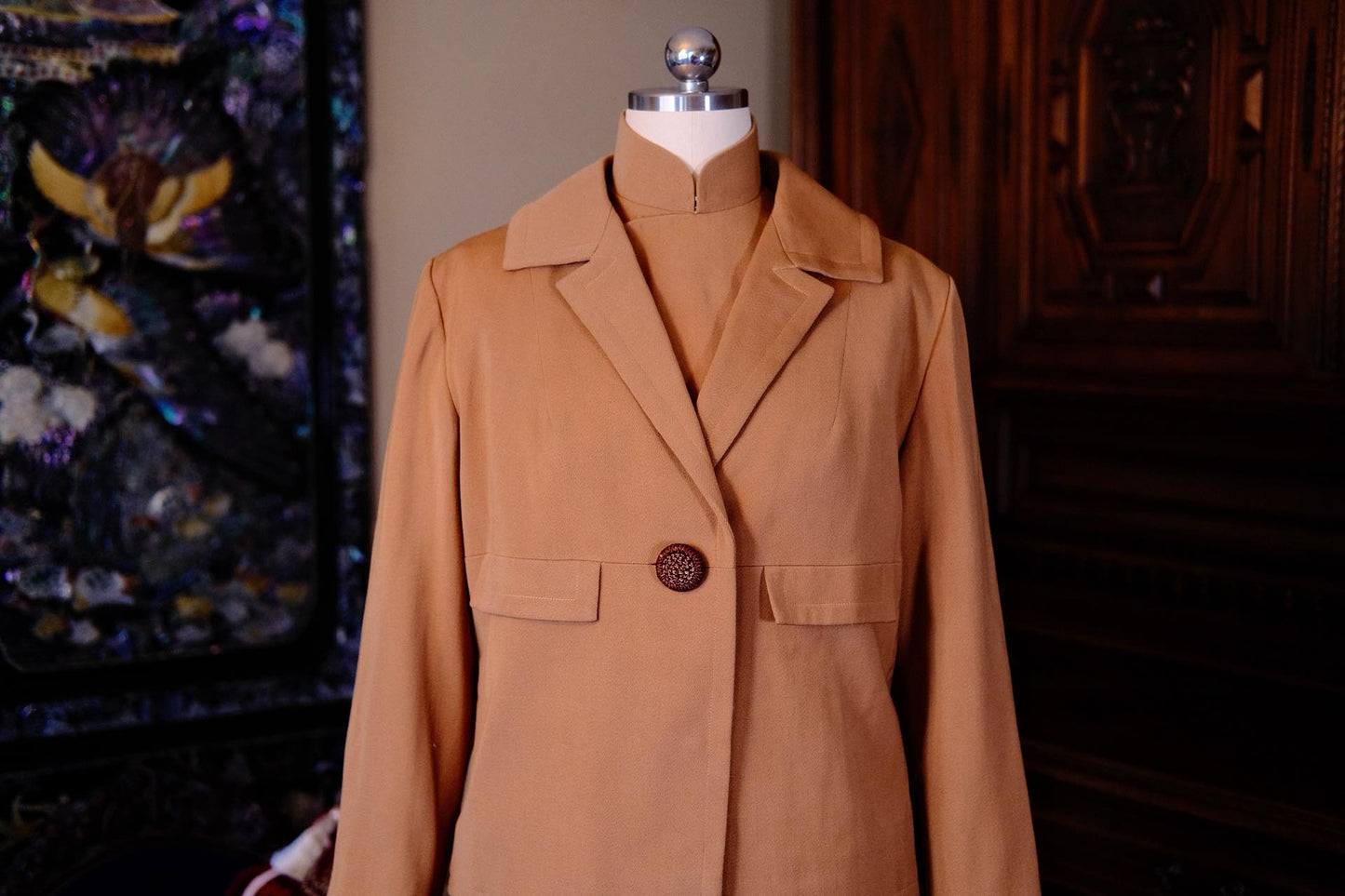
这套套装通体呈现出一种温暖而醇厚的“驼色”。在色彩心理学中,
面料采用了经典的英国进口羊毛,
设计的精妙之处在于“中西合璧”的结构:
- 外套:采用了类似“吸烟装”的改良版剪裁。
- 点睛之笔——纽扣:外套正中那一枚深褐色的编织大纽扣,
二、衣以载道:从苏格兰高地到维多利亚港
这套衣服延续了Woo女士一贯的“环球定制”模式,
六十年代,随着女性社会地位的提升,成衣工业蓬勃发展,
Woo女士将这承载着英伦风骨的面料带回香港,
我们可以想象,在六十年代多伦多的某个深秋午后,
三、稀缺性:不可复制的时代孤品
在快时尚泛滥的今天,这样一套古董套装的稀缺性不言而喻。
首先是面料的不可再生性。六十年代英国进口的原产羊毛面料,
其次是工艺的绝版。香港老裁缝那种“看人下菜碟”的定制手艺,
这套衣服没有品牌的标签,因为它不需要。
If the previous silver-woven qipao ensemble was a brilliant movement in Ms. Woo’s symphony of social galas, then this 1960s camel-toned qipao suit is her serene and unyielding "armor" for the boardroom. Crafted from premium wool textile imported from the United Kingdom and custom-tailored in Hong Kong, this ensemble interprets the "New Modern" aesthetic of mid-century independent women with an understated yet resilient posture.
The entire ensemble is rendered in a warm, mellow "camel" tone. In color psychology, camel symbolizes the earth, stability, and intellect—standing as the most sophisticated neutral shade for the autumn and winter seasons. It avoids the solemnity of black and the ostentatiousness of bright pigments, carrying a natural aura of "quiet luxury."
The fabric features classic British imported wool. Close-up inspection reveals its dense twill texture. This textile is not only structured and insulating but also possesses an excellent drape that perfectly supports the architectural silhouette of the garment.
The ingenuity of the design lies in its cross-cultural structural synthesis:
The Jacket: It adopts a modified tailoring reminiscent of the classic tuxedo or Le Smoking jacket. The broad lapels and sharp shoulder lines grant the wearer a sense of power and executive presence, while the nipped-in waist and hip-length cut preserve the soft contours of feminine grace.
The Focal Point — The Button: Positioned at the center of the jacket is a single, large, dark-brown braided button that resembles an antique medallion. Utilizing a complex rope-knot braiding technique, its coarse and heavy texture creates a magnificent contrast against the fine, smooth wool surface. This interplay of "rough and smooth," "deep and light," disrupts the monotony of the solid camel canvas, serving as the visual anchor for the entire outfit.
This attire continues Ms. Woo’s signature "global bespoke" practice, yet the cultural context behind it runs even deeper.
In the 1960s, alongside the elevation of women’s social status, the ready-to-wear industry boomed. However, discerning women like Ms. Woo adamantly adhered to the philosophy of "fabric supreme." The British wool she selected represents the pride of the UK’s textile heritage—a symbol of rigor, durability, and aristocratic understatement.
Bringing this fabric, steeped in British heritage, back to Hong Kong for bespoke tailoring was an act of cultural "re-creation."
We can imagine a late autumn afternoon in 1960s Toronto, with Ms. Woo wearing this suit to chair a supermarket board meeting. The jacket’s sharp tailoring afforded her an air of capability and decisiveness at the negotiating table, while the intricate braided button and the subtle glimpse of an Eastern collar quietly asserted her cultural roots. It is more than clothing; it was her armor for forging an identity in diaspora, and an elegant proof of her ability to navigate Western and Eastern spheres with absolute fluidity.
In an age dominated by fast fashion, the scarcity of such a vintage tailored ensemble cannot be overstated:
Non-Renewable Materiality: The yarn count, dyeing formulations, and weaving density of 1960s British-loomed wool bear the specific industrial imprint of that decade—characteristics that modern commercial mills cannot replicate.
The Vanishing Craft: The bespoke mastery of old Hong Kong tailors, who drafted "one pattern per individual" and seamlessly fused Western 3D draping with Eastern flat-pattern cutting, has steadily declined in the face of mechanized assembly lines.
This suit carries no designer label because it requires none. Ms. Woo’s personal taste is its brand, and the natural patina of time is its proof of authenticity. It stands in quiet repose, its camel tones as warm as ever, waiting for its next keeper to appreciate its depth and continue its narrative.