深圳溯源
Couldn't load pickup availability
这件六十年代香港产的古董旗袍,
一、面料与纹样:油画真丝的视觉盛宴
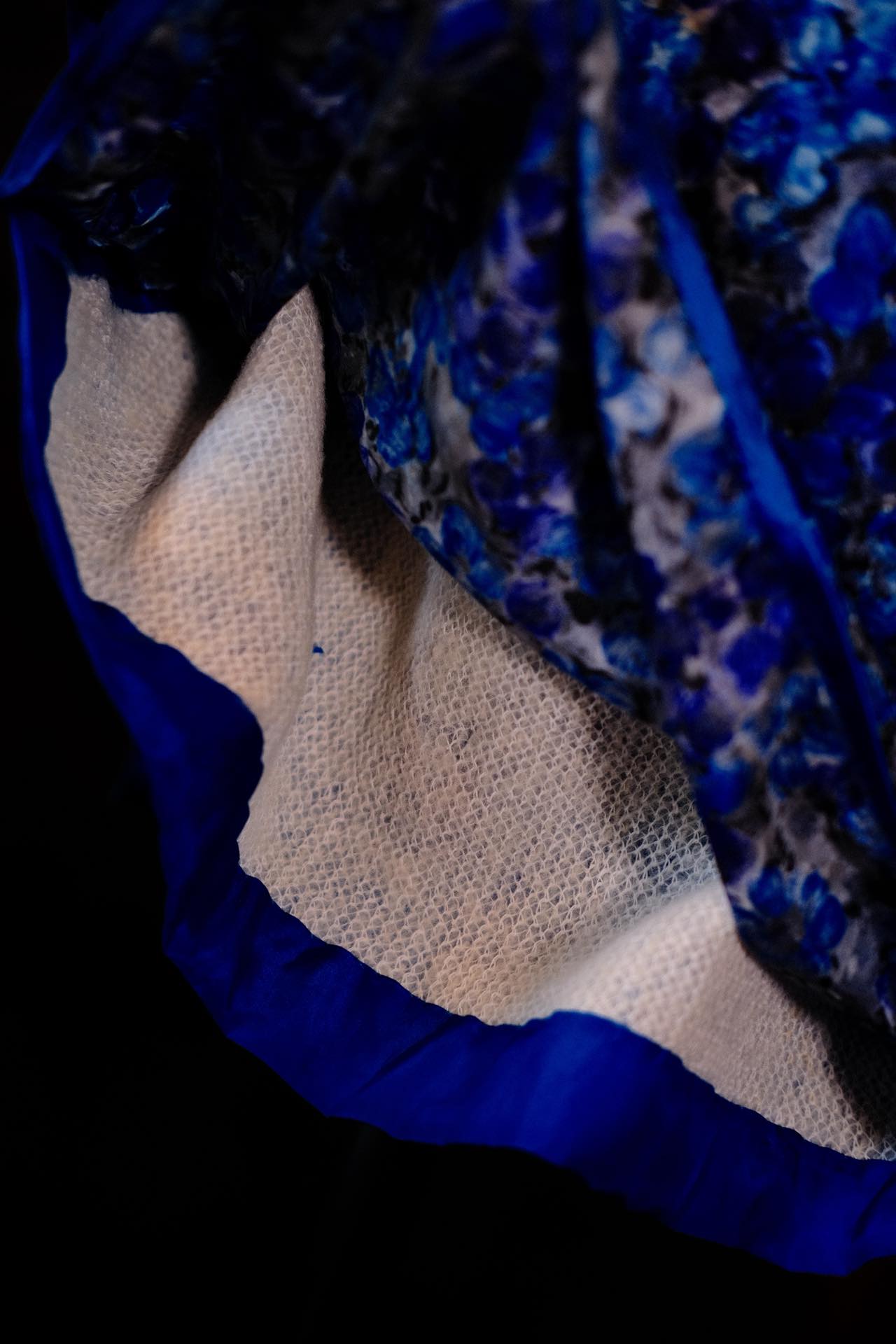
这件旗袍最惊艳的,是它那如油画般浓郁的色彩与灵动的印花。
- 色彩:以深邃的宝蓝色为底色,点缀着深浅不一的蓝紫色、
- 面料:选用的是英国进口真丝印花面料,触感丝滑细腻,
- 纹样:衣身布满密集的蓝紫色花卉印花,花朵形态各异,
二、工艺与细节:线香绲的精致考究
这件旗袍的工艺同样值得称道。领口、
三、点睛之笔:珍珠项链的优雅平衡
这件旗袍搭配了一串双层天然淡水珍珠项链,
四、衣香鬓影:Woo女士的“绮梦时光”
这件旗袍,是Woo女士衣橱中最具“艺术感”的一件。
她是一位懂得用色彩诠释生活的女性。在商场上,她雷厉风行;
这件旗袍,不仅仅是一件衣服,它是Woo女士生活态度的写照——
This 1960s antique qipao, tailored in Hong Kong, represents the most vibrant, richly saturated chapter within Ms. Woo’s wardrobe anthology. Shedding the understated reserve of the previously detailed silk velvets, it utilizes a premium, oil-painting style floral silk imported from the United Kingdom, paired with exquisite "incense-stick" piped edge-work (Xianxianggundao). This piece achieves a flawless synthesis of classical Eastern form and Western artistic romance—as if an entire spring sea of violet and azure blossoms has been captured and draped over the posture.
The most breathtaking dimension of this qipao lies in its painterly, heavy pigmentation and the fluid, kinetic rhythm of its print:
The Depth of Blue: Set against an abyssal sapphire-blue base, the garment is punctuated by multi-layered blossoms in shifting shades of deep violet, periwinkle, and pale lavender. Evoking the liquid light of Claude Monet's Water Lilies, the color layers reveal a dreamlike luminescence under changing light. This audacious, painterly juxtaposition of tones was cutting-edge for 1960s Hong Kong, tracking Ms. Woo’s highly individual design literacy.
The Material Choice: The gown is sculpted from premium silk print yardage imported from the United Kingdom, offering an exceptionally smooth, delicate hand-feel paired with a weighted, fluid drape. The organic sheen of the silk acts in perfect symphony with the oil-painting aesthetic, turning the silhouette into a kinetic work of fine art.
The Composition: The entire body of the gown is blanketed in a dense configuration of blue and purple florals. The blossoms shift across various stages of bloom—some bursting open, others held tightly in bud—as if gently swaying in a localized breeze. This painterly layout shatters the quiet minimalism of traditional everyday qipaos, injecting a sweeping layer of romance and structural vitality.
The internal and edge engineering of this garment is equally masterful. The mandarin collar, the asymmetrical front placket, and the cuffs are entirely structured through the "Incense-Stick Piping" (Xianxianggun) technique. This artisan method utilizes narrow, hair-thin piped bindings to sharply trace and stabilize the edges, ensuring the contours of the qipao remain exceptionally crisp, neat, and highly defined. Furthermore, a specialized light interlining or quilted padding layer guarantees that while the gown retains its rigid, proud architecture, it introduces a subtle warmth and physical insulation ideal for autumn and spring wear.
This expressive qipao is styled with an integrated double-strand natural freshwater pearl necklace, establishing a striking contrast against the heavy saturation of the blue and purple silk print. The soft, milky luminescence of the pearls beautifully anchors the intense vitality of the textile—preserving the rich luxury of the presentation while introducing a necessary counterpoint of soft feminine grace and elite, high-society composure.
This qipao stands as the specific artifact that commands the most profound "artistic presence" within Ms. Woo's entire archive.
She was a woman who mastered the art of interpreting the spectrum of life through color. In the highly competitive corporate boardroom, she was iron-willed and decisive; yet in private life, she remained as romantic and nuanced as this printed silk canvas. One can easily picture an autumn evening, with Ms. Woo wearing this violet-and-blue silhouette paired with her signature double-strand pearls, seated near a carved wooden window with a glass of red wine. As the natural luster of the silk plays against the warm glow of the pearls, the pioneering titan of commerce dissolves into an elegant woman completely immersed in an artistic world of her own curation.
This qipao is far more than an attire; it is a profound manifestation of Ms. Woo’s philosophy of living—bold yet uncompromised by ostentation, magnificent yet utterly devoid of gaudiness. It flows quietly through the passage of time like a silent poem, permanently recording the romance and elegance of a golden era.