深圳溯源
Couldn't load pickup availability
衣服尺寸:
胸围/腰围/臀围:94/78/102 厘米
衣长:110 厘米
细节描述:
衣上观花:错视与浮雕的交响
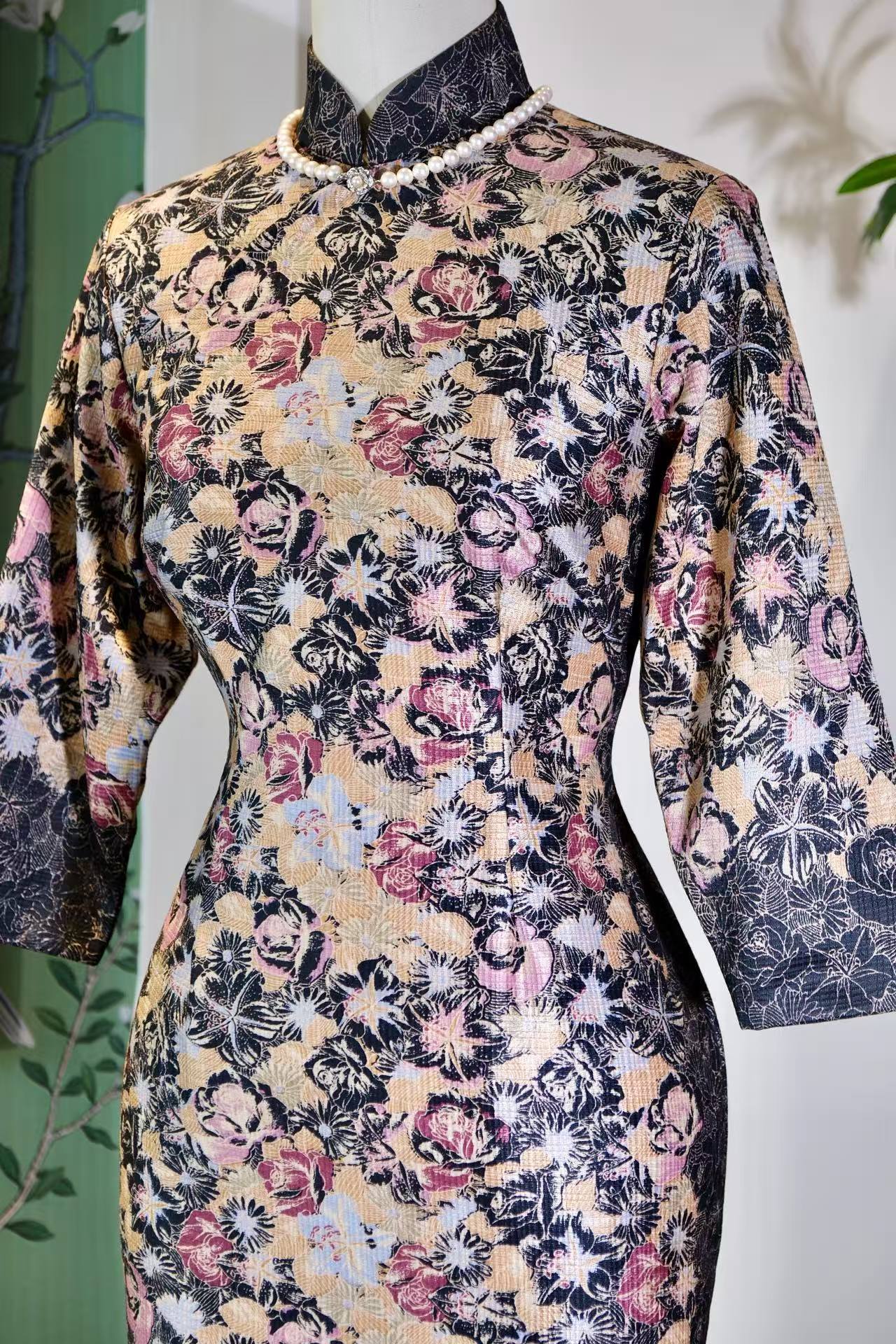
此件旗袍最摄人心魄之处,在于其面料工艺之精妙,堪称上世纪六十年代纺织工业美学的“活化石”。
乍看之下,衣身似乎铺陈着繁复的传统花卉,但若细究其纹理,便会发现其底纹并非素绢,而是隐隐透着几何格纹的秩序感。这种将规整的西式格纹与写意的东方花卉相结合的设计,在当时是一种极为先锋的“中西合璧”。
更令人称奇的是其“浮雕”质感。面料表面并非平滑如镜,而是通过特殊的提花或压纹工艺,使花瓣与枝叶呈现出微微凸起的肌理。这种工艺使得光线在衣褶间流转时,产生了丰富的明暗变化,如同浮雕艺术般立体。在视觉上,它利用错视画法,让平面的布料拥有了深邃的空间感——黑色的枝蔓如墨线勾勒,粉紫与鹅黄的花朵在格纹的经纬间恣意盛放,既有巴洛克式的繁复堆叠,又不失东方水墨的晕染意趣。
宝岛孤本:六十年代的流金岁月
这件旗袍诞生于上世纪六十年代的台湾,那是一个特殊的时空节点。彼时,传统海派旗袍的余韵与西方现代主义的思潮在宝岛交汇。
- 时代的剪影:六十年代的台湾,社会风气渐开,女性意识觉醒。这件旗袍保留了传统的高立领与侧襟,象征着对传统的坚守;但其修身的剪裁与大胆的印花面料,则宣示着对现代时尚的拥抱。它不再是深闺中的旧物,而是那个时代摩登女性出入社交场合的战袍。
引经据典:艺术风格的注脚
若要为这件旗袍寻找艺术注脚,不妨借用宗白华先生在《美学散步》中所言:“错彩镂金,雕缋满眼。”
- “错彩镂金”之美:不同于宋瓷的“初发芙蓉”,这件旗袍展现的是一种极致的装饰主义。黑色的底色压住了阵脚,使得粉、紫、黄等亮色不至于轻浮,反而显得沉稳而贵气。这种配色深得中国传统漆器与织锦的精髓——黑地彩绘,庄重而华丽。
- “衣锦尚絅”的现代演绎:《诗经》云“衣锦尚絅”,意为穿着华美的衣服要罩上麻纱,含蓄内敛。但这件旗袍反其道而行之,它毫不掩饰面料的奢华与纹理的张扬,这正是六十年代那种自信、外放的时代精神的写照。它像是一首现代诗,在格律(格纹)中寻求自由(花卉)的奔放。
结语
这件旗袍,不仅仅是一件衣物,它是一段被封存的时光。当你指尖划过那浮雕般的花纹,你触碰的是六十年代宝岛的微风,是那个时代女性摇曳生姿的背影,更是东西方审美碰撞出的绚烂火花。
藏品级孤品,静候知音,共续旧梦。
Measurements / Size Guide:
Bust / Waist / Hips: 94/78/102 cm
Total Length: 110 cm
Detailed Description:
The most soul-stirring aspect of this cheongsam (qipao) lies in the exquisite craftsmanship of its fabric, a "living fossil" of the textile industrial aesthetics from the 1960s.
At first glance, the garment seems to be adorned with a profusion of traditional blossoms. However, a closer inspection reveals that the base is not plain silk, but possesses an underlying sense of order defined by geometric lattices. This design, merging structured Western-style checks with expressive Oriental florals, was a pioneering example of "East-meets-West" at the time.
Even more remarkable is its "relief" texture. The fabric surface is not smooth as a mirror; instead, through specialized jacquard or embossing techniques, the petals and leaves present a subtly raised grain. This allows light to ripple across the folds, creating rich interplay of light and shadow, much like the three-dimensionality of relief art. Visually, it employs trompe-l'œil (optical illusion) to grant the flat cloth a profound sense of space—black vines appear as if sketched in ink, while pinkish-purple and primrose-yellow flowers bloom willfully amidst the warp and weft of the lattices. It possesses the intricate layering of the Baroque, yet retains the ink-wash charm of the Orient.
This cheongsam was born in 1960s Taiwan, a unique intersection of space and time. During this period, the lingering echoes of traditional Shanghai-style qipaos converged with Western modernist thought on the island.
A Silhouette of the Era: In 1960s Taiwan, social mores were gradually opening, and female consciousness was awakening. This garment retains the traditional high standing collar and side bodice, symbolizing a persistence of heritage; however, its slim tailoring and bold printed fabric declare an embrace of modern fashion. It was no longer an artifact of the inner chambers, but the "battle dress" for the modern woman of that era appearing in social circles.
To find an artistic footnote for this qipao, one might borrow from Mr. Zong Baihua’s Aesthetic Wanderings: "Intricate colors and carved gold, a feast of patterns for the eyes."
The Beauty of "Intricate Colors": Unlike the "newly bloomed lotus" simplicity of Song Dynasty ceramics, this cheongsam showcases a peak of Ornamentalism. The black base "anchors" the composition, preventing the vibrant pinks, purples, and yellows from appearing frivolous, instead granting them a steady and noble air. This palette draws from the essence of traditional Chinese lacquerware and brocade—polychrome painting on a black ground, solemn and magnificent.
A Modern Interpretation of "Yi Jin Shang Jiong": The Book of Songs mentions "wearing brocade covered by a plain wrap" (Yi Jin Shang Jiong), suggesting an understated and reserved elegance. However, this cheongsam does the opposite; it makes no secret of the fabric’s luxury or the patterns’ exuberance. This is a vivid reflection of the confident, extroverted spirit of the 1960s. It is like a modern poem, seeking the wild freedom (the flowers) within the meter (the lattices).
This cheongsam is more than a garment; it is a segment of frozen time. As your fingertips glide over the relief-like patterns, you touch the breeze of 1960s Taiwan, the swaying silhouettes of the era's women, and the brilliant sparks ignited by the collision of Eastern and Western aesthetics.
A museum-grade unique piece, awaiting a kindred spirit to continue this vintage dream.