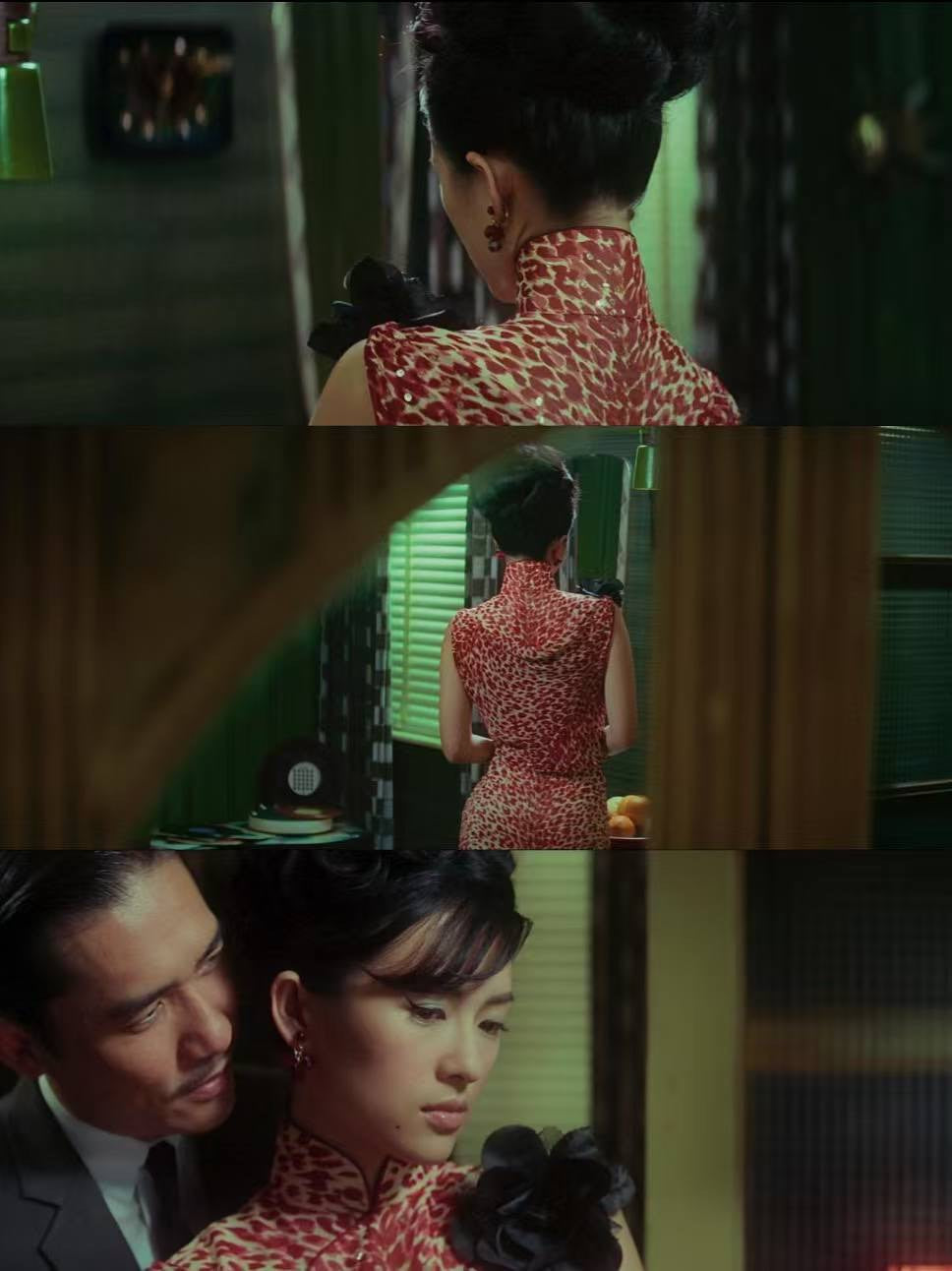
分享一件上世纪六十年代香港产豹纹旗袍:印在丝绸上的东方野性史诗。
当王家卫镜头下章子怡在《2046》中曳过豹纹旗袍的背影,与这件香港古董旗袍在时空褶皱里相遇,我们方觉:豹纹从来不是简单的斑点,而是东方美学与野性现代性博弈的活化石。上世纪六十年代的香港,正处在殖民文化与本土意识的撕扯中,这件旗袍以丝绸为画布,将非洲草原的野性基因,嫁接到旗袍这枚东方符码的骨血里——棕褐与靛蓝的斑点,如《楚辞》中“ 玄黄” 的意象,在米白底色上炸裂成流动的诗行。
它的印花工艺藏着香港制衣业的黄金时代密码:彼时香港的染坊尚能以植物染剂调出这般层次——棕斑深如岭南老岩茶的茶褐,靛点透似青花瓷的幽蓝,每一处晕染都带着手作的呼吸感。这与《2046》中章子怡那件旗袍的工业印染截然不同:后者是电影美术的符号化呈现,而这件古董品,则是真实历史的物质躯壳——香港作为“东方好莱坞”的浮世绘,在纤维经纬间重现。
从艺术史维度看,豹纹在六十年代的风靡,恰是东方对西方现代性的反向诠释。西方语境中,豹纹是“野性”的代名词;而在这件旗袍上,它却被收束进旗袍的立领、斜襟、开衩的规制里,形成“野性与规训”的张力美学。正如《礼记·玉藻》所言“ 衣必整洁,带必端正”,东方美学向来以“度”衡万物,即便是狂放的豹纹,也被纳入“合体而不紧缚”的旗袍廓形中,恰似《诗经》中“执子之手,与子偕老”的绵长韵致——野性终归要落在人间烟火里。
更稀缺的是,它见证了香港旗袍最后的黄金时代。六十年代后,随着成衣工业的兴起,手工印花旗袍逐渐式微,而这件保存完好的孤品,其面料的柔滑、图案的完整,都让它成为香港制衣业“手工时代落幕”的见证者。当我们凝视它,仿佛能听见重庆大厦的霓虹与檀香山戏院的粤剧,在斑点间交织成一声叹息:那些消逝的,终将以美学的形态归来。
若说《2046》的豹纹旗袍是王家卫写给过去的挽歌,这件香港古董则是时光留给我们的密码——穿它的人,穿的不是潮流,是半部东方现代史在丝绸上的褶皱。
🐆 An Oriental Epic of Wildness Printed on Silk: A Vintage 1960s Hong Kong Leopard Print Cheongsam
When Zhang Ziyi’s silhouette, gliding in a leopard print cheongsam in Wong Kar-wai’s 2046, meets this vintage Hong Kong robe in the folds of time and space, we realize: the leopard pattern is never just a simple spot; it is a living fossil of the contest between Oriental aesthetics and savage modernity. Hong Kong in the 1960s was grappling with the tension between colonial culture and local consciousness. This cheongsam uses silk as its canvas, grafting the wild genes of the African savanna onto the very bone and blood of the cheongsam, an Eastern signifier. The brown and indigo spots, like the imagery of "black and yellow" (玄黄) in the Songs of Chu, explode into flowing poetic lines on the off-white base.
Its printing process holds the code to the Golden Age of Hong Kong’s garment industry: at that time, Hong Kong dye houses could still achieve such layering using vegetable dyes—the brown spots are as deep as the aged black tea (老岩茶) of Lingnan, and the indigo dots are as translucent as the deep blue of blue-and-white porcelain. Every blended area carries the breath of handcraft. This is distinctly different from the industrial printing on Zhang Ziyi’s cheongsam in 2046: the latter is a symbolic representation by cinematic art direction, while this antique piece is the material shell of genuine history—Hong Kong's ukiyo-e as the "Oriental Hollywood," reborn in the warp and weft of the fibers.
From an art history perspective, the popularity of the leopard print in the sixties was an Oriental counter-interpretation of Western modernity. In the Western context, leopard print is synonymous with "wildness"; yet, on this cheongsam, it is restrained within the rules of the cheongsam’s stand collar, diagonal closure, and high slit, creating an aesthetic tension between "wildness and discipline." As stated in the Classic of Rites: Yu Zao (玉藻), "Clothes must be neat, and the belt must be straight." Oriental aesthetics have always measured all things by "moderation" (du), and even the flamboyant leopard print is contained within the "fitted but not tight" cheongsam silhouette, much like the enduring charm of "Holding your hand, growing old with you" from the Classic of Poetry—wildness must ultimately settle into the human world.
Even rarer, it witnesses the final Golden Age of the Hong Kong cheongsam. After the sixties, with the rise of the ready-to-wear industry, the hand-printed cheongsam gradually declined. This well-preserved singular piece, with the smoothness of its fabric and the completeness of its pattern, stands as a witness to the "end of the manual era" in Hong Kong's garment industry. When we gaze upon it, we can almost hear the neon lights of the Chungking Mansions and the Cantonese opera of the Honolulu Theatre interweaving in its spots into a sigh: that which vanished will eventually return in the form of aesthetics.
If the leopard print cheongsam in 2046 is Wong Kar-wai’s elegy to the past, this Hong Kong antique is the cipher left to us by time—the person who wears it wears not a trend, but half an Oriental modern history in the folds of the silk.