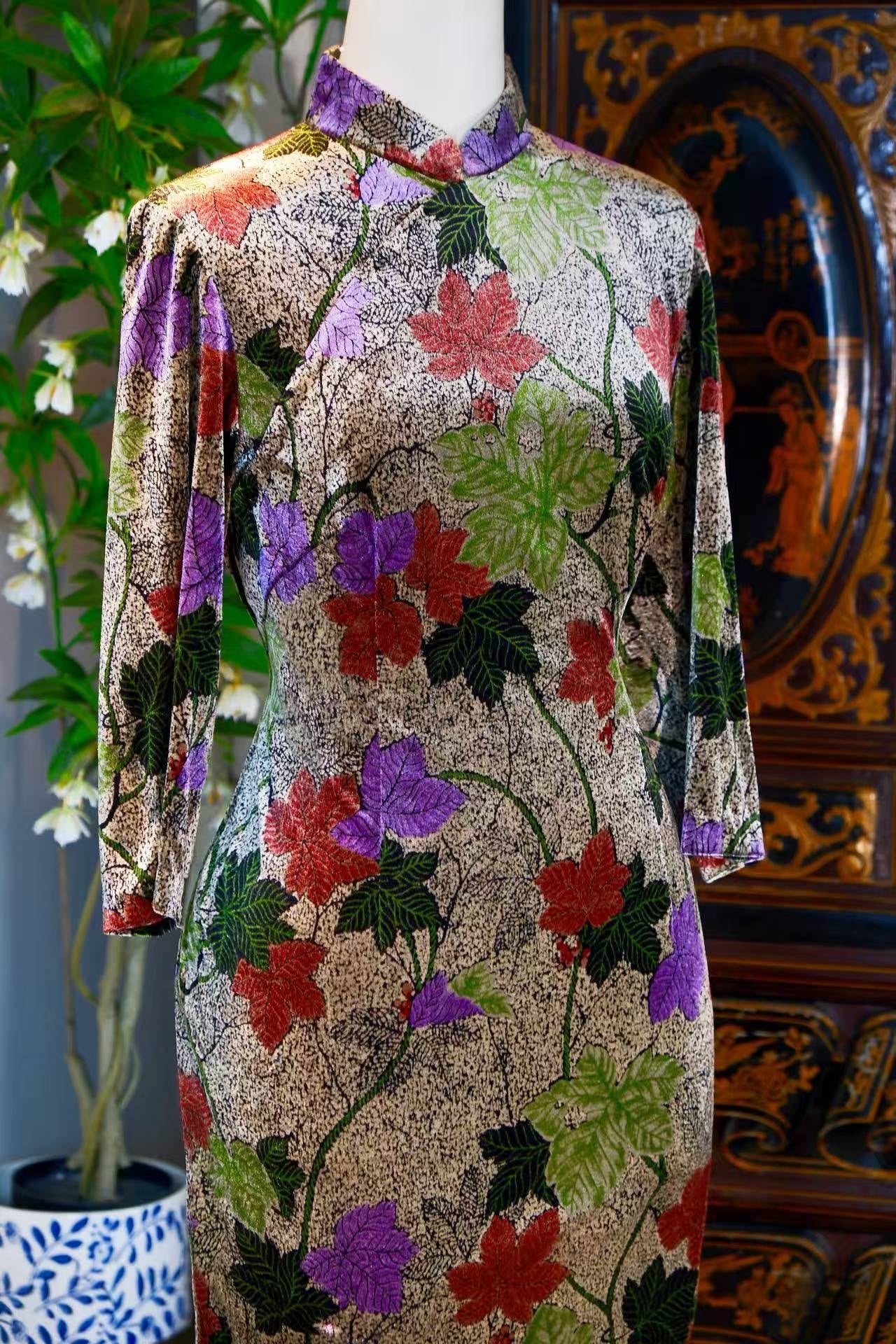
分享一件上世纪六十年代香港金产丝绒古董印花旗袍:叶影流年,织就风华。
当目光触及这件沉睡于时光匣中的古董旗袍,恍若瞥见六十年代香港浮世绘的一角。香槟金为底,金丝绒的肌理在光线下流转着暗金星屑,恰似《考工记》所言“天有时、地有气、材有美、工有巧”的天时地利人和之境——香港作为东西文化熔炉,彼时正将传统中式美学与南洋风情淬炼成独特的设计语言。
其纹样堪称“活的植物图谱”:紫荆叶以绛紫与墨绿对撞,脉络间藏着《楚辞》“扈江离与辟芷兮”的香草意象;枫叶染就朱砂红,呼应着《长物志》“枫色最艳,秋深弥佳”的时令诗学;常春藤缠绕成流动藤蔓,又暗合《诗经》“南有乔木,不可休思”的缠绵意境。更妙的是特殊的印染工艺赋予的朦胧晕染感,让每片叶子都似浸透过岭南烟雨,于写实中透出文人水墨的逸气。
这般“织物上的新水墨”,恰是战后香港时装产业“海派新韵”的缩影。不同于上海旗袍的繁复镶滚,这件作品以七分袖、高开衩的利落剪裁,映射着香港都市女性的独立精神;而金丝绒与植物印花的碰撞,更似将《晋书·五行志》“木不曲直”之警示,化作对生命张力的礼赞。作为现存极少的六十年代港产金丝绒旗袍实物,其每一寸经纬都织就着殖民地后期的文化突围,堪称穿在身上的“香港故事”。
当现代霓虹与旧时月色在此交织,这件旗袍早已超越服饰范畴,成为解码华人审美基因的密钥——它让《源氏物语》“樱花般短暂却绚烂”的物哀美学,与香江都会的摩登脉搏,在经纬交错间达成了微妙和解。
🍁 Leaves, Shadows, and the Flow of Time: A Vintage 1960s Hong Kong Gold Velvet Print Cheongsam
As one's gaze touches this vintage cheongsam, dormant within its time capsule, it is like catching a glimpse of a fleeting ukiyo-e scene of 1960s Hong Kong. The base color is champagne gold, and the texture of the gold velvet flows in the light with a dark, metallic shimmer, precisely embodying the condition of "timeliness, vital forces of the earth, beauty of materials, and cleverness of craftsmanship" (tian shi, di qi, cai you mei, gong you qiao) as cited in the Rites of Zhou: Examiner of Works. Hong Kong, as a melting pot of East and West, was at that time refining traditional Chinese aesthetics and Southeast Asian charm into a unique design language.
The pattern is a "living botanical atlas": Bauhinia leaves contrast deep purplish red (绛紫) with dark moss green (墨绿), concealing the fragrant herb imagery of "I wear the angelica and fragrant herbs" from the Songs of Chu. Maple leaves are dyed cinnabar red, echoing the seasonal poetics of the Records of Superfluous Things: "The color of maple is most vibrant, growing richer as autumn deepens." Ivy twines into flowing vines, subtly aligning with the melancholic imagery of "In the South there are lofty trees, but they offer no rest" from the Classic of Poetry. Even more exquisite is the hazy, blended effect granted by the special printing and dyeing technique, making every leaf look as if it has been immersed in the smoky rain of Lingnan, revealing the detached, expressive quality of literati ink painting within its realism.
This kind of "New Ink Painting on Fabric" is a microcosm of the "New Shanghai Style Rhyme" (海派新韵) in post-war Hong Kong's fashion industry. Unlike the elaborate piping and trims of Shanghai cheongsams, this piece uses the clean-cut tailoring of three-quarter sleeves and high slits (七分袖、高开衩) to reflect the independent spirit of Hong Kong's urban women. The clash between the gold velvet and the botanical print transforms the warning in the Book of Jin: Treatise on the Five Elements against "wood being neither straight nor bent" into a tribute to the dynamism of life. As one of the few existing 1960s Hong Kong-made gold velvet cheongsams, its every warp and weft weave the story of the cultural breakthrough in the late colonial period, truly a "Hong Kong story" worn on the body.
Where modern neon lights and the old moonlight interweave, this cheongsam transcends the category of clothing, becoming a key to decoding the Chinese aesthetic genome. It achieves a subtle reconciliation between the "mono no aware" (pathos of things) aesthetics of the Tale of Genji—"brief yet brilliant like cherry blossoms"—and the modern pulse of the Hong Kong metropolis, woven in the crossing of the warp and weft.