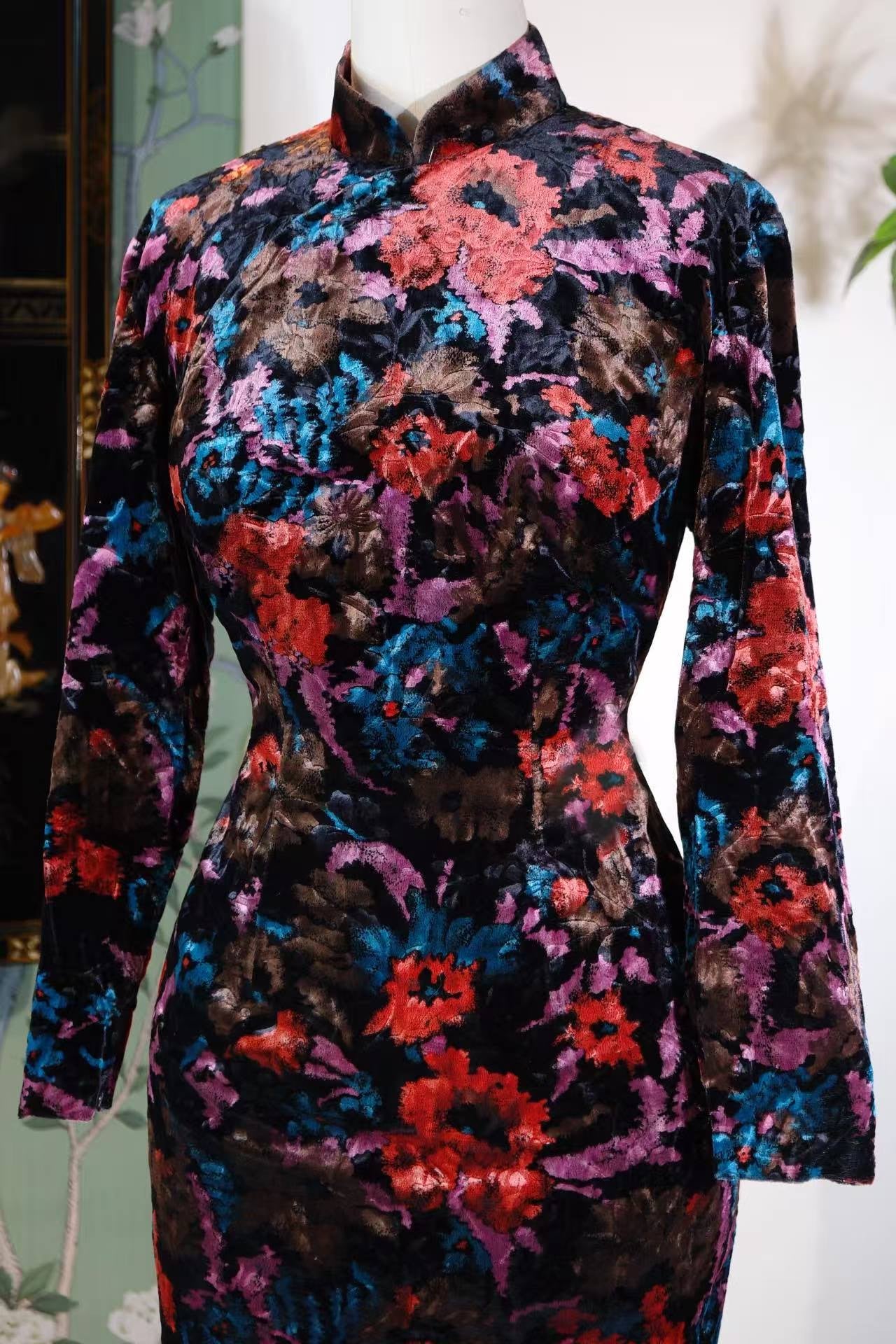
《黄金时代的遗珍》—— 上世纪六十年代香港产暗纹压花金丝绒旗袍
这是一件上世纪六十年代香港产的暗纹压花金丝绒旗袍,其面料采用高密度金丝绒,通过压花工艺形成深浅不一的立体花卉图案,色彩以深褐、墨蓝、酒红、紫粉为主,交织出浓烈而沉稳的视觉层次。领口为经典立领设计,线条利落,袖口收束自然,整体剪裁贴合身形,凸显女性柔美曲线,是那个年代“港风”美学的典型代表。
旗袍上的图案以大朵花卉为主题,花瓣层叠、枝叶缠绕,呈现出一种“繁而不乱”的艺术效果。这种暗纹压花工艺在当时极为考究,需在织造过程中通过特制滚筒压制出凹凸纹理,再经染色使花纹与底色形成微妙对比,远观如水墨晕染,近看则肌理分明,极具质感。这种工艺在六十年代的香港旗袍中尤为流行,常用于节庆、婚嫁等重要场合,象征富贵与吉祥。
这件旗袍不仅是一件服饰,更是一段历史的见证。六十年代的香港,正处于东西方文化交融的黄金期,旗袍作为传统中式服饰的代表,在保留立领、斜襟等经典元素的同时,也融入了西方剪裁的修身理念,形成了独具一格的“港式旗袍”风格。这件旗袍正是这一时期的产物,它承载着那个年代女性的优雅与独立,也映射出香港作为“东方之珠”的文化包容与时尚活力。
从艺术价值来看,这件旗袍的暗纹压花工艺已近乎失传,其面料的光泽感与图案的立体感在现代复制品中难以再现。加之金丝绒材质易磨损、难保存,能完好留存至今的六十年代压花金丝绒旗袍极为稀缺,堪称“穿在身上的文物”。
正如张爱玲在《更衣记》中所言:“旗袍的花色,是女人的第二张脸。”这件旗袍的图案,恰如一幅流动的工笔画,将六十年代香港的繁华与诗意,凝固在每一寸丝绒之上。它不仅是服饰史上的珍品,更是文化记忆的载体,值得被珍视与传颂。
A Legacy of the Golden Age: A 1960s Hong Kong-made Embossed Golden Velvet Qipao with Jacquard Motifs
This is an embossed golden velvet qipao produced in Hong Kong during the 1960s. Crafted from high-density golden velvet, the fabric utilizes an embossing technique to create three-dimensional floral patterns of varying depths. The color palette—dominated by deep brown, ink blue, wine red, and purplish pink—interweaves to form a rich yet steady visual hierarchy. Featuring a classic high mandarin collar with clean lines and naturally tapered sleeves, the overall tailoring clings elegantly to the silhouette, accentuating the feminine curves and serving as a quintessential representative of the "Hong Kong Style" aesthetic of that era.
The motifs on the qipao center on large blossoms with layered petals and winding vines, presenting an artistic effect of "complexity without chaos." This embossed jacquard process was extremely sophisticated at the time; it required pressing the fabric with specialized rollers during the weaving process to create a relief texture, followed by a dyeing process that produced a subtle contrast between the patterns and the base color. From a distance, it resembles a fluid ink wash painting; up close, the distinct textures provide a profound sense of quality. This craftsmanship was particularly popular in 1960s Hong Kong for festive occasions and weddings, symbolizing prosperity and auspiciousness.
This qipao is more than a garment; it is a witness to history. In the 1960s, Hong Kong was in a golden age of cultural fusion between East and West. As a representative of traditional Chinese attire, the qipao retained classic elements like the standing collar and diagonal placket while integrating Western slimming silhouettes, forming the unique "Hong Kong-style Qipao." This piece is a product of that period, carrying the elegance and independence of the women of that era while reflecting the cultural inclusivity and fashionable vitality of Hong Kong as the "Pearl of the Orient."
From an artistic perspective, the embossing technique used for these subtle patterns is nearly a lost art; the specific luster of the fabric and the three-dimensionality of the patterns are difficult to replicate in modern reproductions. Furthermore, since golden velvet is delicate and prone to wear, a well-preserved embossed velvet qipao from the 1960s is exceptionally rare—a true "wearable cultural relic."
As Eileen Chang famously remarked in Chronicle of Changing Clothes: "The pattern of a qipao is a woman's second face." The patterns of this qipao are like a fluid Gongbi painting, solidifying the prosperity and poetry of 1960s Hong Kong upon every inch of velvet. It is not only a treasure in the history of fashion but a vessel of cultural memory, deserving of being cherished and celebrated.