深圳溯源
Couldn't load pickup availability
黑地繁花,岁月如歌——六十年代华美服饰行天鹅绒旗袍
一、华美遗珍,岁月留香
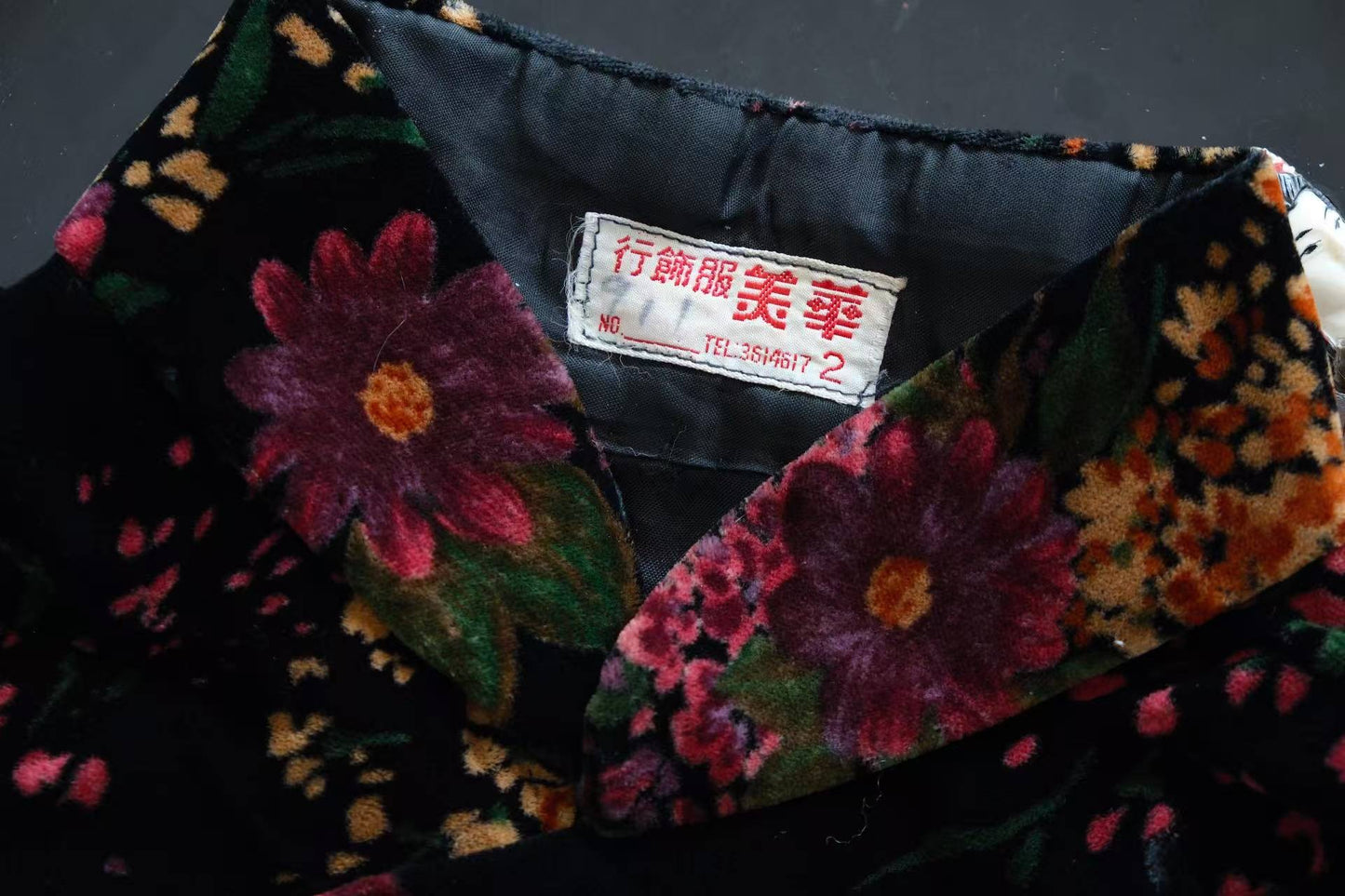
这件诞生于上世纪六十年代的古董旗袍,是台湾“华美服饰行”
二、黑地繁花,如诗如画
旗袍以深邃的黑色天鹅绒为底,宛如夜幕低垂,静谧而神秘。其上,
- 花团锦簇,色彩斑斓:大朵的紫红色花卉,花瓣饱满,花蕊金黄,
- 构图精妙,虚实相生:花簇的分布错落有致,有的密集如云,
三、天鹅绒韵,匠心独运
天鹅绒的材质,为这件旗袍增添了独特的质感与光泽。
这种材质的选择,不仅体现了当时台湾服饰制作的高超技艺,
四、稀缺之美,文化传承
六十年代的台湾旗袍,正处于传统与现代的转型期。
它不仅仅是一件服饰,更是一段历史的见证,一种文化的传承。
黑地繁花,岁月如歌。这件六十年代华美服饰行的天鹅绒旗袍,
Born in the 1960s, this antique Qipao is a masterpiece of craftsmanship from Taiwan’s "Hua Mei Fashion House." The yellowed woven label at the collar, bearing the name "Hua Mei Fashion House" and the vintage phone number "TEL: 3614617," serves as a portal back to the golden age of bespoke tailoring. During this era in Taiwan, where tradition and modernity intertwined, the Qipao stood as an elegant symbol of Oriental womanhood, revitalized by the hands of master artisans. This piece is a cherished mark engraved into the history of Qipao culture by Hua Mei’s superb skill and unique aesthetic.
The Qipao features a deep, midnight-black velvet base, serene and mysterious. Upon this "night sky," a profusion of blossoms unfolds, layered and dense, as if an entire spring has been frozen into the fabric.
Vibrant Clusters: Large purple-crimson blooms, with full petals and golden stamens, exude the opulence of peonies and the passion of roses. They are huddled by small orange-yellow flowers, delicate as scattered stars, creating a vivid tableau reminiscent of the line: "The garden's spring beauty cannot be contained; a spray of red apricot reaches out over the wall." Interspersed throughout are emerald leaves, some stretching and others curling, adding a sense of rhythmic vitality.
Exquisite Composition: The floral arrangement is masterfully balanced between density and space, creating a rich sense of hierarchy. Up close, every flower is lifelike—the texture of the petals and the details of the stamens are rendered three-dimensionally by the velvet pile. From afar, the garment resembles a meticulous Gongbi painting—ornate but not cluttered, brilliant but never garish—embodying the restrained elegance of Oriental aesthetics.
The choice of velvet endows this Qipao with a unique tactile and visual depth. The pile is fine and soft, touching like a cloud, while offering a vision of understated luxury. Under the light, the black ground emits a faint, haunting glow, making the floral colors appear even more dazzling—like fireworks blooming in the dark, brilliant yet eternally captured in time.
This material choice reflects the pinnacle of Taiwanese garment-making at the time. The weight of the velvet contrasts with the lightness of the blossoms, much as the steady black base anchors the vibrant colors. This achieves a harmony echoed in The Classic of Poetry: "Her artful smile so dimpled, her beautiful eyes so clear, it is the plain silk that provides the brilliance."
Taiwanese Qipaos of the 1960s were in a transitional phase. This piece from Hua Mei Fashion House preserves classic elements—the standing collar, diagonal bodice, and slim-fit tailoring—while integrating modern aesthetics into its pattern and material. Its exquisite execution and unique design make it exceptionally rare in today's antique market.
It is not merely a garment, but a witness to history and a carrier of culture. It encapsulates the aesthetic tastes and lifestyle of 1960s Taiwanese women. Today, as we gaze upon it, we can almost hear the wind and footsteps of that era, feeling the timeless charm and grace of the Oriental woman.