深圳溯源
Couldn't load pickup availability
衣服尺寸:
胸围/腰围/臀围:104/96/114 厘米
衣长:136 厘米
细节描述:
一、纹样考释:烧花丝绒与织金葱的视觉交响
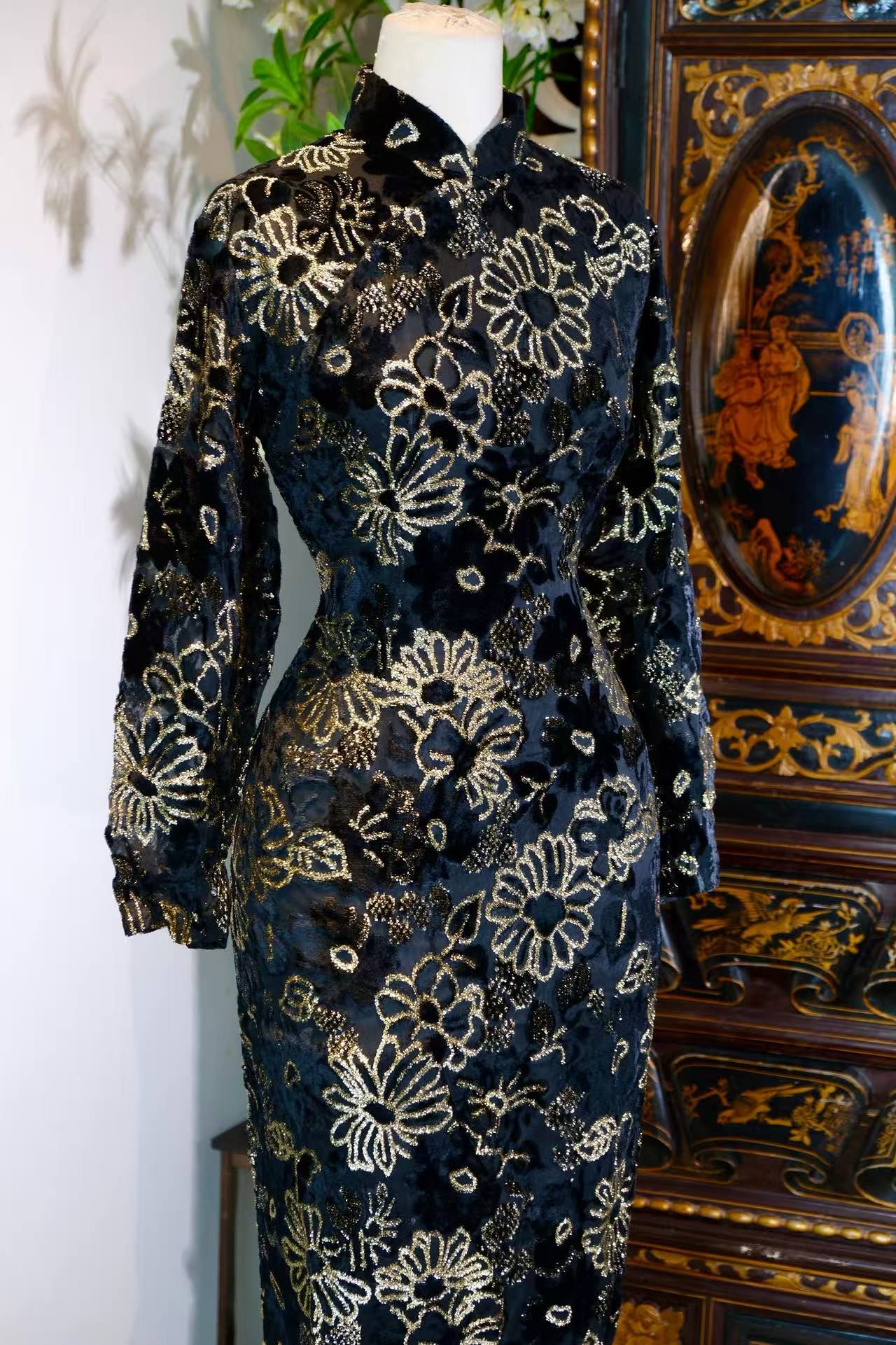
这件旗袍的面料,堪称纺织工艺的微型博物馆。意大利进口的烧花丝绒(Devoré Velvet)为底,通过化学腐蚀工艺在丝绒表面形成半透明的镂空肌理,使黑色天鹅绒与隐约透出的底纱构成虚实相生的层次感。其上织入金葱线,勾勒出繁复的缠枝花卉纹样:主体为变体菊纹,花瓣以放射状金线铺陈,花心嵌以细密珠点;枝叶则以卷草纹穿插,形成“S”形连续构图,暗合《营造法式》中“枝蔓相纠,花叶相错”的装饰美学。金葱线在光线下折射出碎金般的闪烁,与丝绒的哑光质感形成戏剧性对比,宛如夜幕中绽放的金色花火。
二、形制溯源:海派旗袍的南洋变奏
旗袍的立领、斜襟、收腰、开衩形制,延续了上世纪六十年代香港旗袍的经典轮廓。此时香港作为东西方文化交汇的港口,其旗袍设计既保留了上海时期的精致剪裁(如贴合身形的“省道”工艺),又融入了南洋的奢华审美。
三、稀缺性论证:三重维度的不可复制性
1. 材料稀缺:意大利烧花丝绒在上世纪六十年代属高端进口面料,产量有限,且烧花工艺对技术要求极高,现存实物极为罕见。
2. 工艺稀缺:金葱织线需在丝绒表面手工绣制,耗时耗力,现代机械印染无法复制其立体质感。
3. 时代稀缺:六十年代香港旗袍处于“海派传统”与“现代创新”的过渡期,此件作品完整保留了该时期的工艺特征,是研究亚洲时尚史的“活化石”。
四、文化隐喻:黑金配色的符号学解读
黑色在中国传统色彩体系中象征“玄”,《周易·坤卦》云“天玄地黄”,黑色被视为天地之始色,具庄重、神秘之意。金色则对应“黄”,为帝王之色,象征权力与富贵。黑金搭配,既符合《礼记》“衣正色,裳间色”的礼制规范,又暗合现代主义“少即是多”的美学原则。这种色彩组合在六十年代香港社交场合中,常被用于晚宴、婚礼等重要仪式,成为身份与品味的视觉宣言。
五、结语:古董衣的当代价值
这件旗袍不仅是服饰,更是一部穿在身上的历史书。它的每一道针脚、每一缕金线,都承载着上世纪六十年代香港的社会风貌、工艺水平与文化心态。在快时尚泛滥的今天,它的稀缺性与艺术性,使其成为收藏界与学术界的“双重珍宝”。正如罗兰·巴特所言:“服装是符号的集合”,这件黑金丝绒旗袍,正是冷战时期亚洲时尚符号的终极表达。
Measurements / Size Guide:
Bust / Waist / Hips: 104/96/114 cm
Total Length: 136 cm
Detailed Description:
The fabric of this qipao serves as a miniature museum of textile technology. Using Italian imported burn-out velvet (Devoré Velvet) as a base, a chemical etching process creates semi-transparent hollow textures on the velvet surface. This allows the black velvet and the underlying gauze to form a rhythmic interplay of solid and void.
Woven into this structure are gold Lurex threads outlining complex intertwined floral patterns. The primary motif is a variant chrysanthemum, with petals arranged in a radial golden spread and centers embedded with dense bead-like dots. The foliage uses scrollwork in an "S-shaped" continuous composition, echoing the aesthetic of "entwined branches and staggered leaves" found in traditional Chinese decorative canons. The Lurex refracts light like shattered gold against the matte velvet, resembling golden fireworks blooming in the night sky.
The high collar, diagonal closure, cinched waist, and side slits follow the classic silhouette of 1960s Hong Kong qipaos. During this era, as a hub of East-West fusion, Hong Kong's design retained the exquisite tailoring of the Shanghai school (such as sophisticated darting techniques to fit the body) while integrating a luxurious South Seas (Nanyang) aesthetic.
Material Scarcity: Italian burn-out velvet was a high-end imported luxury in the 1960s with limited production. The etching process required extreme technical precision, making surviving specimens exceptionally rare.
Craft Scarcity: The gold Lurex threads were often manually integrated into the velvet surface, a time-consuming process that modern mechanical printing cannot replicate in terms of three-dimensional texture.
Era Scarcity: 1960s Hong Kong qipaos represent a transition between "Shanghai tradition" and "modern innovation." This piece serves as a "living fossil" of Asian fashion history, preserving the unique craft characteristics of that period.
In the traditional Chinese color system, black represents "Xuan" (玄). According to the I Ching, black is seen as the primordial color of the universe, signifying solemnity and mystery. Gold corresponds to the "Yellow" of the earth, symbolizing power and wealth.
The black-gold pairing aligns with the ritual norms of the Book of Rites while subtly nodding to the modernist "less is more" aesthetic. In 1960s Hong Kong, this combination was a visual manifesto of status and taste, frequently reserved for significant ceremonies like gala dinners and weddings.
This qipao is not merely a garment but a wearable history book. Every stitch and every strand of gold thread carries the social landscape, craftsmanship, and cultural mindset of 1960s Hong Kong. In an age of fast fashion, its scarcity and artistry make it a "double treasure" for both collectors and scholars. As Roland Barthes noted, "Clothing is a collection of signs"—and this black-gold velvet qipao is the ultimate expression of Asian fashion semiotics during its most transformative decade.