深圳溯源
Couldn't load pickup availability
当意大利的浪漫印花遇上香港的精湛剪裁,
色彩与图案:晨雾中的水纹诗篇
这套套装最摄人心魄的,
剪裁与风格:东西合璧的摩登美学
这套两件套的精髓,
- 两件套的层次感:它由一件无袖高领旗袍和一件短袖圆领外套组成。
- 旗袍内搭的含蓄之美:内搭的旗袍,保留了中式立领与无袖设计,
细节与工艺:低调处的奢华
- 同色系的包布扣:外套上的纽扣,并非普通的金属或塑料扣,
- 立领与翻领的碰撞:内搭旗袍的立领,
When Italian romantic printing intercepted the pristine structural engineering of Hong Kong dressmaking, this 1960s pale blue georgette ensemble emerged as the most weightless, diaphanous installment within Ms. Woo’s wardrobe anthology. Moving completely away from the heavy, rigid frameworks of traditional tailoring, this silhouette operates as a poetic summer manifesto written in layers of transparency, lightness, and absolute grace.
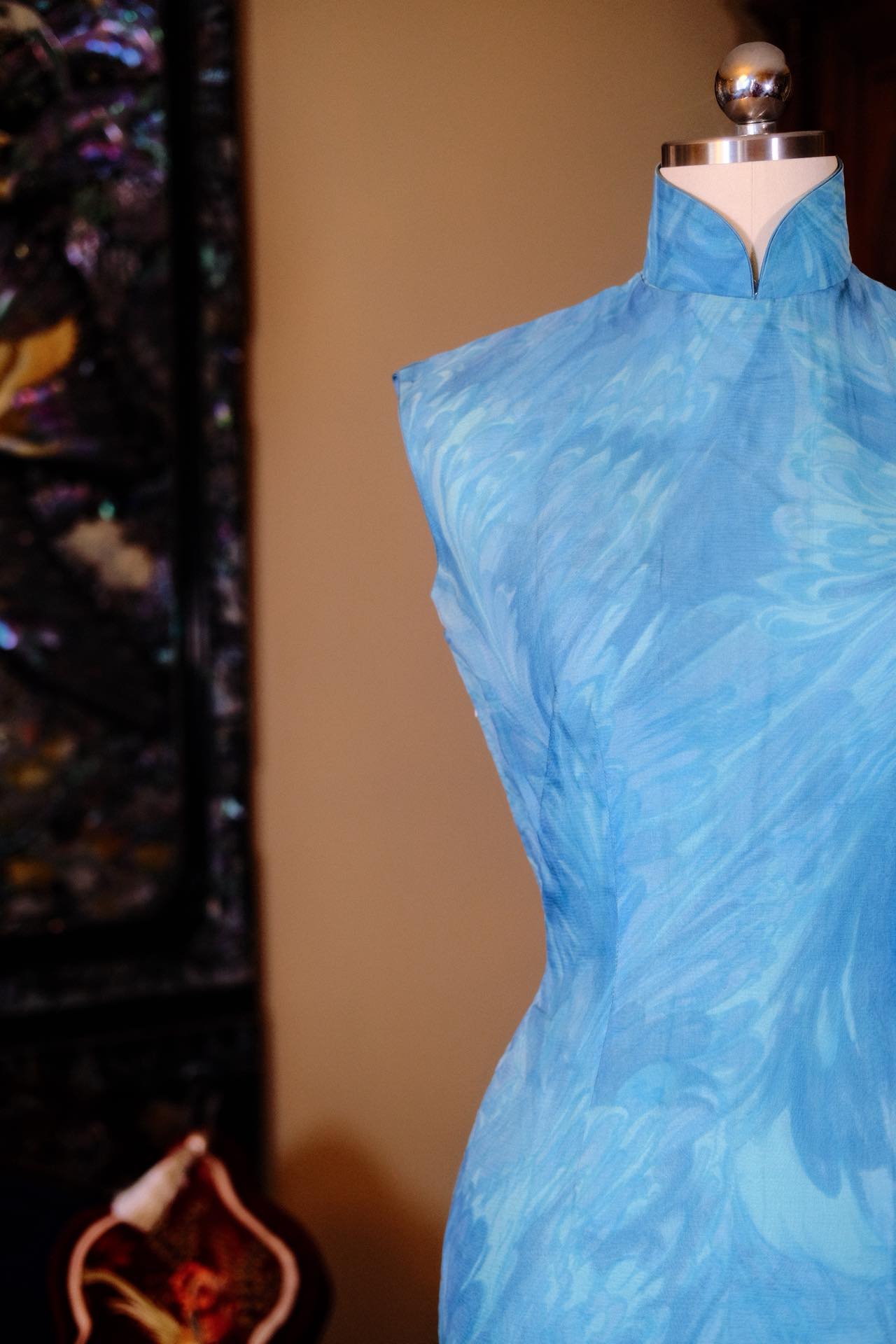
The visual authority of this two-piece set relies on a dreamlike, avant-garde interlace of pale blue and crisp white water-ripple print configurations mapped across a premium georgette ground:
The Fresh Chromatic Poetry: Sourced during the mid-1960s, this specific orchestration of soft azure and white served as the ultimate expression of the era's progressive "New Freshness" (Qingxin Zhuyi) movement. It completely shuns superficial sweetness or aggressive ornamentation, choosing instead to project a calm composure and mature refinement.
The Ethereal Architecture of Georgette: Unlike standard, structured suiting fabrics, the ensemble utilizes a premium imported Italian silk georgette (Qiaoqisha). Characterized by its highly twisted crepe yarns, the textile delivers a fine, slightly grainy hand-feel and an extraordinary, sheer breathing quality. With every movement of the posture, the multi-layered print captures the precise optical depth of morning mist rolling over water, transforming a simple textile surface into a shifting, impressionistic watercolor canvas.
The conceptual soul of this masterpiece resides in its ability to balance the clean, tailored geometry of Western outerwear with the serene, elegant lines of traditional Eastern dressmaking—achieving absolute structural definition without adding physical weight:
The Multi-Layering Matrix: The ensemble is engineered across two independent components: an integrated sleeveless high-neck qipao inner dress and a coordinating short-sleeve, round-neck jacket cut from the identical georgette canvas. This modular approach shatters the functional limits of traditional single-piece garment construction, gifting the wearer complete stylistic freedom and a highly sophisticated play on transparency.
The Restrained Eastern Core: The interior qipao gown preserves a sharp standing mandarin collar and a sleeveless architecture, tracing the posture with clean, modernist lines. This high collar serves to beautifully elongate the neck profile while multiplying the ensemble's formal dignity and sense of ceremony.
Tonal Georgette Covered Buttons: The front closure of the short-sleeve jacket is anchored by custom fasteners meticulously hand-wrapped in the identical blue-and-white water-ripple georgette textile. Executing covered buttons on a sheer, fine fabric requires immense artisanal dexterity to prevent fraying or bulkiness. This seamless, "invisible" detailing keeps the visual plane completely pure, highlighting the rigorous standards of legacy master tailors.
The Confrontation of Collars: The high, upright mandarin collar of the interior dress establishes a sophisticated visual dialogue against the wider, expressive tailored collar lines of the outerwear jacket. This layered juxtaposition of traditional Eastern closure and open Western framing beautifully mirrors Ms. Woo’s dual identity: a woman deeply rooted in ancestral grace, yet fully commanding the cross-border corporate landscape.
This two-piece ensemble stands as a flawless crystallization of 1960s globalized high fashion, capturing the exact historical moment when fluid Western textile prints, European material luxury, and elite Hong Kong custom construction fused into a unified style philosophy.
It survives far beyond the boundaries of an archival wardrobe item; it operates as a living, wearable piece of fashion history. It documents Ms. Woo's legacy as a pioneering, globetrotting female entrepreneur commanding respect across international borders, permanently preserving the romance, industry, and uncompromising artistry of a golden era.