深圳溯源
Couldn't load pickup availability
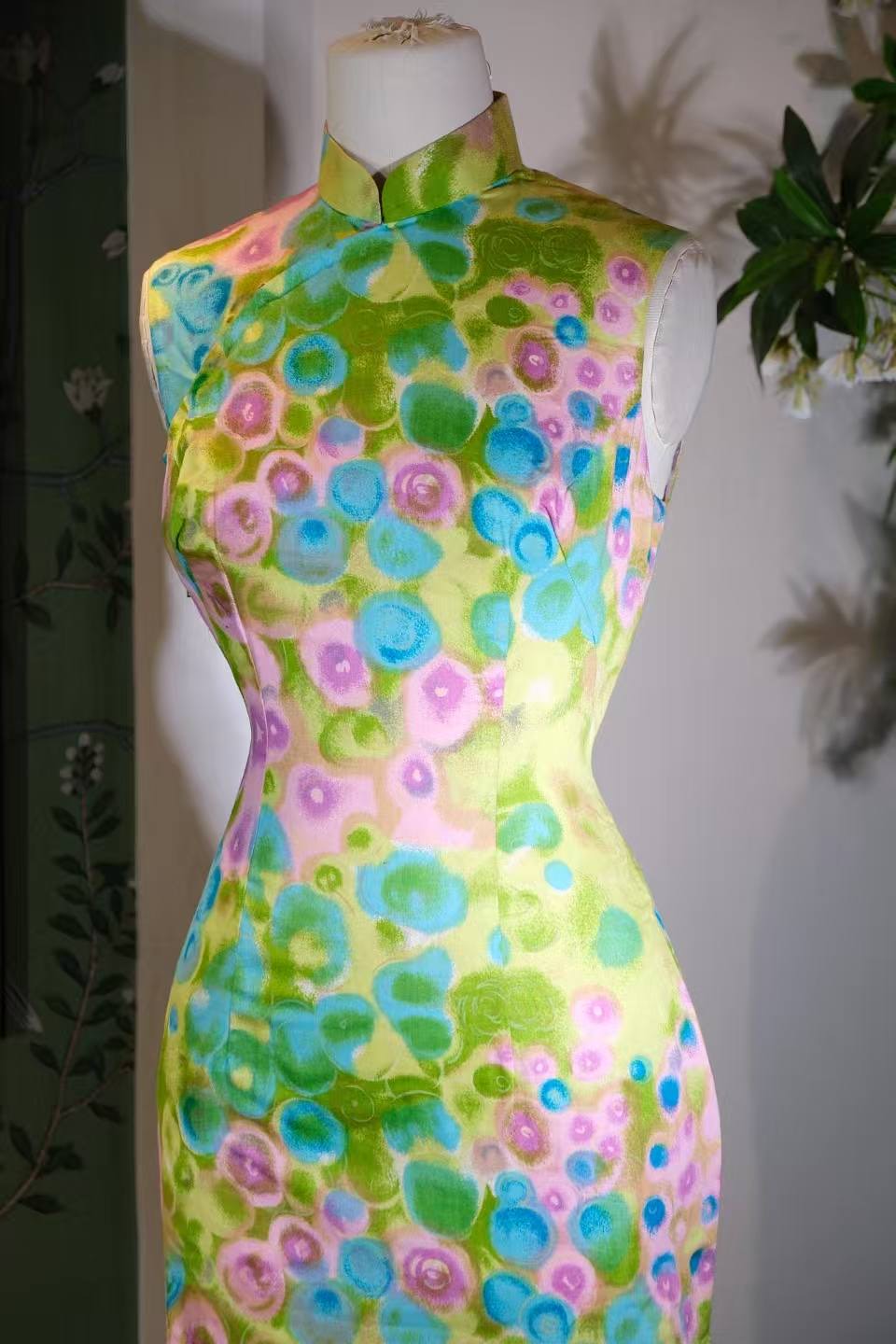
这件上世纪六十年代的荧光绿撞色印花抽象香港产古董旗袍,
旗袍上的图案,是一场色彩与抽象艺术的华丽交响。
追溯这件古董旗袍的故事,便如同翻开一部香港时尚发展的史书。
从艺术风格上看,
至于其稀缺性,更是不言而喻。历经半个多世纪的岁月洗礼,
这件荧光绿撞色印花抽象香港产古董旗袍,
This 1960s fluorescent green contrast abstract print qipao is like an artistic sprite stepping out from the depths of time. Every texture and every splash of color narrates the unique charm and extraordinary allure of that era.
The patterns on this qipao represent a magnificent symphony of color and abstract art. The fluorescent green, serving as the primary hue, is like the first light of a spring dawn—pulsating with vitality and avant-garde fashion sense, instantly capturing the viewer's eye. Adorning this base are blocks of blue, pink, and purple, resembling the uninhibited brushstrokes of an Impressionist painter. Circles and irregular shapes of various sizes interweave and collide; some edges blur like ink seeping into rice paper, while others remain sharp and brilliant as gemstones. These colors and forms are not chaotic but are arranged with deliberate care to create a dreamlike visual effect—capturing the vitality of 1960s Hong Kong, where East met West and tradition collided with modernity.
Tracing the story of this antique qipao is like opening a history book of Hong Kong’s fashion development. In the 1960s, Hong Kong was in a pivotal period of economic takeoff and cultural pluralism. At that time, Western modern art trends flooded in like a tide, deeply fusing with traditional Eastern culture. The Hong Kong garment industry entered a golden age of innovation; designers boldly broke through the conservative styles of traditional qipaos, integrating Western abstract art and pop colors to create the unique "Hong Kong Style." This garment is a vivid reflection of that innovative spirit—a witness to social and cultural shifts and a vessel for the era’s pursuit of beauty and fashion exploration.
Artistically, this qipao is a paragon of the perfect integration of abstract art and traditional attire. It abandons the concrete floral and auspicious motifs common in traditional qipaos in favor of abstract colors and shapes, showcasing an avant-garde artistic temperament. This style retains the classic form-fitting silhouette while injecting modern vitality. As the French art critic Clive Bell famously stated, "Art is significant form." The abstract patterns on this qipao are an exquisite manifestation of this concept, using a unique visual language to convey the spiritual essence and aesthetic pursuits of the age.
Its scarcity is self-evident. Having weathered over half a century, it is truly rare to find a 1960s Hong Kong antique qipao so impeccably preserved with colors remaining as vibrant as new. It is more than a precious textile artifact; it is vital primary material for researching Hong Kong’s fashion and textile history. Every such qipao is a "living fossil" of history, acting as a cultural bridge that connects the past to the present.
Conclusion: This qipao is a perfect crystallization of art and history. With its unique style and profound historical heritage, it speaks of the boundless elegance of 1960s Hong Kong, making it a treasure worthy of careful appreciation and eternal preservation.