深圳溯源
Couldn't load pickup availability
衣服尺寸:
胸围/腰围/臀围:96/88/100 厘米
衣长:128 厘米
细节描述:
Measurements / Size Guide:
Bust / Waist / Hips: 96/88/100 cm
Total Length: 128 cm
Detailed Description:
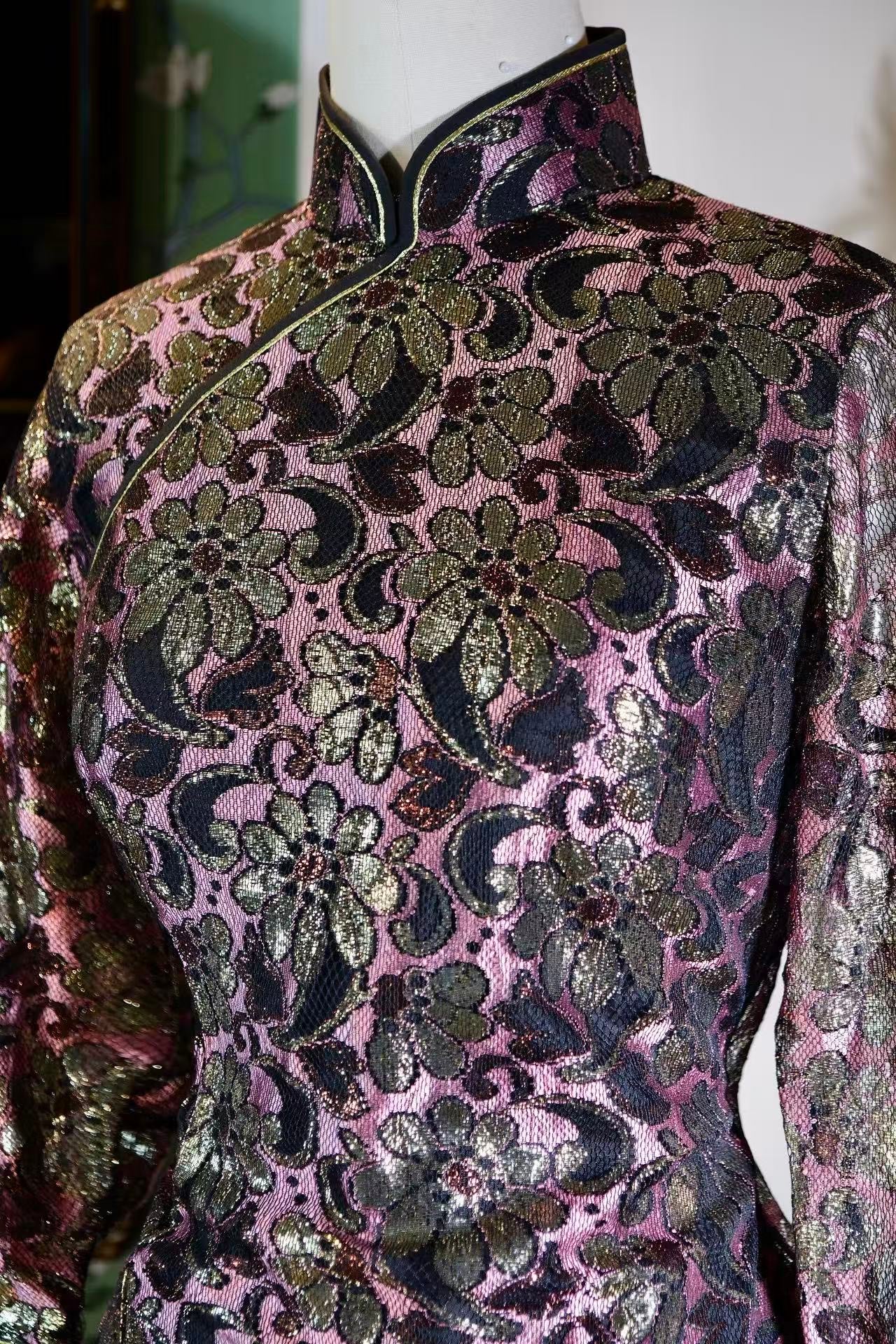
This collection piece is a perfect crystallization of Eastern and Western weaving techniques from the 1960s. Its value lies not only in the magnificent French Lamé (metallic lace) fabric but also in the precious history of cultural fusion it carries.
The fabric of this qipao is an exceptionally expensive French-imported Lamé, a hallmark of luxury in its time.
Rarity of Material: Lamé is a textile where gold, silver, or other metallic fibers are woven into silk, cotton, or synthetic bases. In the 1960s, due to its complex weaving process and opulent visual effect, this fabric was typically reserved for haute couture or grand stage performances. It refracts a shimmering metallic luster under light; as the wearer moves, light and shadow flow across the surface, embodying a regal splendor.
Symbolism of the Pattern: Close observation reveals that the motifs are not simple geometric shapes but a floral theme combined with variations of scrolling vine patterns (Arabesque). This design preserves the complexity of Western Baroque style while aligning with the traditional Chinese pursuit of auspicious symbolism. Flowers represent prosperity and vitality, while the scrolling vines symbolize eternity. Against a purplish-pink base, dark metallic threads outline the blossoms, interspersed with golden silk to create a visual tension that is both classical and modern.
Produced in Hong Kong, the story behind this qipao is a microcosm of Hong Kong’s unique cultural status as the "Pearl of the Orient" during the 1960s.
Crossroads of East and West: 1960s Hong Kong was on the eve of a post-war economic takeoff and was the site of intense cultural collision. Master tailors from Shanghai migrated south, bringing the most exquisite Haipai (Shanghai-style) craftsmanship, while Western fashion trends flooded in through international trade. This qipao is the product of this convergence—utilizing cutting-edge Western Lamé fabric while maintaining the most traditional qipao form, hand-sewn stitch by stitch by Hong Kong’s master artisans.
A Symbol of Identity and Taste: In that era, owning a qipao made of imported French Lamé was a definitive marker of status and discernment. It was more than a garment; it was an expression of a lifestyle. The woman who wore this was likely a pioneer—well-educated, worldly, and daring enough to blend the beauty of Chinese tradition with Western fashion. As Eileen Chang noted in Chronicle of Changing Clothes, "Clothing is a woman’s second face."
From the perspective of art history, this qipao possesses immense research and collection value.
A Pinnacle of Haipai Style: It perfectly exemplifies the "Eastern Essence, Western Application" (Zhong Ti Xi Yong) artistic philosophy. The silhouette is form-fitting to emphasize the feminine curve—a reflection of Western influence—while details like the mandarin collar and diagonal closure uphold the soul of traditional Chinese dress.
Irreplaceable Rarity: Production of imported French Lamé was limited, and this specific color and pattern combination is likely one-of-a-kind. Furthermore, the manual craftsmanship of 1960s Hong Kong qipao making is a nearly lost art. As stated in the Artificers' Record (Kao Gong Ji): "When the season is right, the climate favorable, the materials beautiful, and the craftsmanship skillful, only then can a fine object be made." This qipao is the ultimate interpretation of "beautiful materials" and "skillful craft."
This 1960s French Lamé Hong Kong antique qipao is a piece of walking art. It not only records the unique fashion trends of its era but also witnesses the brilliant collision of East and West. The historical information, artistic value, and humanistic sentiment it contains make it a treasure worthy of preservation. Though times have changed, the magnificence and charm carried by this garment continue to shine through the long river of time.