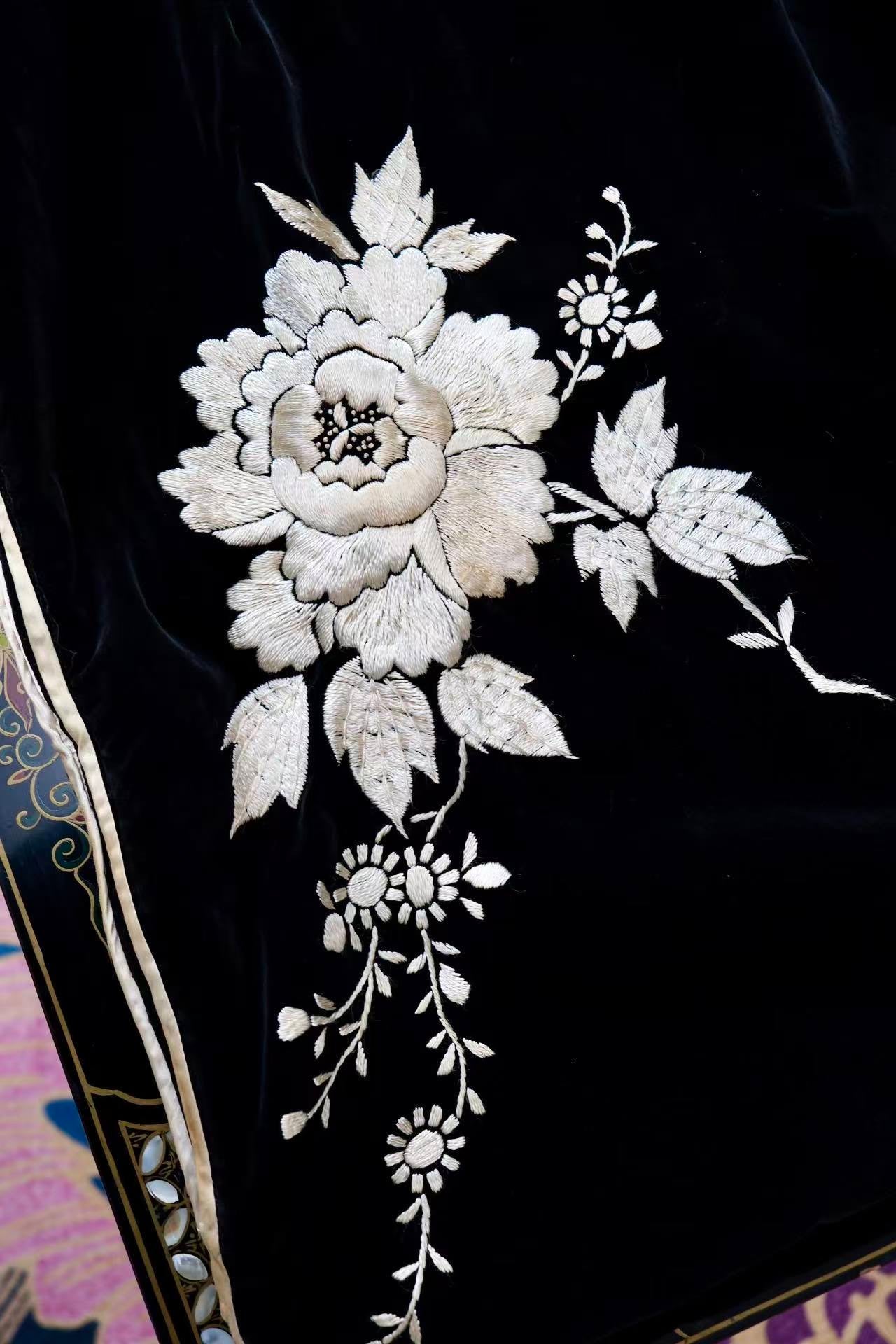
《半世纪的匠心杰作》—— 上世纪五十年代日本产黑丝绒刺绣古董旗袍
这件黑丝绒绣花旗袍,是上世纪五十年代日本工艺与东方美学交融的典范之作。其面料选用高密度黑色丝绒,触感柔滑厚重,光泽内敛深邃,于暗处亦能泛出温润光晕,尽显高贵气质。衣身主体以白色丝线绣出盛放牡丹,花瓣层叠舒展,叶脉清晰如生,枝蔓蜿蜒自然,针法细腻多变,既有平绣的平整,亦见打籽绣的立体,整体构图疏密有致,动静相宜,宛如一幅流动的工笔花鸟画。
领口与斜襟处缀以手工盘扣,造型为卷云纹与花卉结合,线条婉转流畅,与刺绣主题遥相呼应,既具实用功能,又强化了中式服饰的韵律美感。袖口与下摆边缘饰以同色系滚边,细节考究,彰显匠人精神。此袍虽为日本制造,却深谙中国传统旗袍剪裁之精髓——立领挺拔、斜襟婉转、收腰合体、开衩含蓄,既勾勒女性曲线,又保留东方含蓄之美。
在五十年代,丝绒材质因成本高昂、工艺复杂,多用于礼服或高端定制,而如此精细的刺绣更非寻常匠人可为,足见其稀缺性与收藏价值。它不仅是一件服饰,更是一段历史的见证——彼时中日文化交流频繁,日本匠人以东方审美为基底,融入自身工艺细腻之长,创造出既传统又具时代感的作品。正如《礼记·玉藻》所言:“衣正色,裳间色”,此袍以黑为正,以白为间,色彩对比强烈却不失和谐,正合古训。
今日观之,它仍散发着穿越时光的优雅与沉静,是古董衣收藏中不可多得的艺术珍品。
A Mid-Century Masterpiece: A 1950s Japanese-made Black Velvet Embroidered Antique Qipao
This black velvet embroidered qipao is a quintessential example of the fusion between Japanese craftsmanship and Oriental aesthetics from the 1950s. The fabric is a high-density black velvet with a smooth, substantial touch and a deep, restrained luster that emits a warm glow even in dim light, exuding an air of nobility. The body of the garment features blooming peonies embroidered with white silk thread; the petals unfold in layers, the leaf veins are as clear as life, and the vines meander naturally. The needlework is delicate and varied, combining the smoothness of flat embroidery with the three-dimensionality of knot stitch. The overall composition is perfectly balanced between density and space, resembling a fluid Gongbi (fine-brush) flower-and-bird painting.
The collar and diagonal placket are adorned with handmade frog fasteners (Pankou) shaped like a combination of swirling clouds and blossoms. Their fluid lines echo the embroidery theme, serving both a functional purpose and enhancing the rhythmic beauty of traditional Chinese attire. The cuffs and hem are finished with matching piping, reflecting a meticulous attention to detail and a true artisan spirit. Although made in Japan, this qipao deeply understands the essence of traditional Chinese tailoring—the standing collar is upright, the placket is graceful, the waist is form-fitting, and the side slits are demure—outlining the feminine silhouette while preserving Oriental modesty.
In the 1950s, velvet was used primarily for formal gowns or high-end bespoke tailoring due to its high cost and complex production. Embroidery of such fineness was beyond the reach of ordinary craftsmen, underscoring the garment's scarcity and collectible value. It is more than a piece of clothing; it is a witness to history—a time when cultural exchanges between China and Japan were frequent, and Japanese artisans used Oriental aesthetics as a foundation, incorporating their own meticulous craftsmanship to create works that were both traditional and modern. As noted in the Book of Rites: "The upper garment should be a primary color, and the lower garment a secondary color." This qipao uses black as its primary base and white for its details; the contrast is striking yet harmonious, aligning perfectly with ancient precepts.
Viewed today, it still radiates an elegance and tranquility that transcends time, making it an indispensable artistic treasure for any antique clothing collection.