行走的现代派:1960年代香港抽象印花棉艺旗袍三部曲
这三件上世纪六十年代的香港产抽象印花纯棉古董旗袍,宛如三幅行走的现代主义画卷,每一件都凝结着那个时代的先锋审美与精湛工艺。它们不仅是服饰,更是流动的艺术品,诉说着东西方文化碰撞下的独特风华。
第一件:红黑黄蓝交响曲
衣服尺寸:
胸围/腰围/臀围:104/88/106 厘米
衣长:116 厘米
细节描述:
这件旗袍以浓烈的红色为基调,交织着黑色、黄色与蓝色的抽象线条,仿佛一幅动态的蒙德里安画作。图案如漩涡般流动,充满韵律感,既大胆又和谐。纯棉面料的质感在光影下更显层次,将几何的理性与色彩的感性完美融合。
第二件:绿白像素迷踪
衣服尺寸:
胸围/腰围/臀围:100/82/106 厘米
衣长:136 厘米
细节描述:
翠绿色与米白色构成像素化的抽象图案,如同早期计算机屏幕上的数字艺术,又似江南园林的窗棂投影。图案的重复与错位营造出视觉上的深度,仿佛将传统水墨的留白意境转化为现代几何语言。七分袖的设计更显优雅,珍珠项链的点缀则增添了几分温婉。
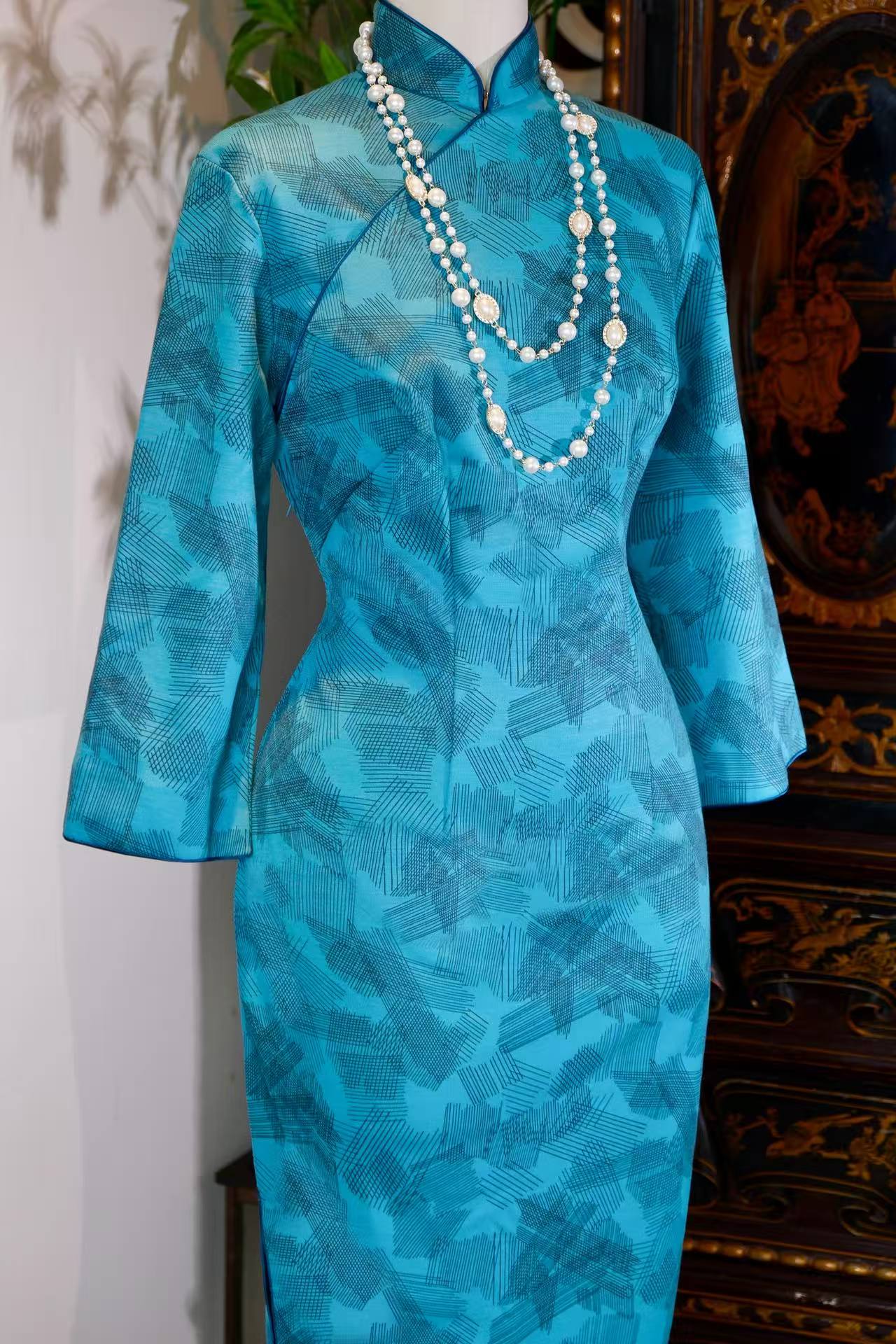
第三件:蓝调几何诗篇
衣服尺寸:
胸围/腰围/臀围:98/80/104 厘米
衣长:116 厘米
细节描述:
静谧的蓝色底色上,深浅不一的几何线条如涟漪般扩散,既有东方水墨的写意,又具西方抽象表现主义的张力。图案的疏密变化如呼吸般自然,将理性结构与感性表达融为一体。
时代印记:六十年代香港旗袍的黄金岁月
上世纪六十年代,香港正处于东西方文化交融的黄金时期。旗袍作为东方女性的经典服饰,在这一时期迎来了最后的辉煌。设计师们大胆吸收西方现代艺术元素,将抽象图案、几何线条融入传统旗袍,创造出既保留东方韵味又具国际视野的独特风格。
这些旗袍正是这一时代的产物。它们诞生于香港制衣业的鼎盛时期,当时香港被誉为“东方好莱坞”,旗袍不仅是日常穿着,更是身份与品味的象征。纯棉面料的选择,既符合当时对舒适性的追求,也体现了对传统工艺的坚持。
艺术风格:抽象印花的先锋实验
这三件旗袍的图案设计,明显受到西方现代艺术的影响。红黑黄蓝的色彩组合让人联想到康定斯基的抽象绘画,绿白像素图案则预示了后来的数字艺术,蓝调几何线条则与蒙德里安的几何抽象异曲同工。
然而,这些图案并非简单的模仿,而是经过东方美学的转化。线条的流动感、色彩的和谐度、图案的节奏感,都体现了中国传统艺术中“气韵生动”的审美追求。正如艺术史家贡布里希所言:“艺术是传统的延续与创新。”这些旗袍正是这一理念的完美诠释。
稀缺价值:古董旗袍的收藏意义
如今,这样的古董旗袍已极为罕见。它们不仅是服饰,更是历史的见证、艺术的载体。每一件都凝聚着那个时代的匠心与创意,是不可复制的文化瑰宝。
在快时尚盛行的今天,这些旗袍提醒我们:真正的时尚,是超越时间的艺术。它们值得被珍藏,被传承,让后人得以窥见那个风华绝代的年代。
Mobile Modernism: A Trio of 1960s Hong Kong Abstract Print Cotton Qipaos
This collection of three antique cotton qipaos from 1960s Hong Kong serves as a walking gallery of modernist art. Each piece encapsulates the avant-garde aesthetics and exquisite craftsmanship of an era where the qipao transitioned from traditional attire into a fluid, artistic medium.
The Trio: Three Movements in Abstract Art
I. The Symphony of Red, Black, Yellow, and Blue
Measurements / Size Guide:
Bust / Waist / Hips: 104/88/106 cm
Total Length: 116 cm
Detailed Description:
Set against a vibrant crimson base, this piece intertwines bold black, yellow, and blue lines. It functions like a dynamic Mondrian painting—patterns swirl with a rhythmic energy that is both daring and harmonious. The natural texture of the high-quality cotton adds depth to the colors, perfectly fusing geometric rationality with emotional vibrance.
II. The Green and White Pixel Labyrinth
Measurements / Size Guide:
Bust / Waist / Hips: 100/82/106 cm
Total Length: 136 cm
Detailed Description:
Emerald green and cream white form a pixelated abstract pattern, reminiscent of early digital art or the dappled shadows cast by traditional garden lattices. The repetition and displacement of motifs create visual depth, translating the "white space" (Liu Bai) of traditional ink painting into a modern geometric dialect. The three-quarter sleeves enhance its elegance, especially when paired with the gentle luster of a pearl necklace.
III. The Blue Geometric Psalm
Measurements / Size Guide:
Bust / Waist / Hips: 98/80/104 cm
Total Length: 116 cm
Detailed Description:
On a serene blue background, geometric lines of varying shades ripple outward like water. This design bridges the gap between the freehand spirit of Eastern ink wash and the tension of Western Abstract Expressionism. The varying density of the pattern mimics a natural breath, integrating structural logic with poetic expression.
Historical Context: The Golden Age of the Hong Kong Qipao
In the 1960s, Hong Kong stood at the pinnacle of East-West cultural fusion. As the "Hollywood of the East," the city saw the qipao reach its final, most creative peak. Designers boldly absorbed Western modern art, integrating abstract patterns and geometric lines into the traditional silhouette to create a style that was unmistakably Eastern yet globally relevant.
The choice of fine cotton reflects the era’s pursuit of practical comfort without sacrificing the integrity of the craft. During this period, the qipao was more than just clothing; it was a visual manifesto of identity and taste for the modern woman.
Artistic Style: An Avant-Garde Experiment
The designs of these three qipaos reflect a sophisticated "translation" of Western influences:
-
The Primary Palette echoes the abstract compositions of Kandinsky.
-
The Pixelated Motifs foreshadow the rise of digital and computer art.
-
The Linear Geometrics align with the Neo-Plasticism of Mondrian.
Yet, these are not mere imitations. They adhere to the Chinese aesthetic of "Qi Yun Sheng Dong" (vivid rhythmic vitality). The flow of the lines and the harmony of the colors ensure that even the most abstract Western concepts are imbued with an Eastern soul. As E.H. Gombrich noted, art is a continuation of tradition through innovation—a philosophy these garments embody perfectly.
Rarity & Value: A Collectible Legacy
Today, such authentic 1960s Hong Kong cotton qipaos are exceptionally rare. They are not simply vintage garments but historical witnesses and vessels of art. In an age of fast fashion, they serve as a reminder that true style is timeless. Each piece is an irreplaceable cultural treasure, preserving the grace and spirit of a bygone era.