深圳溯源
40年代 - 织锦缎双襟旗袍:一袭华彩中的东方织造史诗 | 1940s - Brocade Qipao with Double Bodice: An Epic of Oriental Weaving in Resplendent Silk
40年代 - 织锦缎双襟旗袍:一袭华彩中的东方织造史诗 | 1940s - Brocade Qipao with Double Bodice: An Epic of Oriental Weaving in Resplendent Silk
Couldn't load pickup availability
织锦缎双襟旗袍:一袭华彩中的东方织造史诗
在民国旗袍的瑰丽谱系中,四十年代中期的织锦缎旗袍堪称“
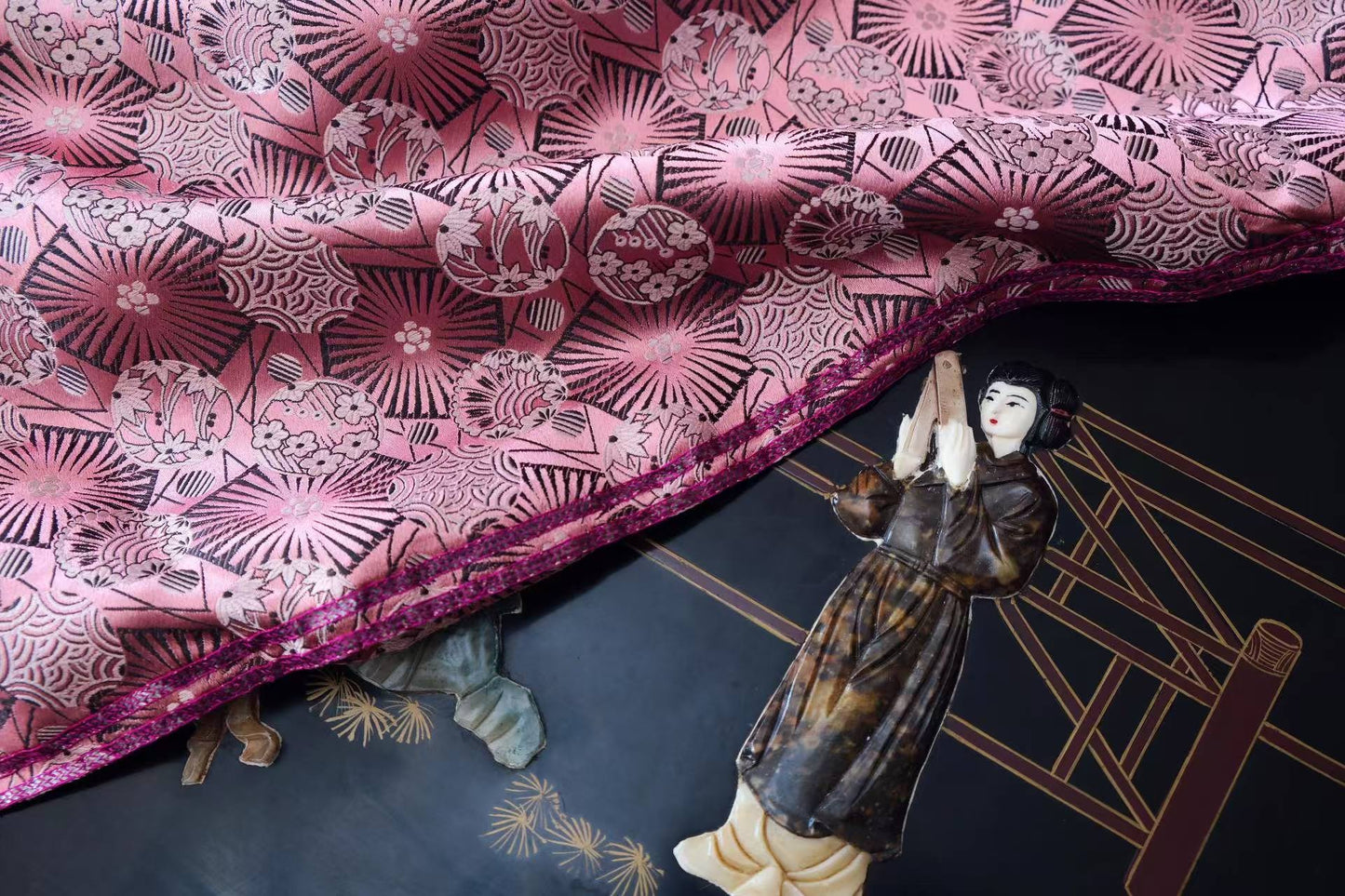
旗袍主体纹样以“扇形”与“蛛网纹”交叠构成,暗合东方美学的“
- 扇形纹:取意《考工记》“扇骨如剑,开阖有度”,既呼应古文“
- 蛛网纹:溯源至战国织锦“云网纹”,《诗经·小雅》“蜘蛛之网,
此袍面料为织锦缎,其工艺承袭宋锦“通经断纬”的挖花绝技,
- 材质与工艺:以桑蚕丝为经,多色彩绒为纬,通过“三枚斜纹”
- 历史稀缺性:织锦缎在明清为皇室贡品,民国时仅上海、
紫色编织滚边如工笔勾勒,将衣襟、袖口、下摆描成“紫气东来”
一袭旗袍,半卷风云
四十年代中期,山河动荡,而这件旗袍却以织锦缎的华彩,
它曾属于某位“云想衣裳花想容”的佳人,
此袍的每一根丝线,皆是历史的注脚;每一道纹路,
Brocade Qipao with Double Bodice: An Epic of Oriental Weaving in Resplendent Silk
The Geometric Cipher: Fans and Cobwebs Within the magnificent genealogy of Republic-era qipaos, the mid-1940s brocade pieces serve as "movable annals of silk." This double-bodice long gown, with its mauve base and brocade soul, resembles a scroll from Tiangong Kaiwu (The Exploitation of the Works of Nature), condensing the pinnacle of traditional weaving into every square inch.
-
The Fan Motif: Drawing from the Kao Gong Ji, the fan skeleton symbolizes "measured opening and closing." It echoes the phoenix's wings and the ancient homophone for "goodness" (Shan), conveying humanistic expectations of perfection.
-
The Cobweb Motif: Tracing back to Warring States "cloud-net" silks, the spider web represents the cosmic order of latitude and longitude. Together, they create a visual rhythm of "order amidst complexity," as described in Huainanzi.
The Alchemy of Brocade: "Soft Gold" The fabric inherits the "cut-weave" mastery of Song Brocade, reaching new heights of opulence:
-
Technique: Using mulberry silk as the warp and multi-colored velvet as the weft, the pattern is formed through a "three-piece twill" structure to create a relief-like texture. Every edge and node requires manual "gold-couching," resulting in a luster as gentle as Song ceramics.
-
Historical Rarity: Once an imperial tribute, brocade was produced by only a few weaving bureaus in Shanghai and Suzhou during the Republic era. The "Fan-Web" pattern is an isolated case—unseen in extant samples—suggesting a bespoke commission for a prominent family, likely drafted by a master from the Jiangnan Weaving Bureau.
Conclusion: A Half-Scroll of Wind and Clouds In the mid-1940s, amidst national turbulence, this qipao froze an era's elegance in brocade. It once belonged to a lady swaying under the lights of a concession-era ballroom; it was later folded away in camphor chests alongside national memories during wartime. As the scholar Shen Congwen noted: "The beauty of silk is the beauty of time, of craftsmanship, and of the human heart." Every thread is a footnote to history; every line a cultural code.
Share