织金雀羽中国红旗袍:六十年代港工技艺的织物诗篇
这件织金雀羽中国红旗袍,诞生于上世纪六十年代的香港,是传统工艺与现代审美碰撞的结晶。其形制承袭海派旗袍的修身线条,却更显利落现代:无袖设计贴合时代审美,高立领与斜襟保留古典韵味,腰际自然收束的曲线,暗合《礼记·服饰》“衣必称体”的东方审美哲学。香港作为当时中西文化交汇的窗口,此旗袍的剪裁既保留传统旗袍的含蓄,又融入现代时装的简约,堪称“港工”技艺的代表作。
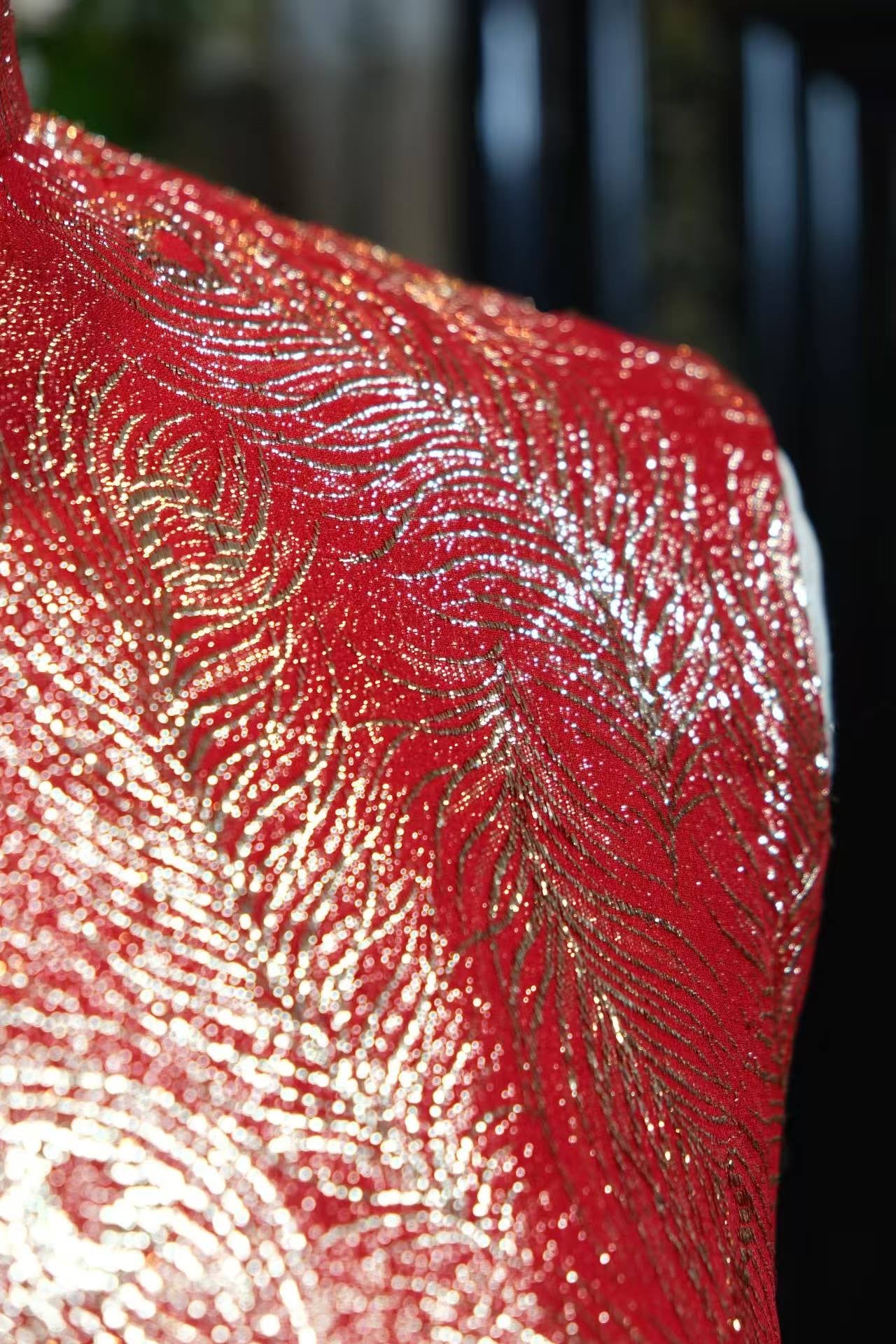
旗袍面料以“织金”工艺打造,底色为中国红,象征喜庆与生命力,更暗合《周礼·春官》“红为赤心”之说。其上雀羽纹样尤为精妙,以金线交织成羽毛状,线条如流水游龙,疏密有致地铺陈于衣身。雀羽纹并非简单装饰,而是承载着深厚的文化隐喻:《山海经·南山经》载“其羽如雀,其文如云”,雀为祥瑞之鸟,羽纹则象征“羽化登仙”的超脱意境;而羽毛的层叠排列,又暗合《考工记》“天有时、地有气、材有美、工有巧”的造物理念,将自然意象与工艺美学熔铸一体。
细观纹样,金线如雀羽舒展,光影流转间似有生命律动:肩部纹样如振翅欲飞,腰部线条渐趋收敛,裙摆处又复舒展,仿佛一只神鸟掠过衣襟,暗藏“起承转合”的东方美学节奏。这种“以纹载道”的设计,既呼应了六十年代香港社会对传统美学的创新表达,也体现了匠人对“天人合一”的追求。
更难得的是,此袍保存状态极佳,中国红底色未褪,金线纹样仍熠熠生辉,历经六十余年仍可见当年工艺之精湛。它不仅是服饰史的实物见证,更是香港制衣业黄金时代的缩影:彼时香港旗袍融合海派遗风与岭南特色,以创新工艺与设计成为华服典范,而此袍正是这一历史节点的标志性作品。
此袍曾为歌手张信哲珍藏,今陈列于上海博物馆《摩登华影:海派旗袍与百年时尚》展,完成从“私人珍品”到“公共文化遗产”的升华。展厅灯光下,织金雀羽纹折射出的不仅是物质的光泽,更是一段跨越时空的文化对话:它让六十年代的港工技艺与海派旗袍的百年风华在此交汇,让观者透过一针一线,触摸到传统美学的现代脉动。
这件旗袍,是织物上的诗篇,是时光里的匠心。它以雀羽为笔,以中国红为纸,书写着东方美学的永恒魅力,亦见证着中华服饰文化在时代浪潮中的传承与新生。
Weaving Gold & Phoenix Plumes: A Chinese Red Qipao — A Poetic Textile of 1960s Hong Kong Craftsmanship
[I. Silhouette: A Convergence of Tradition and Modernity] Born in 1960s Hong Kong, this "Gold-Woven Phoenix Plume" Qipao in Chinese Red is a masterpiece where traditional craftsmanship encounters modern aesthetics. While inheriting the slender lines of the Haipai (Shanghai-style) Qipao, its silhouette is distinctly more crisp and contemporary. The sleeveless design aligns with the era's evolving tastes, while the high Mandarin collar and diagonal closure (pajin) preserve classical charm. The natural tapering at the waist echoes the Oriental aesthetic philosophy from the Book of Rites: "Garments must fit the body perfectly." As a window between East and West, 1960s Hong Kong produced this quintessence of "Hong Kong Tailoring"—a garment that retains traditional modesty while embracing modern minimalism.
[II. Fabric and Motif: The Cultural Metaphor of Phoenix Plumes] The fabric utilizes the exquisite Zhijin (gold-weaving) technique. The base color is "Chinese Red," symbolizing festivity and vitality, resonating with the ancient saying in the Rites of Zhou: "Red represents the sincere heart." The "Bird-Plume" pattern (resembling phoenix feathers) is particularly ingenious; gold threads are interlaced into feather-like shapes, flowing like water and soaring dragons across the garment. These patterns are more than mere decoration; they carry profound cultural metaphors. The Classic of Mountains and Seas describes divine birds with "feathers like sparrows and patterns like clouds." The bird is an auspicious sign, and the plume motif symbolizes the transcendent state of "ascending to immortality." The layered arrangement of the feathers embodies the creation philosophy found in the Artificers' Record (Kao Gong Ji): "Heaven has its seasons, Earth its vital breath, materials their beauty, and craftsmen their skill."
[III. The Rhythm of Craftsmanship: Life Within Light and Shadow] Upon closer inspection, the gold threads expand like unfolding plumes, pulsating with life as the light shifts. The patterns at the shoulders seem ready for flight, while the lines converge gracefully at the waist and broaden again at the hem. This mimics the "Introduction, Elucidation, Transition, and Summation" (Qi, Cheng, Zhuan, He) rhythm of Oriental aesthetics. This design of "carrying the Dao through patterns" reflects the innovative expression of traditional beauty in 1960s Hong Kong society and the craftsmen's pursuit of "Harmony between Humanity and Nature."
[IV. Historical Significance: From Private Collection to Public Heritage] Remarkably preserved, the Chinese Red remains vibrant and the gold patterns continue to shimmer, testifying to the superb craftsmanship of sixty years ago. This Qipao is not only a physical witness to fashion history but also a microcosm of the "Golden Age" of the Hong Kong garment industry. During this period, Hong Kong Qipaos blended the remnants of the Shanghai style with Lingnan characteristics, becoming a global benchmark for Chinese couture.
Once a cherished part of singer Jeff Chang’s private collection, this piece is now displayed in the Glamour in Frames exhibition at the Shanghai Museum, completing its sublimation from "private treasure" to "public cultural heritage." Under the gallery lights, the reflection of the gold-woven plumes is not just a material luster, but a cross-temporal cultural dialogue—bridging 1960s Hong Kong artistry with a century of Haipai elegance. It allows viewers to touch the modern pulse of traditional aesthetics through every stitch and thread.
[V. Epilogue: A Legend in Silk] This Qipao is a poem on fabric and a soul of craftsmanship within time. Using plumes as its brush and Chinese Red as its paper, it writes the eternal charm of Oriental aesthetics, witnessing the inheritance and rebirth of Chinese dress culture amidst the tides of the era.