深圳溯源
无法加载取货服务可用情况
衣服尺寸:
第一件:
胸围/腰围/臀围:86/68/92 厘米
衣长:129 厘米
第二件:
胸围/腰围/臀围:86/70/92 厘米
衣长:133 厘米
价格:
$698 加币/件
细节描述:
在上世纪六十年代的香港,旗袍正经历一场静默的变革——
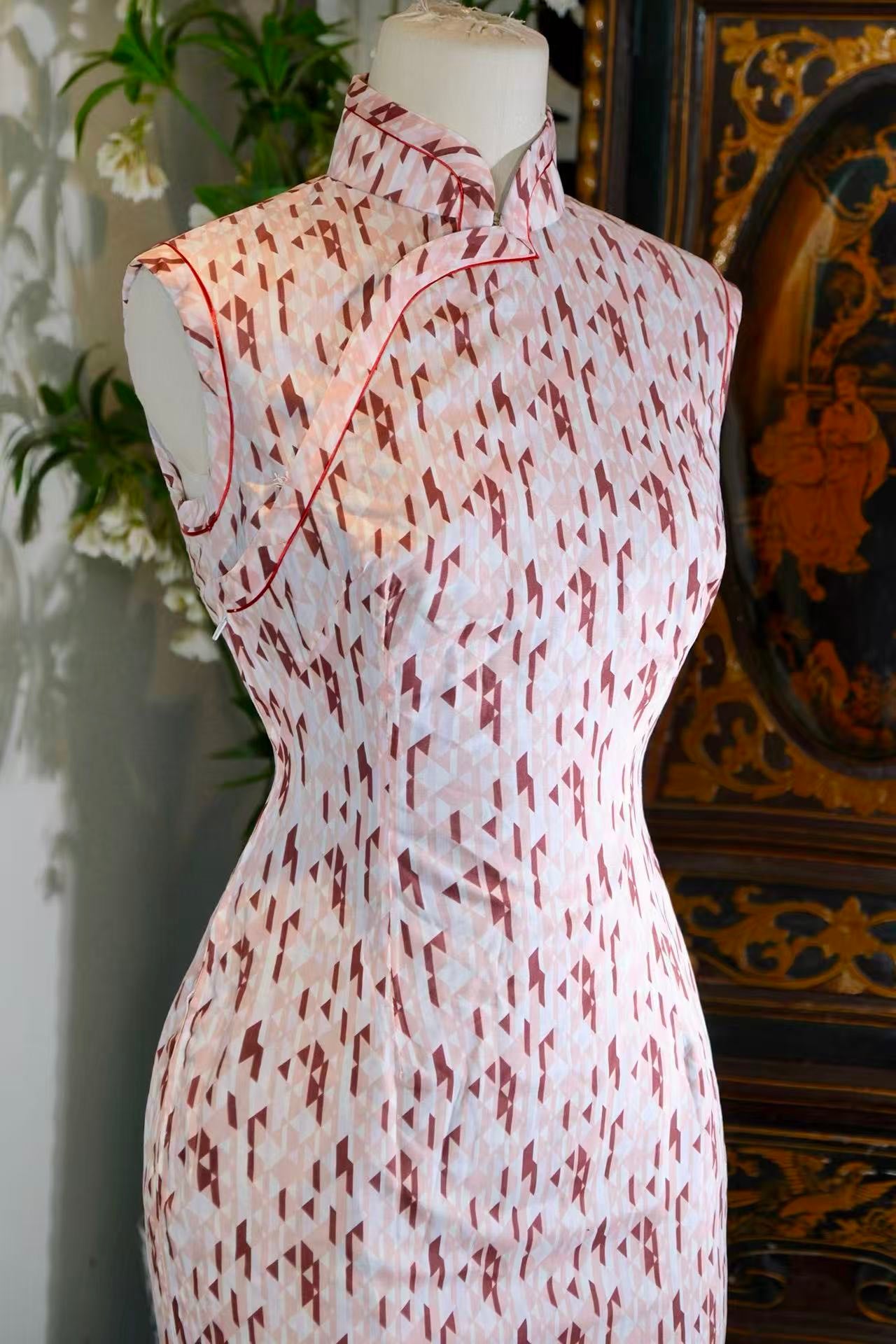
旗袍的面料上,几何图案以严谨的秩序铺陈开来,三角形、
作为香港本土生产的古董衣,它们诞生于一个特殊的时空节点:
这两套旗袍的稀缺性,更在于它们是同一主人的遗珍。相同的面料,
如今,当我们将目光投向这两件旗袍,
Measurements / Size Guide:
The first dress:
Bust / Waist / Hips: 86/68/92 cm
Total Length: 129 cm
The second dress:
Bust / Waist / Hips: 86/70/92 cm
Total Length: 133 cm
Price:
$ 698 CAD / Piece
Detailed Description:
In 1960s Hong Kong, the qipao underwent a silent revolution. As the intricate embroideries of the Haipai (Shanghai-style) qipao gradually faded into the past, a new force—using geometric prints as its brush and cotton as its paper—quietly authored a modernist narrative for Oriental attire. These two geometric print cotton qipaos, produced in Hong Kong, are precious physical evidence of this aesthetic revolution. Tied together by the same fabric, these two unique pieces serve as twin footnotes to a shared history.
Across the fabric, geometric patterns are laid out with rigorous order—triangles, rhombuses, and zigzags resemble weathered rock layers, creating a rhythmic visual symphony within the cotton's texture. The pinkish-white base is like Xuan paper soaked in morning mist, while the deep brown motifs resemble the sharp incisions of an engraver's blade. Every turn of the pattern aligns with the architectural wisdom of "squares, circles, curves, and straights, each in its proper place." This abstract visual language inherits the essence of traditional "four-way continuous" textile composition while quietly echoing the geometric aesthetics of Western Modernism. It perfectly captures the dialectical unity between "intricately carved gold" and "the natural grace of a lotus emerging from water."
As antique garments produced locally in Hong Kong, they were born at a unique spatio-temporal intersection: at that time, Hong Kong was both a guardian of Eastern culture and a watchtower for Western thought. The choice of cotton fabric reflects the rise of post-war utilitarianism—as silk became a luxury, cotton’s accessibility and durability allowed the qipao to transition from the salons of socialites to ordinary streets. Meanwhile, the popularity of geometric prints mirrored the rhythm of the modern city: clean lines and bright contrasts echoed the vitality of neon lights flickering on in Hong Kong, building a bridge between traditional form and modern sensibility.
The rarity of these two qipaos is further heightened by the fact that they were treasures belonging to the same owner. The same fabric, yet different cuts, acts like a dual projection of a woman’s life trajectory: perhaps one was for everyday elegance while the other was for festive splendor. They may have accompanied their owner through the streets of Hong Kong, witnessing the breath of an era amidst the lingering aroma of tea houses and the blare of steamship whistles at the pier. This "common-origin, different-structure" quality allows them to transcend the realm of clothing, becoming dual carriers of private memory and collective history.
Looking at these qipaos today, we see more than just a 1960s fashion silhouette; we see a modernist translation of Oriental aesthetics. They use geometric "form" to carry cultural "spirit" and cotton "simplicity" to interpret artistic "splendor." In a contemporary context, they remain vibrant—those rigorous geometric patterns resemble the pixel aesthetics of the digital age, and the collision of pink-white and deep brown aligns with the minimalism of modern design. They remind us that true classics are never submerged by time but are constantly reinterpreted in the long river of history, forever radiating a charm that transcends eras.