深圳溯源
无法加载取货服务可用情况
衣服尺寸:
胸围/腰围/臀围:100/84/108 厘米
衣长:118 厘米
细节描述:
【器物之美】
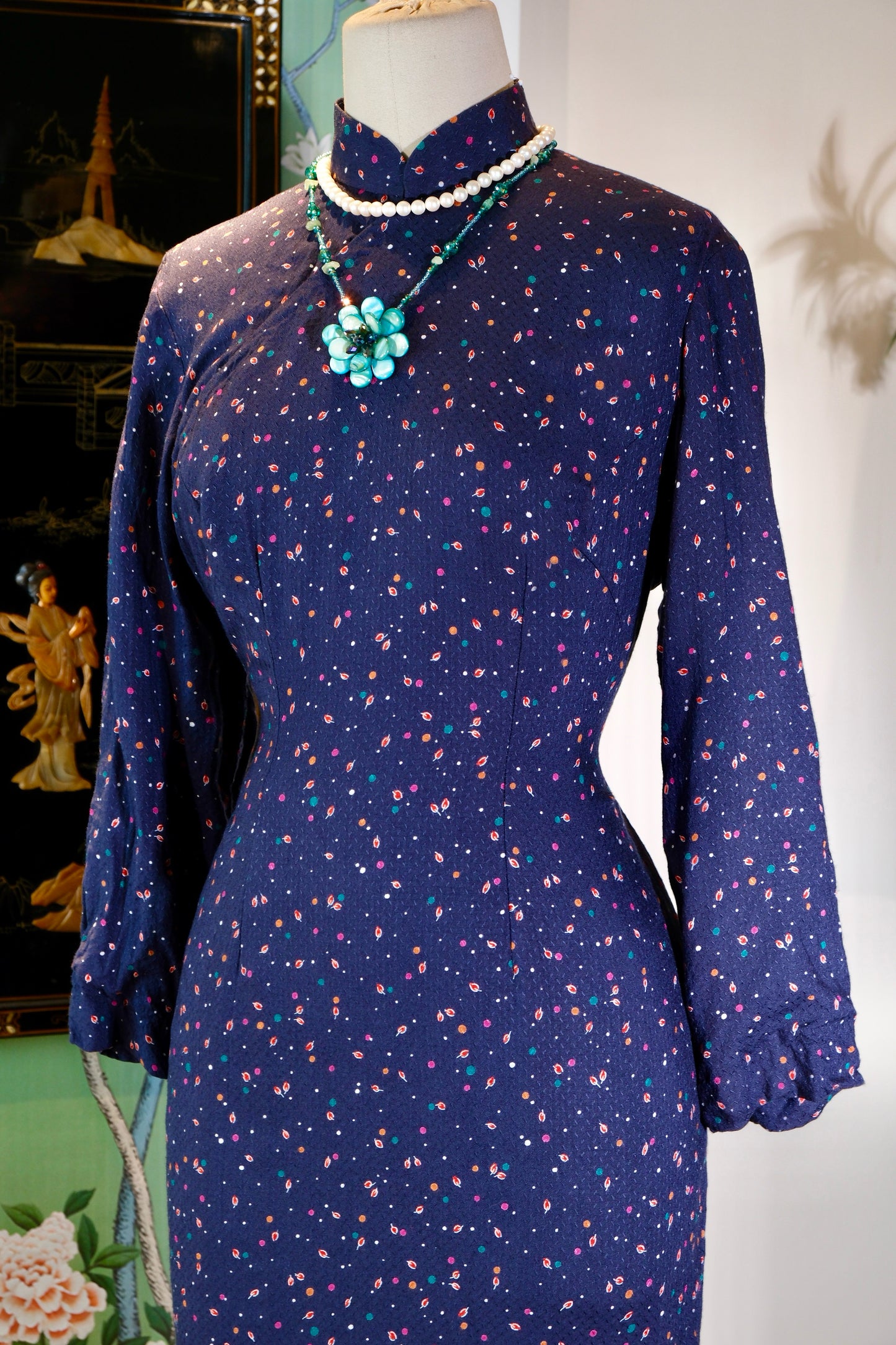
展现在我们眼前的这件上世纪六十年代香港产古董旗袍,宛如一首凝固在时光里的散文诗。它通体采用深邃的幽蓝底色,宛若静谧夜空或深海之渊,其上密布着细碎而灵动的印花图案。这些图案并非传统意义上的大朵牡丹或具象花鸟,而是以抽象的笔触,描绘出如星辰、如雨滴、又如随风飘洒的花瓣般的几何点状纹样。色彩上点缀着粉红、翠绿与橙黄,犹如夜空中闪烁的微光,打破了深蓝的沉闷,赋予了衣物一种跳跃的生命力。这种“碎花”设计,在当时是摩登与洋气的象征,既保留了东方的含蓄,又吸纳了西方波普艺术(Pop Art)早期的视觉冲击感。面料轻薄透气,隐约透出的肌理感,诉说着那个年代纺织工艺的精湛与对穿着舒适度的极致追求。
【剪裁之韵】
从形制上看,这件旗袍完美诠释了六十年代“海派”与“港式”风格的融合与演变。此时的旗袍已褪去了三四十年代的繁复镶滚,转而追求极简的线条美。其立领依然挺括,象征着东方女性的端庄;但腰身收得极紧,臀胯处的曲线夸张而流畅,这是受当时西方迪奥“New Look”风潮影响,强调女性S型曲线的结果。袖口微微收紧并带有褶皱细节,增添了几分柔美与俏皮。整件衣服没有多余的装饰,全靠精准的立体剪裁来勾勒身形,正如《诗经·卫风》所云:“巧笑倩兮,美目盼兮”,衣与人合二为一,方显风华。
【岁月之痕与稀缺性】
那个年代的香港,正处于经济腾飞与文化交融的黄金期,旗袍不仅是日常着装,更是身份与审美的表达。然而,随着七十年代后西式裙装的全面普及,以及生活节奏的加快,这类精工细作的日常旗袍逐渐退出历史舞台,多被改制或遗弃。能像这样色泽如初、版型未变地流传至今,实乃凤毛麟角。它不仅是一件衣物,更是一段关于“东方巴黎”繁华旧梦的实物见证。它的稀缺性,不仅在于年份,更在于它记录了那个特定时代下,华人女性审美意识的觉醒与独立。
【结语】
张爱玲曾言:“对于不会说话的人,衣服是一种语言,随身带着的是袖珍戏剧。”这件六十年代的碎花旗袍,便是一出无声的戏剧。它见证了那个时代的灯红酒绿与似水流年,将那份独属于东方的优雅与那个时代特有的摩登气息,永远地封存在了这一抹幽蓝之中。拥有它,便是拥有了一段触手可及的历史,一份永不褪色的芳华。
Measurements / Size Guide:
Bust / Waist / Hips: 100/84/108 cm
Total Length: 118 cm
Detailed Description:
The 1960s vintage qipao from Hong Kong presented before our eyes is like a prose poem frozen in time. The entire garment features a deep, mysterious blue background, reminiscent of a quiet night sky or the depths of the ocean, densely covered with delicate, lively printed patterns. Rather than traditional large peonies or literal flower-and-bird motifs, these patterns employ abstract brushstakes to depict geometric dot-like designs that resemble stars, raindrops, or petals drifting in the wind.
Accents of pink, emerald green, and orange-yellow sparkle like faint glimmers in the night sky, breaking up the solemnity of the deep blue and imbuing the garment with a rhythmic vitality. This "ditsy floral" or "shattered pattern" design was a symbol of modern and chic fashion at the time—retaining Eastern subtlety while absorbing the early visual impact of Western Pop Art. The fabric is lightweight and breathable, with a subtly translucent texture that speaks to the exquisite textile craftsmanship of that era and an ultimate pursuit of wearing comfort.
Structurally, this qipao flawlessly interprets the fusion and evolution of the 1960s "Shanghai-style" (Haipai) and "Hong Kong-style" designs. By this period, the qipao had stripped away the heavy, complex pipings and trimmings of the 1930s and 1940s, turning instead toward a minimalist linear beauty. Its mandarin collar remains structured and crisp, symbolizing the dignity of Eastern women. However, the waist is tightly cinched, and the curve around the hips is exaggerated yet fluid—a direct result of the influence of Dior's Western "New Look" trend at the time, which emphasized a woman's S-curve silhouette.
The cuffs are slightly tapered with pleated details, adding a touch of softness and playfulness. The entire garment features no redundant decorations; it relies completely on precise three-dimensional tailoring to outline the figure. As The Book of Songs (Shijing: Wei Feng) describes, "Her dimpling smile so charming, her beautiful eyes so clear," the dress and the wearer become one, revealing true elegance.
Hong Kong in the 1960s was in a golden age of economic liftoff and cultural integration. The qipao was not only everyday attire but also an expression of identity and aesthetic taste. However, with the comprehensive popularization of Western dresses after the 1970s and the accelerating pace of life, these finely crafted everyday qipaos gradually exited the stage of history, with most being altered or discarded.
To have a piece survive to this day with its colors as vibrant as new and its structure unaltered is exceptionally rare. It is not merely a garment, but a physical witness to the bustling old dreams of the "Paris of the East." Its rarity lies not just in its age, but in how it records the awakening and independence of Chinese women's aesthetic consciousness during that specific era.
Eileen Chang once wrote, "To those who cannot speak, clothing is a form of speech; it carries with it a pocket-sized drama." This 1960s printed qipao is precisely such a silent drama. It witnessed the glamorous nightlife and the fleeting years of that bygone era, permanently sealing that unique Eastern elegance and the era's signature modern flair within this single shade of deep blue. To possess it is to possess a tangible piece of history, a bloom of youth that will never fade.