深圳溯源
无法加载取货服务可用情况
衣服尺寸:
胸围/腰围/臀围:88/64/92 厘米
衣长:94 厘米
细节描述:
【图案之美:墨色兰影与璀璨星尘的交响】
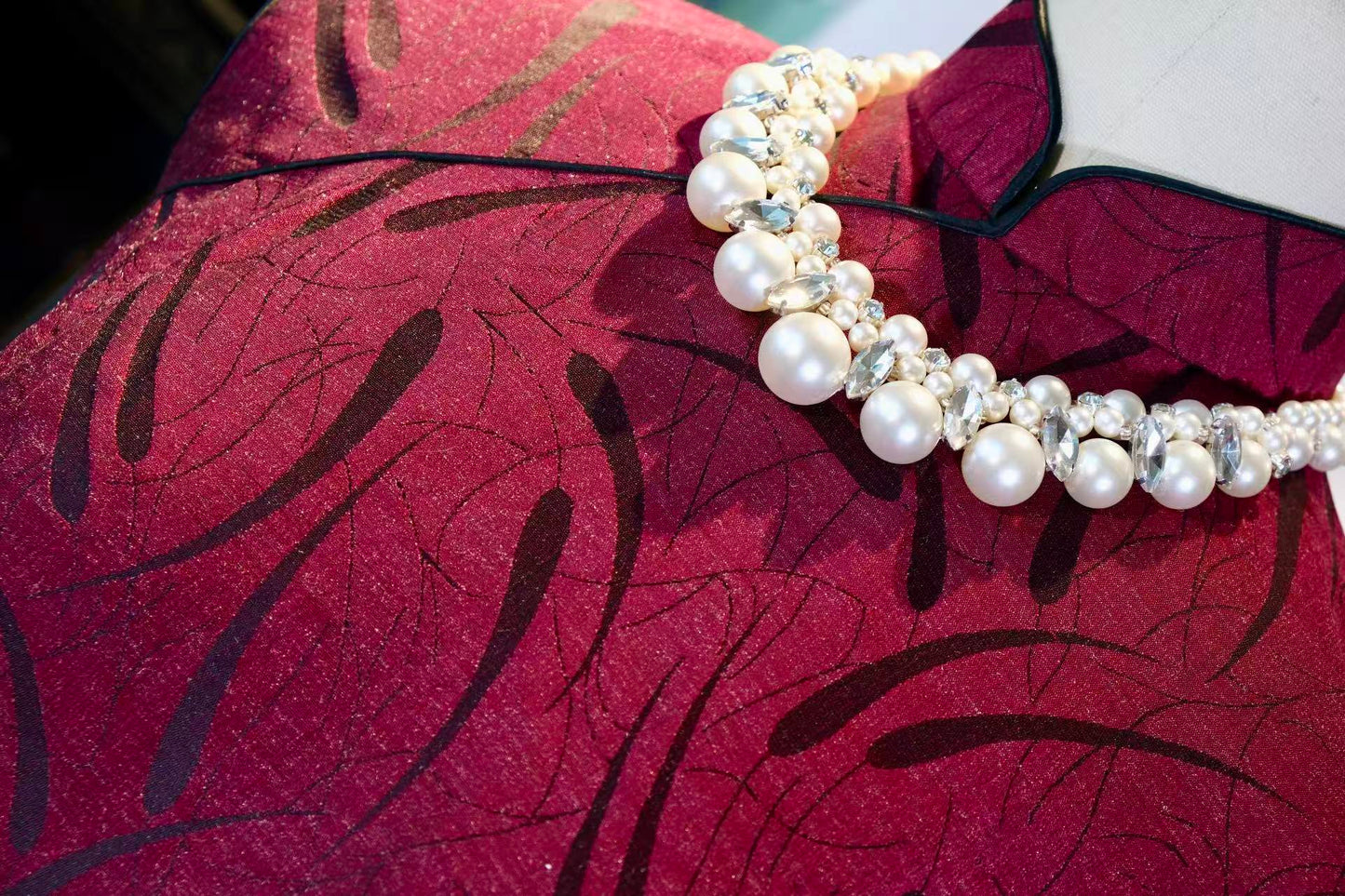
这件旗袍的面料,堪称纺织工艺史上的“微缩宇宙”。其底色并非寻常印染,而是以黑色丝线为经纬,通过高密度的提花织造技术,呈现出一种深邃如夜空的哑光质感。在这幽暗的黑色基底之上,匠人用黑色丝线勾勒出抽象的兰叶纹样。这些纹样并非具象的花草描摹,而是如同狂草书法般奔放流动的笔触,它们相互交织、重叠,仿佛是深夜中随风摇曳的幽兰剪影,带着一种神秘而内敛的东方气韵。
更为绝妙的是,整幅面料上运用了意大利进口的“洒银”工艺。无数细若游丝的银线被巧妙地织入经纬之间,形成了星星点点的视觉效果。这并非简单的印花,而是真正的金属光泽在织物深处的呼吸。当光线掠过,那些黑色的兰叶纹样仿佛隐没于夜色,而点点银光则如银河倾泻,又似萤火虫在幽谷中飞舞。这种“黑底银点”的设计,既有着宋画山水般的沉静深远,又兼具了六十年代现代主义对光影与材质的前卫探索。它不张扬,却在举手投足间流露出“众里寻他千百度,蓦然回首,那人却在,灯火阑珊处”的惊艳。
【古董衣的故事:香江织造与欧陆风华的联姻】
上世纪六十年代的香港,正处于东西方文化剧烈碰撞与融合的熔炉之中。这件旗袍,正是那个黄金时代留下的珍贵遗产。彼时,随着大量内地裁缝南迁,香港成为了全球高级定制旗袍的中心。但这件作品并未局限于传统,它大胆地引入了意大利进口的织锦缎面料。
这种面料在当时极为罕见,它是欧洲顶级纺织工业与中国传统审美的一次完美邂逅。意大利科莫地区的纺织厂擅长处理金属丝线与丝绸的混纺,他们生产的这种“洒银”面料,原本多用于晚礼服或舞台装,却被香港的老派裁缝慧眼识珠,用来制作极具东方韵味的旗袍。
更令人称道的是其“香绲”工艺。所谓香绲,即使用真丝斜纹布条手工滚边。在这件旗袍上,我们可以看到领口、襟边乃至袖窿处的滚边,皆由经验丰富的老师傅手工完成。那一道道黑色的滚边,如同水墨画的勾勒,不仅加固了边缘,更在视觉上强化了旗袍的立体轮廓,将意大利面料的华丽与中式剪裁的严谨完美统合。这不仅是一件衣服,更是一段关于“中西合璧”的历史见证,记录了那个年代香港女性对于摩登与传统的独特理解。
【引经据典:稀缺性背后的艺术孤本】
清代李渔在《闲情偶寄》中论及服饰云:“妇人之衣,不贵精而贵洁,不贵丽而贵雅。”这件旗袍恰恰诠释了何为“雅致的奢华”。
从服装史的角度审视,它的稀缺性体现在三个维度:
其一,材质的不可复制性。六十年代的意大利洒银织锦,因环保标准提升和工艺成本高昂,如今已难觅踪迹。那种特有的金属光泽与丝线的融合度,是现代化纤仿制品无法企及的。
其二,工艺的断层。全手工的“香绲”技艺,要求工匠具备极高的定力与手感,随着老一辈匠人的离去,这种针脚细密、圆润饱满的滚边已成为绝响。
其三,审美的独特性。它脱离了传统旗袍大红大绿的喜庆范式,转向了更具现代感和知识女性气质的“暗黑系”美学。这种深沉的黑色与冷冽的银色搭配,在当时是极先锋的尝试,即便置于今日,依然显得格调高远,不落俗套。
拥有一件这样的旗袍,不仅是拥有了一件御寒遮体的衣物,更是收藏了一段流光溢彩的历史,一份关于美、关于技艺、关于那个风云激荡年代的永恒记忆。
Measurements / Size Guide:
Bust / Waist / Hips: 88/64/92 cm
Total Length: 94 cm
Detailed Description:
The textile of this qipao acts as a breathtaking "micro-universe" within costume history. Its foundation rejects basic industrial dyeing or superficial chemical finishes; instead, it utilizes jet-black silk threads across both warp and weft. Driven by high-density jacquard weaving techniques, the resulting canvas radiates a matte, dark texture as deep and endless as a midnight sky.
Upon this moody foundation, master artisans have woven abstract orchid foliage (lanye) using matching black silk thread. These silhouettes skip literal botanical representations, opting instead for wild, sweeping strokes that heavily channel the unbridled momentum of cursive calligraphy (kuangcao). Interlacing and overlapping, they mimic the organic shadows of orchids swaying against the night wind—capturing a mysterious, fiercely disciplined Eastern spirit.
The definitive triumph of this textile, however, resides in its premium imported Italian silver-sprinkling methodology (洒银 / silver lamé weaving). Countless ultra-fine silver metallic wires are meticulously interwoven directly into the structural grid of the cloth, producing a constellation-like visual aesthetic. This is not a superficial overlay; it is the genuine respiration of raw metallic refraction emerging from the deepest fibers of the loom.
When light sweeps across the fabric, the black calligraphic leaves seem to dissolve into the darkness, while the fractured silver wefts spark like the Milky Way cascading through night clouds or fireflies dancing across a forgotten valley. This bold "black ground, silver speck" arrangement honors the serene, endless depths of classic Song Dynasty landscape paintings, while concurrently mirroring the avant-garde material and light-play explorations of 1960s Western Modernism. It refuses loud, vulgar display, yet confidently delivers a breathtaking, dramatic presence when in motion.
During the 1960s, Hong Kong functioned as an intense, vibrant cultural melting pot where ancestral Eastern heritage and Western post-war modernity merged. This archival qipao stands as a magnificent monument safeguarding the material legacy of that golden era. Following the mid-century migration of elite master tailors from mainland China, Hong Kong evolved into the absolute global capital for high-grade bespoke qipao commissions. Yet, the master who engineered this specific piece refused to stay bound to conservative traditions, boldly incorporating an elite imported Italian brocade canvas.
At the time, this imported textile represented an extraordinary luxury commodity. It marked a flawless historical intersection between the height of European textile engineering and ancestral Chinese dress philosophy. Master weavers across historic mills in the Lake Como region of Italy excelled at blending fine metallic wires with premium raw silks; their "silver-sprinkled" textiles—originally intended for Western haute couture ballgowns and theatrical costumes—were chosen by the discerning eye of a Hong Kong master tailor to construct an evocative piece of Eastern wearable art.
Equally remarkable is the immaculate execution of its traditional Xianggun (香绲) piping. This arduous discipline requires the artisan to hand-craft bias-cut silk twill strips into ultra-fine, perfectly rounded borders. Across this garment, the mandarin collar, the structural seams of the diagonal closure (pajin), and the armscyes are all bound by these hand-turned black pipes. Mirroring the precise ink-outlines of a master scroll painting, these fine borders not only structurally reinforce the vintage edges but visually amplify the three-dimensional, architectural framework of the qipao silhouette. They seamlessly harmonize the luxurious flair of the Italian metallic weave with the rigid, pristine discipline of Chinese pattern drafting.
The Qing Dynasty scholar Li Yu noted in his celebrated aesthetic treatise Xianqing Ouji (Casual Notes on Leisurely Living): "In women's attire, prioritize impeccable neatness over mere material cost; favor absolute elegance over ostentatious display." This black-and-silver qipao serves as the absolute physical manifestation of that restrained, high-intellectual manifestation of luxury.
Examined through the strict framework of textile archaeology and costume sociology, the profound scarcity of this archival specimen commands exceptional merit across three specific dimensions:
The Extinction of Vintage Metallurgical Textiles: Due to the strict overhauls of modern environmental manufacturing regulations and the global shift toward high-speed synthetic screen printing, authentic 1960s Italian silver-sprinkled brocades have completely vanished from modern production. The organic drape, weight, and internal light refraction of these mid-century metallic weaves remain completely unmatched by contemporary plastic-coated replicas.
The Loss of Technical Infrastructure: The execution of a flawless, completely hand-turned Xianggun piping demands immense physical stamina, ironclad focus, and an intuitive hand-feel from the tailor. Following the departure of that post-war golden generation of artisans, these microscopic, perfectly rounded silk edges have largely entered the realm of a lost art form.
The Singularity of the Avant-Garde Aesthetic: This garment completely breaks away from the conventional, festive red-and-green colorways that dominated traditional qipao manufacturing, shifting instead toward a sophisticated, intellectual "dark" aesthetic. This pairing of deep, ink-like black with cold, icy silver represented an intensely radical,先锋 (pioneering) experiment in the 1960s. Even when viewed through a contemporary lens, it projects a commanding, high-toned nobility that stands completely outside the volatile torrents of fast fashion.
To possess a vintage qipao of this caliber is not merely to own an article of dress to shield the physical form; it is to hold a frozen segment of history. It stands as an unblemished, tangible monument to mid-century cross-cultural trade, master craftsmanship, and the everlasting dignity of a magnificent generation.