深圳溯源
无法加载取货服务可用情况
一、面料:双宫真丝的“天然肌理”
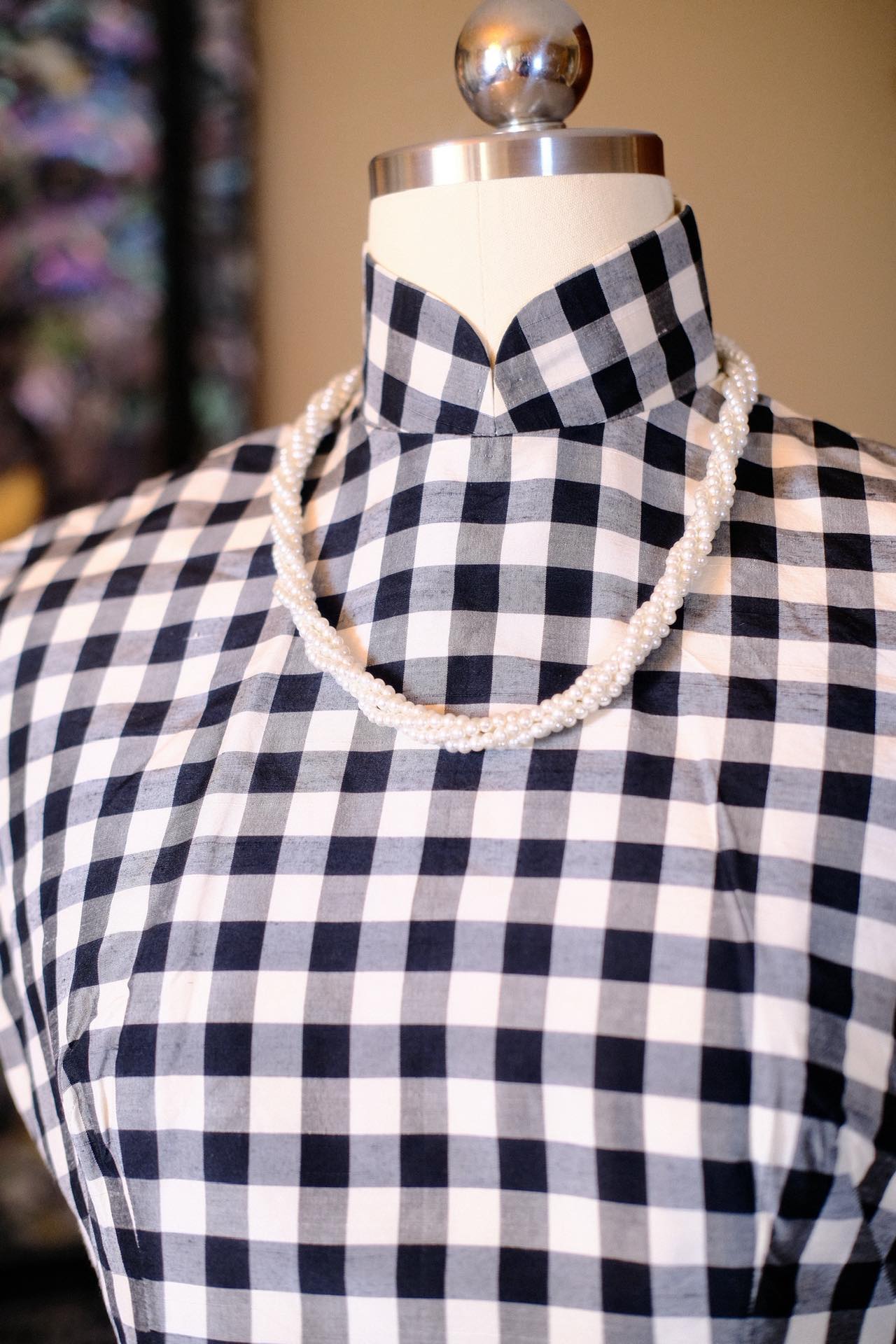
这件旗袍的面料,是六十年代珍贵的双宫真丝。
二、形制:格纹与旗袍的“现代对话”
这件旗袍采用经典的无袖立领设计,线条流畅,剪裁合体。
三、故事:Woo女士的“双城记”
这件旗袍的主人Woo女士,是加拿大Super Store的老板之一,亦是六十年代“全球买手”的先驱。
- 在六十年代,像Woo女士这样的海外华商,每年必赴欧洲(
- 这件旗袍就是这种生活方式的见证:
四、稀缺性:消逝的“港产高定”生态
如今这件旗袍的珍贵,不仅在于面料与工艺,
- 六十年代的香港,曾有数百家旗袍工坊,师傅们以“一人一版”
The structural foundation of this qipao resides in a premium, vintage-grade dupioni silk (Shuangong Zhensi) sourced during the 1960s. Diverging sharply from traditional flat or slick satins, this exquisite material possesses an innate textural complexity born from the organic behavior of twin silkworms weaving a single cocoon. The resulting yarn is characterized by deliberate, naturally occurring slubs and microscopic irregularities—mimicking fine ripples catching shifting coastal light or linear ridges sculpted across sand by a retreating tide. Under studio lamps, this structural matrix yields a highly sophisticated, semi-matte luster and a dense, substantial hand-feel that remains remarkably smooth against the skin. This specific fabrication was highly celebrated within mid-century European haute couture for its crisp drape and tactile depth.
The silhouette of the gown relies on a classic, refined sleeveless architecture paired with a proud standing mandarin collar, engineered with absolute geometric fluidity to mirror the posture flawlessly. The strategic application of a crisp plaid pattern completely shatters the visual monotony of traditional monochrome or conventional floral garments, injecting a bold sense of contemporary modernism and linear symmetry. This progressive approach to textile geometry became exceptionally popular among intellectual women in mid-century Hong Kong, operating as a definitive sartorial symbol of independence, cultural literacy, and forward-thinking fashion design.
The custodian of this artifact, Ms. Woo, operated as a co-director of a major Canadian enterprise, standing as a definitive visionary within the early network of global luxury textile procurement:
During the 1960s, elite international Chinese merchants made regular, calculated sourcing journeys across Europe—specifically targeting the premier textile centers of Italy and France—to secure advanced, high-end fabric volumes. These precious materials were subsequently routed through Hong Kong, where master tailors transformed the raw textiles into bespoke, one-of-a-kind garments.
This specific qipao stands as an absolute historical marker of that exact transoceanic lifestyle: the premium European dupioni silk records the pinnacle of Western material taste; the precision-engineered custom Hong Kong construction tracks the absolute mastery of Eastern artisan tailoring traditions; and its ultimate presentation within the corporate and cultural landscapes of Canada highlights a profound narrative of self-directed identity. As the fashion historian Anne Hollander noted, "Dress is an extension of the body." Ms. Woo’s selection functions beautifully as a material expression of personal refinement and a concrete manifestation of cultural authority on the global stage.
The modern rarity of this garment extends far beyond its raw material worth or its unique slubbed aesthetics; it stands as a pristine archive of a highly specialized, completely vanished sartorial ecosystem:
During the 1960s, Hong Kong’s custom apparel trade thrived across hundreds of master ateliers who engineered garments based on a strict "one person, one pattern" blueprint philosophy, where senior artisans meticulously draped rare European imported fabrics to match individual anatomical requirements down to the millimeter.
With the subsequent global ascension of mechanized, mass-market ready-to-wear production scales, this resource-heavy, time-intensive synthesis of European textile technology and custom Hong Kong craftsmanship permanently dissolved. The few surviving specimens left in existence operate now as precious historical monuments, recording the romance, industry, and uncompromising artistry of a golden era.