肉粉色绸吊带式衬裙:海派摩登的蕾丝诗篇
此件肉粉色绸吊带式衬裙,诞生于二十世纪三十年代的上海滩,是海派时尚“摩登”气质的微观缩影。其以真丝为底,手工编织蕾丝为饰,将东方织造的细腻与西方装饰艺术的灵动熔铸一体,堪称海上闺阁衣饰的“活化石”。
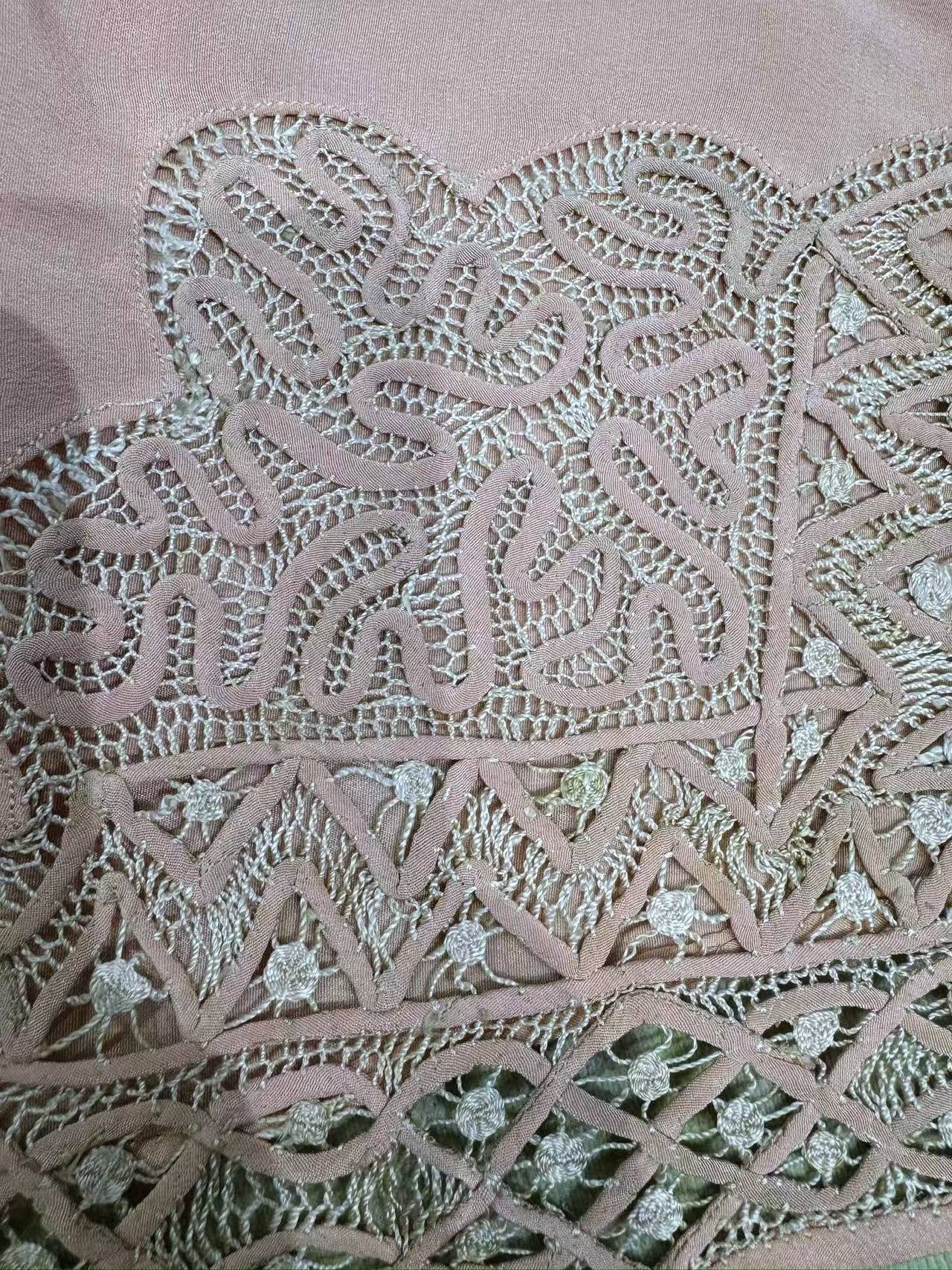
衬裙的视觉焦点集中于领口与下摆的蕾丝花边,其图案设计暗藏匠心。
- 几何与自然的交响:领口蕾丝以卷草纹为骨,缠枝藤蔓蜿蜒舒展,其间点缀星点小花,既承袭了中国传统纹样的“生生不息”意象,又融入了西方装饰艺术(Art Deco)的几何抽象风格。
- 技法的稀缺性:蕾丝采用“镂绣”技法,在真丝底料上以针线勾勒出透空花纹,需绣娘以数十年功底把控针脚密度,稍有差池则整幅纹样尽毁。这种“以线为墨”的工艺,堪称民国闺阁中的“ haute couture(高级定制)”。
- 吊带式剪裁:衬裙采用挂脖式吊带设计,贴合身体曲线,既保留了旗袍的典雅轮廓,又暗藏西式内衣的性感基因。
- 真丝的光泽叙事:面料选用顶级肉粉色绸,真丝的柔滑肌理在光影下泛起温润晕彩,恰如《繁花》中描写的“雪白皮肤映着粉红衫子,像一朵开在春日里的芍药”。这种对材质光泽的极致追求,正是海派时尚“精致到骨子里”的生活哲学。
三十年代的上海,是“东方巴黎”的摩登现场。衬裙的穿着场景,恰是旗袍风靡的“内搭叙事”——当女士们身着透纱旗袍时,衬裙的蕾丝花边从领口、袖口、下摆处隐隐露出,如“暗香浮动”,于不经意间流露闺阁雅趣。
正如《玲珑》杂志所言:“衬裙之美,不在张扬,而在细节处的讲究。”此件衬裙的稀缺性,更在于其见证了张爱玲笔下“上海传奇”的黄金时代:它是海上名媛梳妆时的“仪式感”,是社交场中“低调的炫耀”,更是海派文化“中西合璧、雅俗共赏”的物质载体。
此件衬裙曾为私人珍藏,今陈列于上海博物馆《摩登华影:海派旗袍和百年时尚》展柜,其蕾丝纹样如一首未完成的诗,邀观者透过经纬交错的丝线,触摸那个“摩登与传统交织”的黄金年代。
Flesh-Pink Silk Slip: A Lace Poem of Haipai Modernity
Born in 1930s Shanghai, this flesh-pink silk slip is a microscopic silhouette of the "Modern" temperament of Haipai (Shanghai-style) fashion. Crafted from a silk base and adorned with hand-woven lace, it melds the delicacy of Oriental weaving with the agility of Western Art Deco. It stands as a "living fossil" of the attire found in the boudoirs of Old Shanghai.
The visual focus of the slip resides in the lace edging at the neckline and hem, where the design reveals hidden ingenuity.
-
A Symphony of Geometry and Nature: The neckline lace is structured with scrolled grass patterns and winding vines, interspersed with tiny starlit flowers. This design inherits the Chinese traditional motif of "endless life" while integrating the geometric abstraction of Western Art Deco.
-
Rarity of Technique: The lace employs the "cutwork embroidery" technique, where openwork patterns are sketched with needle and thread upon the silk. It required embroiderers with decades of mastery to control the stitch density; the slightest error would ruin the entire pattern. This "ink-in-thread" craftsmanship was truly the "Haute Couture" of the Republican-era boudoir.
-
Bespoke Silhouette: Featuring a halter-style slip design, it contours to the body's curves. It preserves the elegant silhouette of the Qipao while harboring the sensual genes of Western lingerie.
-
The Narrative of Silk Luster: Selected from top-tier flesh-pink silk, the smooth texture of the fabric casts a warm, iridescent glow under the light. As described in the novel Blossoms Shanghai: "Snow-white skin reflected against a pink chemise, like a peony blooming in spring." This pursuit of material luster reflects the Haipai philosophy of "refinement to the very bone."
Shanghai in the 1930s was the "Paris of the East." The slip belonged to the "inner-wear narrative" of the Qipao era. When ladies wore sheer gossamer Qipaos, the lace edges of the slip would subtly peek through the neckline, cuffs, and hem—like "floating fragrance," revealing boudoir elegance in an unintentional whisper.
As Linglong magazine once noted: "The beauty of a slip lies not in ostentation, but in the meticulousness of its details." The rarity of this piece lies in its witness to the Golden Age of Eileen Chang’s "Shanghai Legends." It was the "sense of ritual" for socialites at their dressing tables, a "low-key display of splendor" in social circles, and the material vessel of Haipai culture's "fusion of East and West."
Once a private treasure, this slip is now displayed in the Glamour in Frames: Haipai Qipao and a Century of Fashion exhibition at the Shanghai Museum. Its lace patterns remain like an unfinished poem, inviting viewers to touch that golden era where modernity and tradition were intricately interwoven through the warp and weft of silk.