溯源
无法加载取货服务可用情况
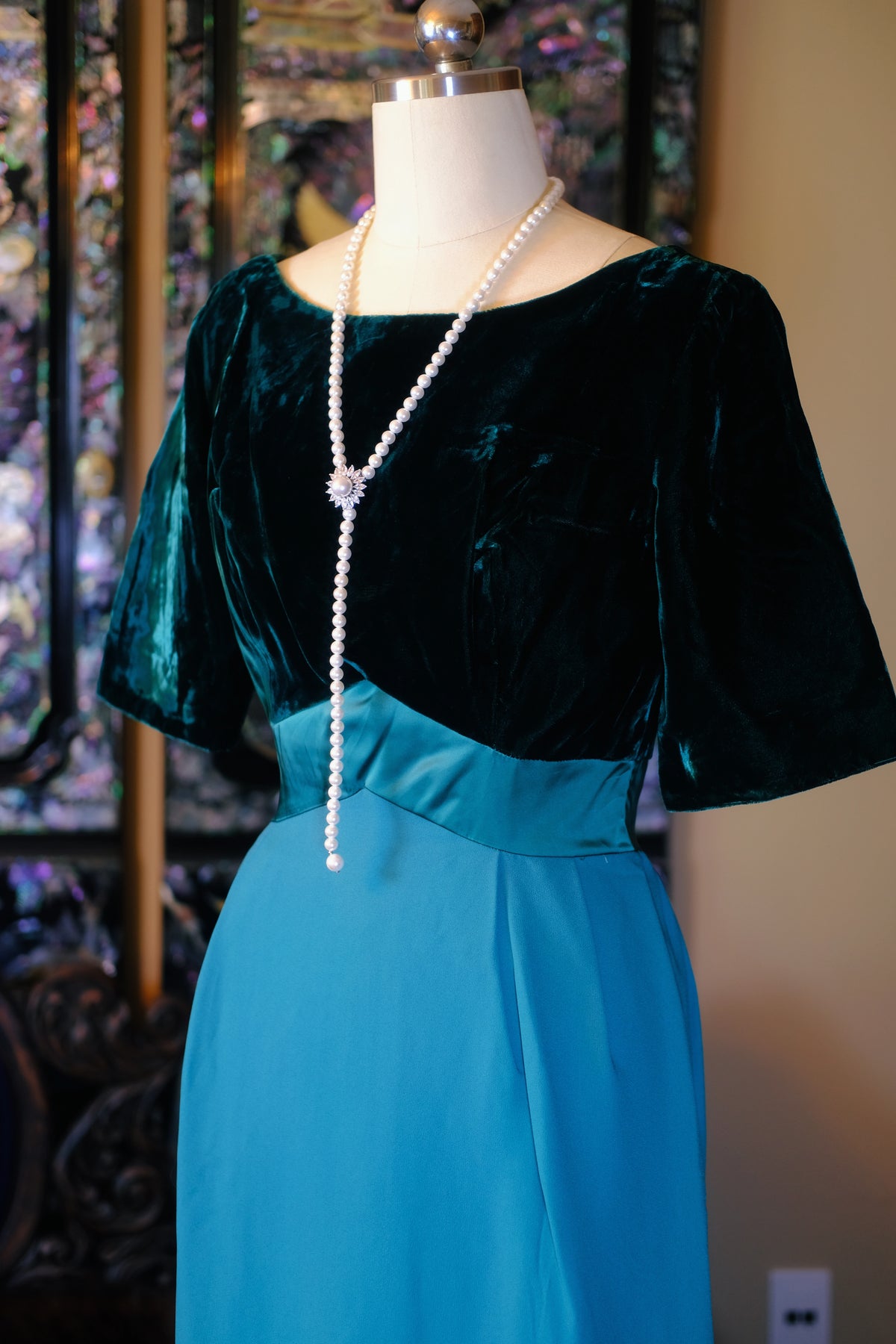
在时尚的宏大叙事中,二十世纪六十年代常被简化为一场喧嚣的革命——迷你裙的叛逆、波普艺术的迷幻与太空时代的金属光泽。然而,在这片躁动的声浪之外,始终流淌着一条静谧而高贵的暗河。眼前这件祖母绿天鹅绒拼接时装裙,便是那个时代“静谧奢华”风格的绝佳注脚,宛如一首被时光珍藏的散文诗。
色彩的隐喻:祖母绿的深沉与天蓝的清澈
色彩,是服装最直白的语言。这件裙装的上半身,选用了极致的祖母绿(Emerald Green)。
在文学与艺术的语汇中,祖母绿从不只代表一种颜色。它象征着沉静、内敛与深不可测的优雅。正如伊丽莎白·泰勒在银幕上赋予它的性感与狂野,或是伊丽莎白女王将其佩戴于身所彰显的无上尊贵,祖母绿自带一种古典的庄严感。当它化作天鹅绒的面料,光线在其绒面上漫反射,产生一种“油滴效应”般的视觉质感,绿得柔软、醇厚,如深夜的密林,引人探寻。
而裙身的下半部分,则大胆地拼接了如天空般澄澈的孔雀蓝。这是一种极具六十年代特征的色彩——明亮、纯粹、充满希望。如果说上半身的祖母绿是夜晚的深邃,那么下半身的孔雀蓝便是白昼的明朗。这种“上深下浅”的色彩分割,在视觉上极大地提升了重心,营造出一种既端庄又不失轻盈的平衡感。
材质的交响:天鹅绒的温润与织物的流动
高级时装的灵魂,在于面料的对话。这件裙装无疑是材质拼贴艺术的典范。
* 上半身:祖母绿天鹅绒
天鹅绒(Velvet),自古便是皇室与贵族的专属。它触感温润,光泽内敛,能够最完美地衬托出穿着者肤色的白皙与姿态的雍容。在六十年代,尽管合成纤维层出不穷,但天鹅绒依然是高级晚宴装中不可或缺的灵魂面料,代表着对传统工艺的坚守。
* 腰部与裙身:孔雀蓝色织物
与天鹅绒的厚重形成对比的是,腰部拼接了一段同色系的、带有丝光感的缎面织物,它像一条腰带,巧妙地勾勒出女性的腰线,并向下延伸出流畅的裙摆。裙身面料的垂坠感极佳,行走时能形成优美的“钟摆式”流动感。这种不同材质的碰撞与融合,正是六十年代高级定制精神的体现:在简约的轮廓下,隐藏着对细节的极致考究。
轮廓的诗学:建筑感剪裁与优雅的回归
这件裙装的廓形,是对六十年代“建筑感”美学的完美诠释。
* 船型领(Bateau Neckline)与三分袖:这种设计灵感可追溯至奥黛丽·赫本时代的经典风格,它能够最大程度地展现女性优美的肩颈线条与锁骨的精致。袖长恰到好处地停留在上臂中部,含蓄而得体。
* 高腰线(Empire Waist):腰线被巧妙地提升至胸下,这不仅是一种向帝国时期风格的致敬,更是一种精妙的人体工学设计。它拉长了下半身的视觉比例,使得穿着者看起来更加修长挺拔,同时在胸下形成自然的褶皱,增添了一份浪漫的柔美。
* A字型长裙:裙身从腰部自然垂下,呈A字散开,下摆及地。这种轮廓摒弃了五十年代“Dior New Look”式的繁复,以简洁流畅的线条,塑造出一种如雕塑般的体积感与稳定性。
点睛之笔:长款珍珠项链
如果说裙装本身是一首沉静的诗,那么模特佩戴的那条长款珍珠项链(Y形链)便是最动人的诗眼。它如同一道流动的月光,从颈间垂坠而下,打破了深色天鹅绒的沉闷,将人们的视线自然地引向高腰线处,不仅起到了视觉引导的作用,更注入了无可比拟的复古名伶气质。
结语
这件诞生于六十年代的礼服,超越了时代的喧嚣。它没有追随迷你裙的潮流,也没有沉迷于未来主义的狂想,而是选择回归服装的本质——以顶级的面料、精妙的剪裁和和谐的色彩,来歌颂女性的优雅与从容。
它是一件可以走入博物馆的艺术品,也是一段可以被穿着的、关于静谧与奢华的永恒记忆。
In the grand narrative of fashion history, the 1960s is frequently simplified into a clamorous revolution—the rebellion of the miniskirt, the psychedelia of Pop Art, and the metallic sheen of the Space Age. Yet beyond the din of this restless wave, a serene and noble undercurrent quietly flowed. The emerald green velvet color-blocked gown before us stands as a stellar footnote to that era's "quiet luxury," resembling a prose poem preserved by time.
Color is the most candid language of attire. The bodice of this dress utilizes the absolute pinnacle of Emerald Green.
In the lexicon of literature and art, emerald green has never represented mere color. It symbolizes serenity, restraint, and unfathomable elegance. Echoing the sensuality Elizabeth Taylor imparted to it on the silver screen, or the supreme majesty conveyed when worn by Queen Elizabeth II, emerald possesses an inherent classical solemnity. Rendered in velvet, light diffuses across its napped pile to create an optical texture akin to an "oil-drop effect"—a green that is soft, rich, and mysterious as a midnight forest, inviting exploration.
Meanwhile, the skirt section boldly contrasts this with a peacock-blue as crystalline as the sky. This shade stands out as intensely characteristic of the 1960s—bright, pure, and brimful of optimism. If the emerald green of the bodice evokes the profound depth of night, the peacock-blue below brings the clarity of day. This color-blocked division of a "dark top paired with a lighter base" visually elevates the center of gravity, achieving a balanced poise that remains dignified without losing weightlessness.
The soul of haute couture resides in the dialogue between fabrics. This dress is unquestionably an exemplar of textural collage art:
The Bodice: Emerald Velvet
Velvet has served as an exclusive preserve of royalty and aristocracy since antiquity. Tactilely warm with a muted sheen, it illuminates the wearer's porcelain skin and graceful posture with unmatched splendor. In the 1960s, despite the rapid emergence of synthetic fibers, velvet remained an indispensable centerpiece for high-end eveningwear, representing a steadfast commitment to traditional craftsmanship.
The Waist and Skirt: Peacock-Blue Woven Textile
Contrasting with the substantial weight of the velvet, the waist is inset with a tonal, mercerized satin fabric. Functioning like a midsection belt, it artfully outlines the female waistline before cascading downward into a fluid skirt. The fabric exhibits an exceptional drape, creating a graceful pendulum-like sway in motion. This collision and synthesis of contrasting textures encapsulates the spirit of 1960s haute couture: concealing supreme attention to detail beneath a deceptively simple silhouette.
The silhouette of this gown offers a flawless interpretation of 1960s "architectural" aesthetics:
Bateau Neckline & Three-Quarter Sleeves: Drawing inspiration from the iconic style of the Audrey Hepburn era, this neckline exposes the graceful contour of the shoulders and collarbones to maximum effect. The sleeves stop purposefully at mid-upper arm, retaining a reserved decorum.
Empire Waist: The waistline is elevated beneath the bust—an homage to the Empire style paired with clever ergonomic design. Visually elongating the lower body to render a tall, slender line, it forms soft, natural gathering below the bust to add a touch of romantic gentleness.
A-Line Maxi Skirt: The skirt falls naturally from the waist, expanding into a floor-sweeping A-line contour. Rejecting the cumbersome layering of the 1950s "Dior New Look," it uses clean, sweeping lines to forge a sculpted sense of volume and stability.
If the gown itself is a tranquil poem, the long pearl Y-necklace worn by the model acts as its most moving poetic anchor. Cascading from the neckline like liquid moonlight, it shatters the gloom of the dark velvet and guides the eye toward the high waistline—serving as a visual anchor while instilling an incomparable vintage screen-siren aura.
Born in the 1960s, this evening gown transcends the noise of its era. Refusing to chase the trend of the miniskirt or succumb to Space Age fantasies, it chooses instead to return to the essence of dress: using supreme fabrics, refined tailoring, and harmonious colors to celebrate feminine poise and composure.
It stands as an artwork worthy of a museum collection—a wearable, everlasting memory of quiet luxury.