深圳溯源
无法加载取货服务可用情况
衣服尺寸:
胸围/腰围/臀围/衣长:94/76/96/94 厘米
细节描述:
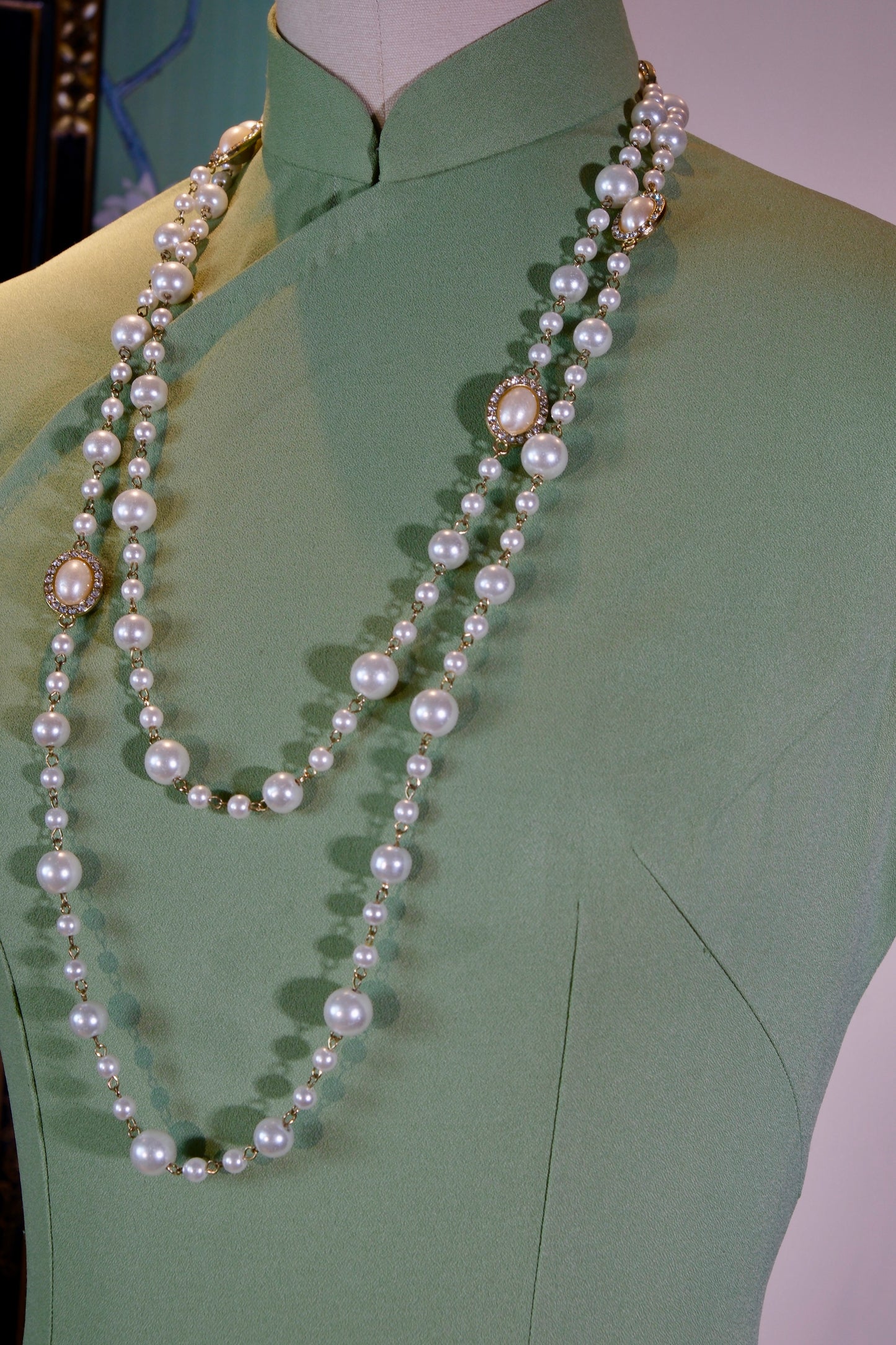
这件古董旗袍,是上世纪六十年代台湾裁缝以意大利进口时装料精心制作的杰作,融合了东西方美学与工艺精髓。其浅绿色调如春日新芽,温润雅致,既承袭了传统旗袍的含蓄内敛,又因面料的光泽与垂坠感而焕发现代气息。无袖设计与立领剪裁,勾勒出女性肩颈线条的柔美,而收腰廓形则凸显了六十年代对女性曲线的推崇,是当时“中西合璧”时尚思潮的典型体现。
图案与工艺细节
此旗袍虽为素色,但其“图案”实为面料本身的肌理与光影变化所构成。意大利进口料质地细腻,表面带有微妙的光泽流转,随光线角度呈现深浅不一的绿色层次,宛如水墨晕染,无需繁复刺绣便自成风韵。这种“以质代纹”的设计哲学,正是高级定制服装的精髓所在——以材质本身说话,而非依赖外在装饰。
历史背景与文化价值
六十年代的台湾,正处于经济起飞与文化转型期,旗袍作为女性日常与社交场合的重要服饰,不仅承载着传统审美,更成为身份与品味的象征。彼时,许多裁缝铺开始引入欧洲面料,结合本地工艺,创造出兼具东方神韵与西方剪裁的“新式旗袍”。这件作品正是这一历史阶段的实物见证,其稀缺性不仅在于年代久远,更在于它代表了那个时代女性对美与自由的追求。
艺术风格与稀缺性
从艺术史角度看,这件旗袍体现了“极简主义”与“东方禅意”的早期融合。它不靠图案取胜,而以色彩、剪裁、面料三者之间的和谐关系构建视觉美感,这与同时期西方现代主义设计思潮遥相呼应。在古董衣市场中,如此保存完好、工艺精湛且具明确历史背景的六十年代台湾产旗袍极为罕见,堪称“可穿着的艺术品”。
引经据典
正如《礼记·深衣》所言:“古者深衣,盖有制度,以应规、矩、绳、权、衡。”这件旗袍虽非古代深衣,却同样遵循着“度身而制、因时而变”的造物智慧。它不仅是衣物,更是时代精神的载体,是女性在传统与现代之间寻找自我表达的无声宣言。
Measurements / Size Guide:
Bust / Waist / Hips / Total Length: 94/76/96/94 cm
Detailed Description:
This antique qipao is a masterfully executed piece crafted by a Taiwanese tailor in the 1960s utilizing premium fashion material imported from Italy, flawlessly blending the core philosophies of Eastern and Western aesthetics and technique. Its pale green coloration, reminiscent of fresh springtime shoots, is gentle, warm, and elegant. It firmly inherits the classic reserve and modesty of the traditional qipao while projecting a distinctly modern breath through the natural luster and dramatic drape of the premium substrate. The sleek, sleeveless configuration operates in tandem with the standing collar construction to refine the soft contours of the female neck and shoulders, while the closely tailored waist silhouette highlights the mid-century appreciation for anatomical curves—serving as a textbook manifestation of the "East meets West" fashion philosophy of that era.
Although monochromatic and devoid of surface prints, the "patterning" of this qipao is generated entirely by the structural weave, texture, and shifting play of light across the fabric itself. The fine-spun Italian imported material possesses an exceptionally delicate texture, with a subtle, fluid sheen running across its surface. Under directed illumination, it unveils shifting depths of green tonal layers akin to the graduated bleeding of Chinese ink wash painting, establishing a supreme sense of grace without relying on complex embroidery. This design philosophy of "substituting pattern with material texture" sits at the very heart of haute couture—allowing the raw purity of the textile to articulate the garment's identity rather than relying on external ornamentation.
During the 1960s, Taiwan was entering a pivotal window of rapid economic takeoff and socio-cultural transformation. As a staple of both daily wear and elite social functions, the qipao during this decade did not merely anchor traditional aesthetics; it evolved into a definitive marker of social status and refined personal taste.
During this period, premium tailor shops began actively introducing European textiles, fusing them with local handcraft to forge a "new style qipao" that possessed both Eastern spiritual resonance (qiyun) and Western tailoring discipline. This specific piece stands as a primary physical document of that transitional historical phase. Its curation premium resides not only in its age, but in its capacity to archive the mid-century woman's pursuit of modern beauty and personal liberation.
Examined through the lens of art history, this qipao reflects an early, masterful integration of Minimalist functionalism and Eastern Zen philosophy. It explicitly refuses to rely on loud graphics for visual impact, constructing its aesthetic weight solely through the harmonious calibration of color, silhouette, and textile quality—conceptually echoing the Western modernist design movements happening concurrently across the globe.
Within the antique clothing market, a 1960s Taiwanese-manufactured qipao that exhibits such pristine preservation quality, masterful execution, and a clear socio-historical background is an absolute anomaly, truly existing as a piece of wearable art.
As the ancient text The Book of Rites: Dark Robes (Liji: Shenyi) profoundly asserts: "The deep robes of antiquity conformed to strict metrics, aligning with the compass, the square, the rule, and the balance." Though this modern qipao diverges from the ancient shenyi form, it faithfully adheres to the timeless creative wisdom of "tailoring according to the physical form, and mutating according to the demands of the era." It completely transcends its utilitarian boundaries as a garment to exist as a physical vessel for the spirit of its times—a silent manifesto of women navigating and declaring their self-expression at the crossroads of tradition and modernity.