深圳溯源
无法加载取货服务可用情况
衣服尺寸:
胸围/腰围/臀围:82/62/96 厘米
衣长:102 厘米
细节描述:
一、器物之美:面料与剪裁的跨洋对话
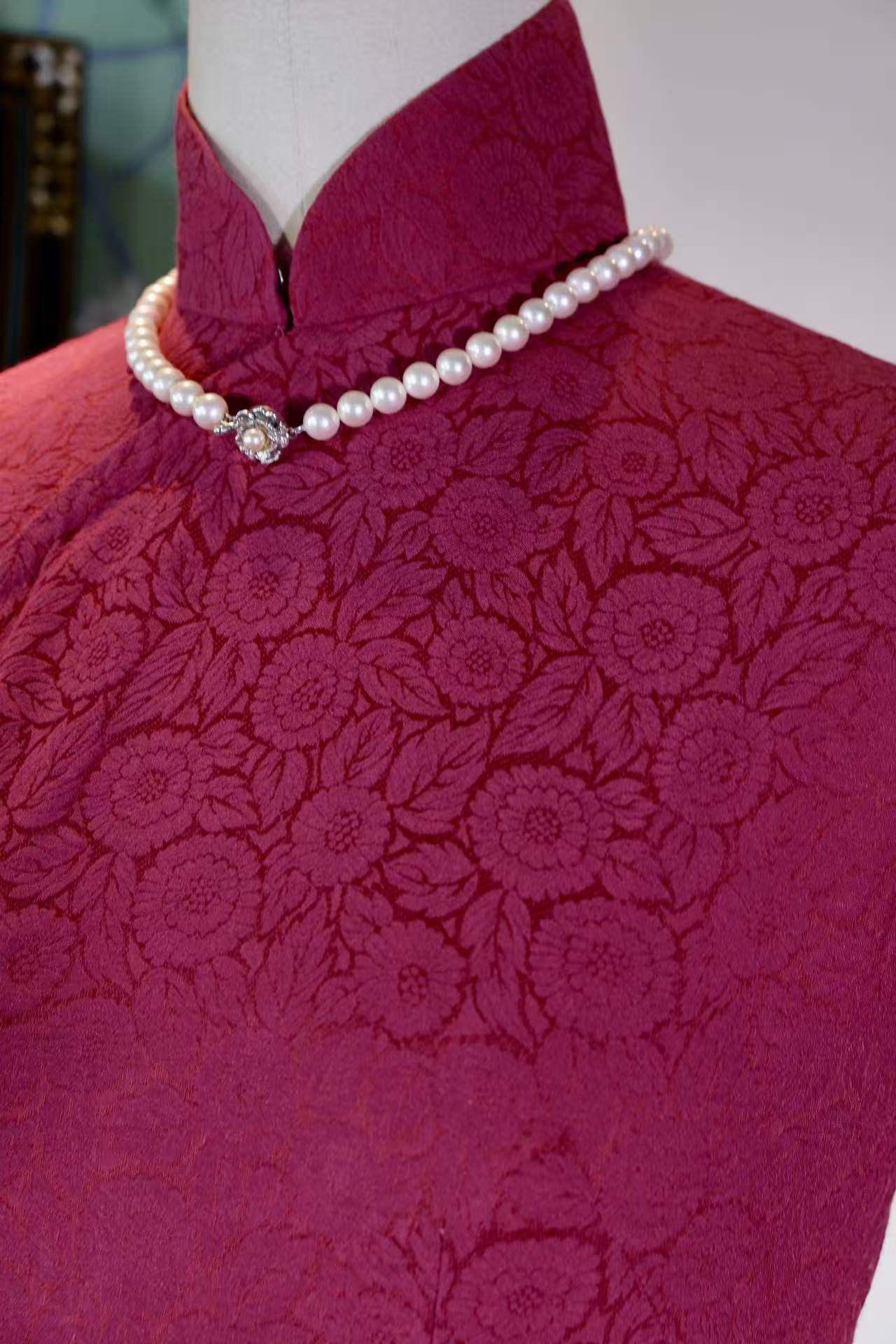
这件诞生于上世纪五十年代的古董旗袍,是东西方纺织文明交汇的珍贵标本。其面料源自意大利进口的顶级提花织物,这种工艺在当时极尽奢华。不同于平纹丝绸的素雅,提花工艺通过经纬线的复杂交织,在布面上直接“织”出立体的图案。
- 图案解析:衣身遍布着繁复而规整的菊瓣纹样。这些花卉并非简单的印染,而是通过丝线的光泽差异呈现出浮雕般的质感。花朵饱满圆润,枝叶连绵不断,寓意着“富贵连绵、生生不息”。这种图案布局深受中国传统吉祥纹样的影响,但织造技法却带有明显的欧式宫廷风格,体现了那个时代特有的审美融合。
- 色彩美学:色泽为浓郁的胭脂玫红(或称玫瑰紫)。这是一种极具张力的颜色,既保留了东方女性的端庄沉稳,又融入了西方时尚的大胆热烈。在自然光下,随着穿着者的走动,提花纹理会产生微妙的光影流转,宛如流动的液体宝石。
- 海派剪裁:作为“香港产”的代表作,它完美继承了海派旗袍的精髓。立领高度适中,不仅修饰颈部线条,更透着一种克制的优雅;收腰设计极其考究,利用归拔工艺贴合人体曲线,展现出女性曼妙的身姿;袖口微翘,长度恰到好处地遮挡了大臂最粗处,尽显含蓄之美。
二、历史回响:五十年代香江的流金岁月
若要读懂这件旗袍,便需回到那个风云变幻的五十年代。彼时,上海的一批顶尖裁缝带着技艺南下香港,将原本属于十里洋场的精致带到了维多利亚港畔。
- 身份的符号:在那个物资相对匮乏但精神极度昂扬的年代,拥有一件进口面料制作的旗袍,不仅是财富的象征,更是品味的宣言。它往往出现在名媛的下午茶会、重要的社交晚宴或是家族的合影之中。
- 工艺的绝唱:五十年代的香港旗袍制作正处于巅峰期,讲究“量体裁衣,一人一版”。如今,这种纯手工的立体剪裁技艺已近乎失传,机器量产的成衣再也无法复刻那种贴合肌肤的温润感。
三、文化互文:引经据典看稀缺性
张爱玲曾在《更衣记》中写道:“对于不会说话的人,衣服是一种语言,随身带着的是袖珍戏剧。”这件旗袍,正是一出无声的戏剧。
- “锦衣夜行”的遗憾与重现:古人云“锦衣夜行”,意指华美的衣服若在黑暗中无人欣赏便是遗憾。这件旗袍沉睡数十载,今日重见天日,其稀缺性不仅在于面料的不可再生(当年的意大利老厂多已倒闭或改变工艺),更在于它所承载的那个“慢工出细活”的时代精神已一去不返。
- 中西合璧的典范:它印证了费孝通先生所言的“各美其美,美人之美,美美与共”。西方的提花技术服务于东方的身体哲学,这种跨越文化的艺术张力,使其超越了单纯的衣物范畴,成为了一件可穿戴的艺术品。
四、收藏寄语
这不仅是一件衣裳,更是一段被封存的时光。它见证了半个多世纪前的香江风华,记录了那个时代女性对美的极致追求。对于收藏家而言,拥有它,便是拥有了一段触手可及的历史,一份独一无二的优雅。
总结: 这件1950s意大利提花香港产古董旗袍,以其精湛的立体提花工艺、经典的胭脂玫红色调以及完美的海派剪裁,成为了那个黄金时代的缩影。它不仅展示了极高的艺术价值,更因其不可复制的历史背景与制作工艺,具备了极高的收藏稀缺性。
Measurements / Size Guide:
Bust / Waist / Hips: 82/62/96 cm
Total Length: 102 cm
Detailed Description:
Born in the 1950s, this vintage qipao stands as a precious specimen showing the intersection of Eastern and Western textile civilizations. Its fabric originates from premium imported Italian jacquard, a textile that represented the height of luxury during the mid-century. Departing from the understated elegance of plain-weave silk, the jacquard technique utilizes a complex interlacing of warp and weft threads to directly weave a three-dimensional pattern into the cloth.
Pattern Analysis: The body of the garment is covered all over with intricate and highly orderly chrysanthemum petal motifs. Rather than being simply printed or dyed, these flora emerge with a relief-like, sculptural quality generated by the varying luster of the silk threads. The blossoms are full and rounded, their stems and leaves continuous and unbroken—symbolizing fugui lianmian (unending wealth and continuous prosperity). While this compositional layout is deeply influenced by traditional Chinese auspicious motifs, the weaving technique bears a distinct European courtly flair, manifesting the unique aesthetic fusion of the era.
Color Aesthetics: The coloration is a rich rouge rose-pink (often referred to as rose-purple). This is a hue brimming with visual tension; it retains the dignified composure of Eastern women while incorporating the bold, passionate flair of Western mid-century fashion. Under natural light, the jacquard texture yields subtle ripples of light and shadow as the wearer moves, resembling a fluid, liquid gemstone.
Haipai Tailoring: As a classic representative of mid-century Hong Kong craftsmanship, this piece perfectly inherits the essence of Haipai (Shanghai-style) tailoring. The mandarin collar is structured to a moderate height, beautifully elongating the neck line while projecting a disciplined elegance. The cinched waist is meticulously engineered, utilizing the traditional gui-ba (stretching and shrinking) ironwork technique to perfectly contour to the human form. The slightly flared cuffs are tailored to a flawless length that subtly covers the upper arm, epitomizing the beauty of Eastern understatement.
To truly comprehend the soul of this qipao, one must travel back to the shifting tides of the 1950s. During this period, a wave of elite master tailors from Shanghai migrated south to Hong Kong, transplanting the unparalleled refinement of the old Shanghai high society onto the shores of Victoria Harbour.
A Symbol of Identity: In an era when material resources were relatively scarce but cultural spirits ran high, owning a qipao fashioned from imported European fabric was not merely a symbol of wealth—it was a definitive declaration of taste. Such garments were worn specifically for high-society afternoon teas, critical social banquets, or formal family portraits.
Swan Song of Custom Craftsmanship: The 1950s marked the absolute pinnacle of Hong Kong's custom qipao era, which strictly adhered to the philosophy of "tailoring to the individual, one pattern per body." Today, this completely handmade approach to three-dimensional tailoring is nearly a lost art; mass-produced industrial garments can never replicate the organic warmth of a dress that skims the skin so flawlessly.
The author Eileen Chang once noted in A Chronicle of Changing Clothes, "To those who cannot speak, clothing is a form of speech; it carries with it a pocket-sized drama." This qipao is precisely such a silent theatrical performance.
The Regret and Resurgence of "Night Walks in Silk": An old Chinese proverb speaks of the tragedy of "walking in splendid silk garments at night" (jinyi xiexing), implying the profound waste of beautiful attire left unappreciated in the dark. Having slumbered for several decades, this qipao re-emerges into the light today. Its rarity lies not only in the non-renewable nature of the textile itself—as most mid-century Italian mills have long since closed or altered their looms—but in the fact that the spirit of that era, which fiercely prioritized slow, deliberate craftsmanship, has vanished forever.
A Paradigm of East-Meets-West: This piece serves as physical evidence of what sociologist Fei Xiaotong described as "appreciating one's own beauty, respecting the beauty of others, and coexisting in shared harmony" (meimei yugong). Western jacquard technology here serves the philosophy of the Eastern silhouette. This cross-cultural artistic tension elevates the garment beyond a simple article of clothing, transforming it into a magnificent piece of wearable art.
This is more than an article of clothing; it is a segment of time captured in amber. It bears witness to the mid-century elegance of Hong Kong and records the ultimate pursuit of beauty by women of that generation. For a discerning collector, to possess it is to possess a tangible piece of history—an irreplaceable, living monument to elegance.