溯源
无法加载取货服务可用情况
衣服尺寸:
胸围/腰围/臀围/衣长:92/84/100/105 厘米
细节描述:
【藏品基本信息】
项目 内容
名称 琥珀金仿丝缎面旗袍
年代 约1950年代
产地 中国香港
面料 进口人造丝缎(Rayon Satin,南洋进口)
工艺 海派立体裁剪 · 港式手工缝制
【视觉描述:流光溢彩的素面美学】
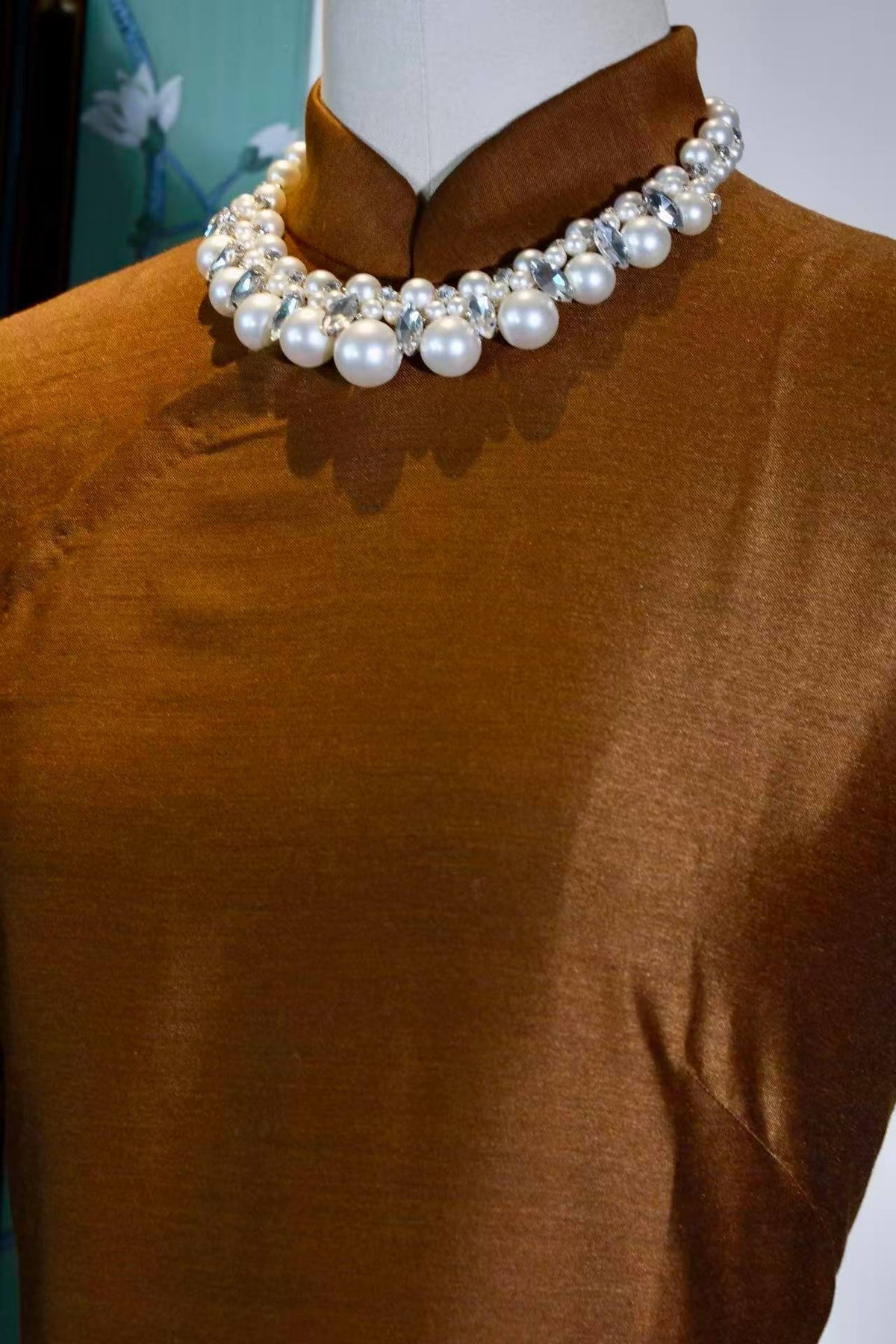
此件旗袍通体无刺绣、无印花,却因面料本身的材质特性而呈现出极为丰富的视觉层次。
采用1950年代从南洋进口的人造丝缎面料制成。人造丝(Rayon)是二十世纪上半叶最具革命性的化学纤维之一,它以天然纤维素为原料,经化学纺丝而成。其缎面织造工艺赋予了衣物表面一种如流水般温润的光泽——正如此衣所呈现的琥珀金与焦糖古铜色泽,在光线折射下泛着如同"炉火照天地,红星乱紫烟"般的金属质感。
这种面料的珍贵之处在于其"看似素面,实有千纹"的视觉效果:缎纹组织的经纬交织在光线下形成细密的斜向光泽带,随人体曲线起伏而明暗交替,如落日熔金、波光粼粼。
【工艺特征:五十年代"港工"的巅峰之作】
1950年代的香港,是中国近代旗袍工艺承前启后的重要枢纽。大批上海"红帮裁缝"南下香江,将西方立体剪裁技术与中国传统缝制工艺相融合,催生了独树一帜的"港工旗袍"。
此件展品集中体现了港工旗袍的核心工艺特征:
- 立领高耸:前领呈优雅V形开口,贴合颈部曲线,兼具端庄与摩登。
- 立体省道:胸省、腰省、腋下省三维联动,完全摒弃传统平面裁剪的宽松结构,精准贴合女性身形,呈现出极致的沙漏轮廓。
- 袖型改良:落肩微喇短袖,既修饰臂线,又赋予穿着者轻盈舒展的活动空间。
- 暗合拉链:侧缝或后缝暗设金属拉链,取代传统盘扣,体现了五十年代对效率与现代审美的双重追求。
【历史叙事:一截南洋舶来的摩登记忆】
人造丝在1950年代的全球贸易中具有特殊意义。彼时东南亚地区(尤其是泰国、马来亚等地)是重要的纺织原料与成品转口贸易中心。从南洋进口的人造丝缎面料运抵香港后,由本地经验丰富的裁缝手工缝制为旗袍,这一"南洋面料 + 港工手艺"的组合,本身就是战后东亚贸易网络与人口流动的物质见证。
可以想象,当年定制此衣的女主人,或许是一位出入中环写字楼或半山社交场合的现代职业女性。她身披这件琥珀金缎面旗袍,步履从容,衣摆生风——那光泽流动的缎面,记录着一个时代女性从闺阁走向公共空间的自信与力量。
正如张爱玲在《更衣记》中所写:
"各人住在各人的衣服里。"
这件旗袍,便是五十年代香港都市女性最忠实的"居所"。
Measurements / Size Guide:
Bust / Waist / Hips / Total Length: 92/84/100/105 cm
Detailed Description:
Basic Information
| Feature | Details |
| Title | Amber Gold Imitation Silk Satin Cheongsam |
| Era | Circa 1950s |
| Origin | Hong Kong, China |
| Fabric | Imported Rayon Satin (Imported from Nanyang) |
| Craftsmanship | Shanghainese 3D Tailoring · Hong Kong Hand-Sewing |
Visual Description: The Radiant Aesthetics of a Plain Surface
This cheongsam carries no embroidery and no printed patterns across its entirety, yet it displays an extraordinarily rich visual depth through the inherent quality of the fabric itself.
Crafted from rayon satin imported from Nanyang (Southeast Asia) in the 1950s, it utilizes one of the most revolutionary chemical fibers of the early-to-mid 20th century. Rayon, produced by spinning regenerated natural cellulose, achieves a liquid-smooth finish through satin-weave construction. The resulting amber gold and caramel bronze hues gleam under shifting light, casting a metallic luster reminiscent of molten gold.
The true value of this fabric lies in its subtle, living texture: the warp and weft of the satin structure form fine, diagonal bands of shimmer beneath the light. As the garment follows the body’s contours, light and shadow alternate gracefully, evoking the image of a setting sun melting into golden ripples.
Craftsmanship: The Zenith of 1950s "Hong Kong Tailoring"
In the 1950s, Hong Kong served as a vital bridge in the history of modern cheongsam tailoring. As master tailors from Shanghai’s renowned Hongbang tradition migrated south to the island, they integrated Western three-dimensional draping with traditional Chinese sewing methods, giving birth to the distinct "Hong Kong Tailored Cheongsam."
This piece exemplifies the core craftsmanship of that golden era:
High Mandarin Collar: Designed with an elegant V-shaped front opening, it contours smoothly to the neck, striking a balance between modesty and modernity.
Three-Dimensional Darts: Bust, waist, and underarm darts work together in harmony. Completely departing from the loose, flat-pattern cuts of earlier traditions, it closely sculpts the female form to create a refined hourglass silhouette.
Modified Sleeve Cut: Slanted-shoulder, subtly flared short sleeves offer both coverage for the arms and comfortable freedom of movement.
Concealed Zipper: A metal zipper is discreetly set into the side or back seam, replacing traditional frog buttons—a reflection of the 1950s pursuit of efficiency and modern functionality.
Historical Narrative: A Fragment of Modernity Imported from Nanyang
Rayon held a unique position in 1950s global commerce. At the time, Southeast Asia (particularly Thailand and Malaya) served as an essential hub for the import, export, and transit of textile raw materials and finished goods. The journey of this rayon satin—imported from Nanyang to Hong Kong and transformed into a bespoke cheongsam by local master artisans—stands as physical proof of post-war East Asian trade networks and migration.
It is easy to picture the original owner of this custom garment: perhaps a modern professional woman walking through the office towers of Central or attending social gatherings in the Mid-Levels. Draped in this amber-gold satin cheongsam, her steps are confident and unhurried. The shimmering satin captures a pivotal era, documenting the confidence and independence of women stepping out of private domestic spheres and into the public eye.
As Eileen Chang famously reflected in A Record of Changing Clothes:
"Each person lives inside their own clothes."
This cheongsam served as the most faithful dwelling for the urban woman of 1950s Hong Kong.