溯源
无法加载取货服务可用情况
【形制与时代背景】
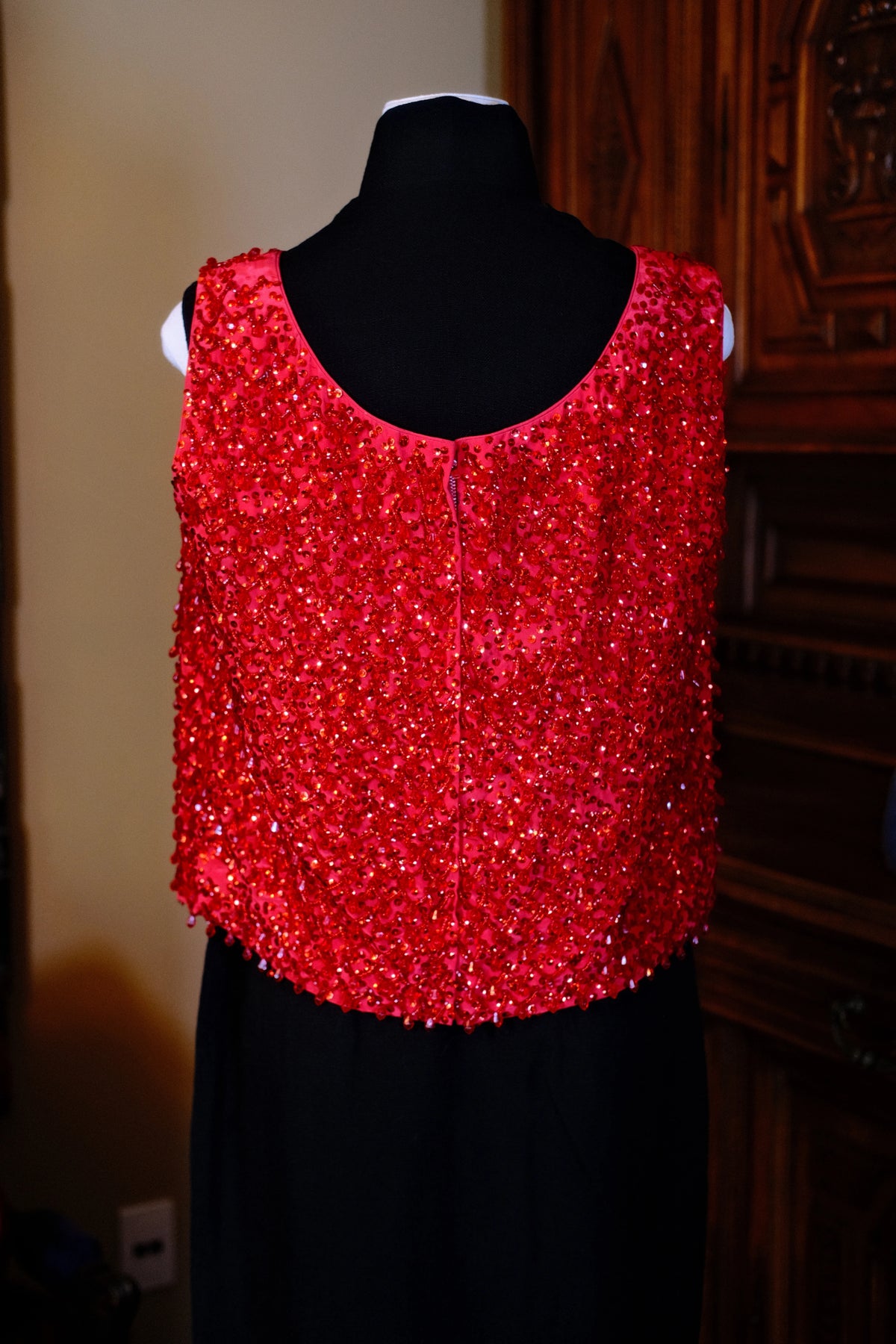
本藏品为1960年代香港地区所产,是一件极具代表性的港式时尚单品——手工钉珠红坎肩。
二十世纪六十年代,随着内地海派裁缝大规模南下,香港迅速成为东西方服饰文化交融的“时装熔炉”。彼时的女装,在保留中式旗袍传统神韵的基础上,大胆汲取了西方立体剪裁的精髓。这种外搭式坎肩(Sleeveless Jacket/Waistcoat)便是当时名媛淑女的流行标配,它打破了传统旗袍的平面感,在增加着装层次的同时,更为夜场文化或重要社交场合赋予了极强的仪式感与舞台张力。
【面料与工艺细节】
此件背心在工艺上达到了那个年代手工定制的巅峰水准。
* 底料与配色: 选用了质地细腻、光泽温润的粉色真丝绡作为底衬,与表层大面积的高饱和度红色管珠形成了微妙的色彩层次。这种“透底映红”的视觉效果,使得整件衣服在光线折射下,呈现出如晚霞般绚烂而富有深度的色泽。
* 针法与珠绣: 绣工承袭了潮绣与粤绣中“密不透风”的珠管绣技法。数以万计的红色亮片与细管珠,由工匠一针一线,以极其耗费工时的平针技法密密缝缀于真丝之上。珠片的排列并非杂乱堆砌,而是构成了繁复而有序的浮雕式纹理。这种重工钉珠不仅增加了面料的垂坠感与挺括度,更使得整件坎肩宛如一件精美的立体浮雕艺术品。
【穿搭美学与历史呼应】
在美学呈现上,本件藏品与温哥华Woo女士珍藏的黑色长衫(旗袍)叠穿,堪称经典。
这种“内深外艳”的色彩搭配,完美契合了中国传统美学中“朱砂点漆”的极致对比。黑色旗袍作为“留白”与“收敛”,勾勒出女性端庄内敛的骨相;而外罩的红珠坎肩则如“点睛”之笔,尽显海派摩登的奢华与张扬。
正如老上海与老港片时期(如乐蒂女士的经典银幕形象)所呈现的,这种穿搭方式既保留了东方女性“犹抱琵琶半遮面”的含蓄风韵,又完美展现了西式晚装的结构感与华丽度,是20世纪60年代“中西合璧”服饰美学在实物档案中的绝佳见证。
This archival piece hails from 1960s Hong Kong—a quintessential example of mid-century Hong Kong haute couture styling: a hand-beaded red waistcoat (Sleeveless Jacket).
During the 1960s, following the southward migration of master Shanghai-school (Haipai) tailors, Hong Kong rapidly emerged as a fashion melting pot bridging East and West. Womenswear of this era retained the traditional essence of the Chinese Qipao while boldly assimilating the structural precision of Western draping. Layered waistcoats of this style became a prevailing wardrobe staple among high-society ladies and socialites. Breaking the visual flatness of a traditional single-piece Qipao, this garment added structural depth while instilling an unmistakable sense of ceremony and stage presence tailored for evening soirées and key social occasions.
Executing the pinnacle of mid-century bespoke handcraftsmanship, this vest displays remarkable technical mastery:
Foundation & Color Palette: The underlying shell utilizes delicate pink silk organza with a subtle, luminous luster, creating a nuanced tonal gradient beneath the dense layer of high-saturation red bugle beads. This visual technique of a "translucent undertone reflecting through crimson" allows the garment to radiate a hue as rich and deep as a glowing sunset under shifting light.
Needlework & Bead Embroidery: The beadwork inherits the dense, full-coverage bead embroidery techniques (Zhuguan Xiu) characteristic of Chaoshan and Cantonese embroidery. Tens of thousands of red sequins and fine bugle beads were meticulously hand-sewn onto the silk ground, stitch by stitch, using extremely labor-intensive flat-stitch methods. Rather than a chaotic scatter, the beads are arrayed to form a intricate, relief-like tactile texture. This heavy beadwork endows the textile with substantial drape and structural firmness, elevating the waistcoat into a three-dimensional work of relief art.
Within visual presentation, pairing this archival piece over the black silk Qipao from Ms. Woo’s collection in Vancouver represents an absolute triumph of vintage styling.
This color contrast of a "dark interior wrapped in vibrant exterior" flawlessly aligns with the classical Eastern aesthetic tradition of "vermilion painted over black lacquer." The black Qipao serves as negative space and restraint, contouring the dignified, introverted poise of the female form; meanwhile, the outer red beaded waistcoat acts as the defining stroke of master craftsmanship, exuding the opulence and expressive flair of Shanghai-school modernism.
Echoing the silver screen imagery of vintage Shanghai and Golden Age Hong Kong cinema (such as the classic screen persona of actress Betty Loh Ti), this layering method preserves the reserved allure of Eastern womanhood while displaying the structural drama and splendor of Western eveningwear. It stands as a flawless physical witness to the "East-meets-West" fashion synthesis of the 1960s.