深圳溯源
无法加载取货服务可用情况
衣服尺寸:
胸围/腰围/臀围:94/72/94 厘米
衣长:112 厘米
细节描述:
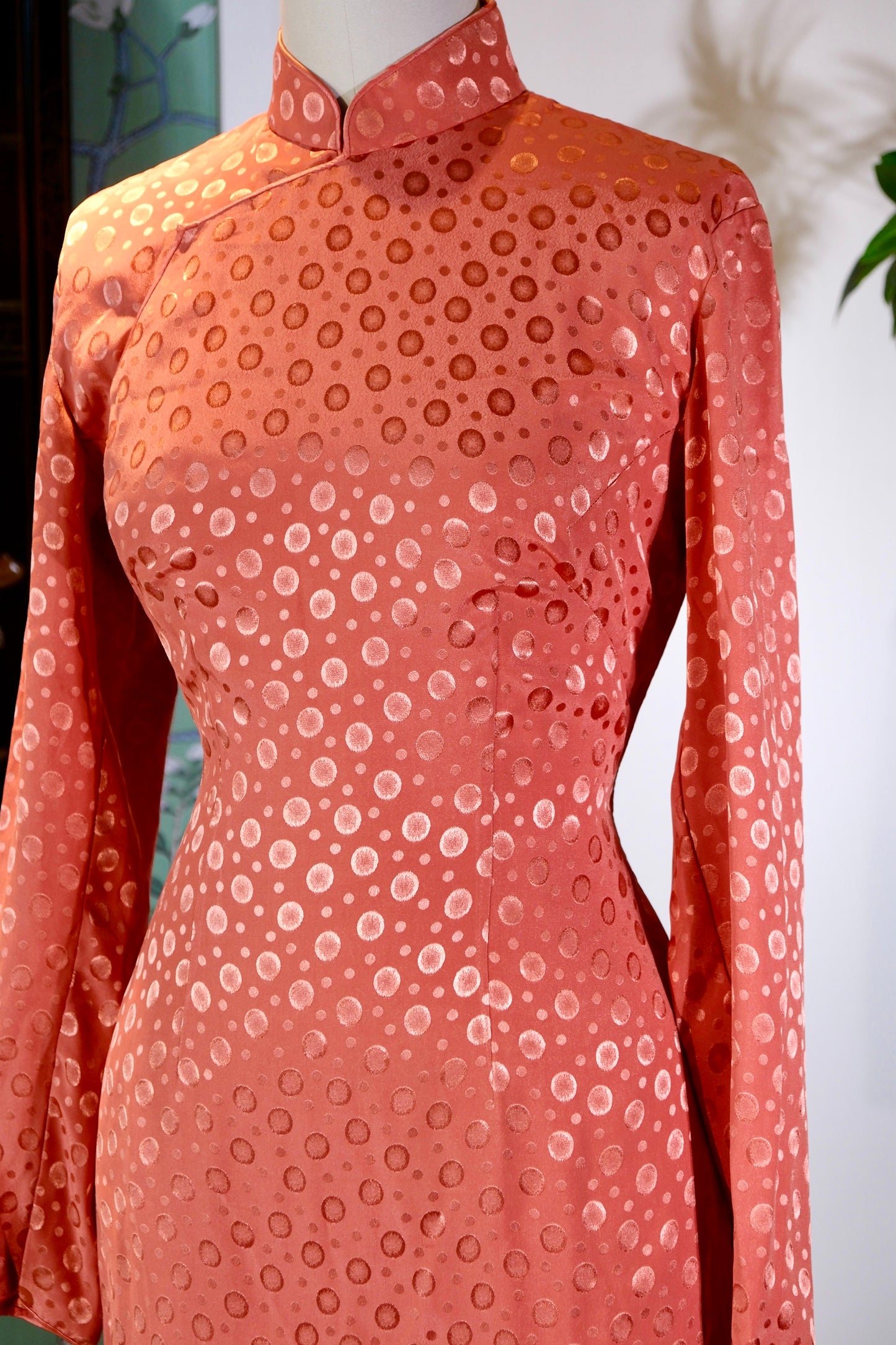
这件诞生于上世纪五十年代的香港产古董旗袍,恰是这一美学巅峰的缩影。它以鲑鱼粉为底色,通体铺陈着提花织就的波点纹样——大小不一的圆点如星子散落,在光影流转间泛着珍珠般的柔润光泽。这种看似简约的图案,实则暗合了彼时香港纺织业的精湛技艺:提花工艺使波点脱离平面印染的单调,以浮凸的肌理赋予面料呼吸感,既呼应了五十年代全球流行的“波点热潮”(源于迪奥“新风貌”的几何美学影响),又以东方丝绸的含蓄质感,将西方的现代性悄然本土化。
五十年代的香港,是东西方文化激烈碰撞又温柔交融的“东方好莱坞”。彼时的旗袍,既保留了民国时期的修身剪裁——高领斜襟、收腰放摆,以曲线勾勒女性的婉约风骨;又吸纳了西方时装的立体剪裁理念,肩线更为贴合,袖口微收,展现出战后女性追求独立与优雅的矛盾与统一。
这件旗袍的稀缺性,更在于其“港产”身份的珍贵。五十年代的香港旗袍业,汇聚了从上海南迁的顶尖裁缝,他们将“海派旗袍”的精致与香港本地的务实精神结合,创造出“港式旗袍”的独特风格:用料考究却不浮夸,设计时髦却不失传统韵味。而提花波点面料在当时属进口奢侈品,多用于高级定制,存世量极少。
张爱玲在《更衣记》中写道:“回忆这东西若是有气味的话,那就是樟脑的香,甜而稳妥,像记得分明的快乐,甜而怅惘,像忘却了的忧愁。”这件旗袍,恰似一阙被时光封存的霓裳旧梦。它不仅是一件衣物,更是一段历史的切片:见证了五十年代香港的经济腾飞与文化繁荣,承载了那个时代女性对美的极致追求,也凝结了传统工艺与现代设计的碰撞火花。
如今,当我们凝视这件旗袍上跳跃的波点,仿佛能听见旧上海百乐门的爵士乐,看见维多利亚港畔的霓虹初上,触摸到那个黄金年代里,女性以衣为笔,书写自我的温柔力量。它是可触摸的历史,是可穿着的艺术,更是时光长河中,永不褪色的东方美学符号。
Measurements / Size Guide:
Bust / Waist / Hips: 94/72/94 cm
Total Length: 112 cm
Detailed Description:
This antique qipao, born in 1950s Hong Kong, is a quintessential microcosm of an aesthetic pinnacle. With a salmon-pink base, the garment is entirely adorned with polka-dot patterns woven through jacquard techniques—dots of varying sizes are scattered like stars, radiating a pearl-like soft luster as light and shadow dance across them. This seemingly simple pattern actually conceals the exquisite craftsmanship of the Hong Kong textile industry at the time: the jacquard process allows the polka dots to transcend the monotony of flat printing, granting the fabric a sense of "breathability" through raised textures. It both echoes the global "polka-dot craze" of the 1950s (influenced by the geometric aesthetics of Dior’s "New Look") and quietly localizes Western modernity through the subtle, restrained texture of Oriental silk.
Hong Kong in the 1950s was the "Hollywood of the East," where Eastern and Western cultures collided fiercely yet merged tenderly. The qipao of this era retained the form-fitting tailoring of the Republican period—high collars, slanted closures, cinched waists, and flared hems to outline a woman’s graceful character—while absorbing Western 3D tailoring concepts. The shoulder lines became more fitted and the cuffs slightly tapered, showcasing the contradiction and unity of post-war women pursuing both independence and elegance.
The scarcity of this qipao lies further in the preciousness of its "Hong Kong-made" identity. The 1950s Hong Kong qipao industry brought together top tailors who had migrated south from Shanghai. They combined the exquisite nature of "Haipai (Shanghai-style) qipaos" with the pragmatic spirit of local Hong Kong, creating the unique "Hong Kong-style qipao": meticulous yet not ostentatious in material, fashionable yet never losing traditional charm. Polka-dot jacquard fabric was considered an imported luxury at the time, mostly reserved for haute couture, making surviving pieces extremely rare.
Eileen Chang wrote in A Record of Changing Clothes: "If memory had a scent, it would be the fragrance of camphor—sweet and steady, like a clearly remembered joy; sweet and wistful, like a forgotten sorrow." This qipao is exactly like a neon dream of bygone garments sealed by time. It is not merely a piece of clothing but a slice of history: a witness to the economic takeoff and cultural prosperity of 1950s Hong Kong, a carrier of the ultimate pursuit of beauty by women of that era, and a crystallization of the sparks between traditional craftsmanship and modern design.
Today, as we gaze upon the dancing polka dots on this qipao, it is as if we can hear the jazz of Old Shanghai’s Paramount, see the neon lights beginning to glow along Victoria Harbour, and touch the gentle power of women in that golden age who used clothing as a pen to write their own identities. It is touchable history, wearable art, and an unfading symbol of Oriental aesthetics in the long river of time.