深圳溯源
无法加载取货服务可用情况
衣服尺寸:
胸围/腰围/臀围/衣长:80/66/94/98 厘米
细节描述:
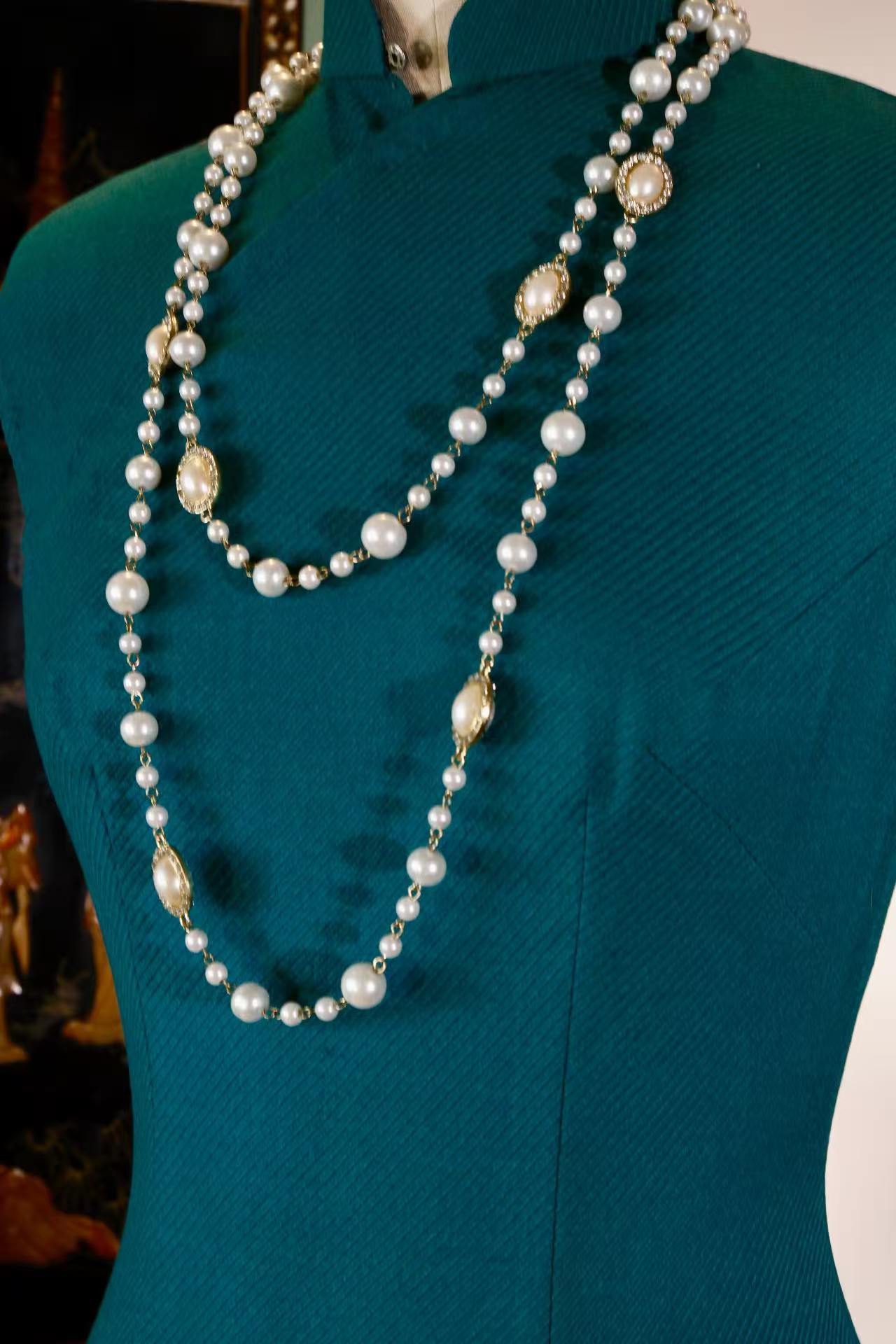
这件旗袍,是上世纪六十年代香港裁缝工艺的巅峰之作。它选用意大利进口斜纹羊毛为面料,将东方剪裁的含蓄与西方材质的挺括融为一体,堪称“海派文化”在服装史上的活化石。其无袖立领、收腰修身的设计,既保留了传统旗袍的典雅风韵,又吸收了西式连衣裙的结构美学,是那个时代“中西合璧”时尚潮流的典型代表。
从图案上看,这件旗袍本身并无印花或刺绣,其美感完全依赖于面料本身的肌理与剪裁的线条。斜纹羊毛的天然纹理在光线下呈现出细腻的斜向纹路,赋予衣物一种低调而高级的质感。这种“无图案之图案”,恰恰体现了六十年代高级定制中“以质取胜”的设计理念——不靠繁复装饰,而靠面料与结构的精妙配合来彰显品味。正如《礼记·深衣》所言:“短毋见肤,长毋被土。”此衣之长,恰至膝下,既显端庄,又不失灵动,是“中庸之美”在现代服饰中的绝佳体现。
古董衣的故事,往往藏在针脚与岁月里。这件旗袍诞生于香港制衣业黄金年代,彼时香港是全球重要的成衣出口地,汇聚了来自上海、广州的顶尖裁缝,他们将在内地失传的“归拔”“推门”等手工技艺带到香江,并与欧洲进口面料结合,创造出独一无二的“港式旗袍”。这件作品正是这一历史背景下的产物,它可能曾属于一位出入中环写字楼或浅水湾舞会的都市女性,见证过她人生中的重要时刻。如今,它已不仅是衣物,更是一段被缝进布料里的城市记忆。
引经据典而言,张爱玲在《更衣记》中写道:“衣服是一种言语,随身带着一种袖珍戏剧。”这件旗袍正是这样一出无声的戏剧——它以沉默的面料语言,诉说着一个时代的审美自信与文化交融。其稀缺性不仅在于年代久远,更在于它所代表的“手工定制+进口面料+本地工艺”三位一体的生产模式早已消失。今天,我们能在博物馆或私人收藏中见到它,已是莫大的幸运。
Measurements / Size Guide:
Bust / Waist / Hips / Total Length: 80/66/94/98 cm
Detailed Description:
This qipao represents the absolute pinnacle of 1960s Hong Kong tailoring craftsmanship. Selecting an imported Italian twill wool as its textile, it integrates the subtle reserve of Eastern cutting with the crisp structure of Western materials, serving as a living fossil of "Shanghai Culture" (Haipai) within fashion history. Its sleeveless, Mandarin-collared, and close-fitting tailored design preserves the elegant charm of the traditional qipao while absorbing the structural aesthetics of Western dresses, standing as a definitive representative of the "East-meets-West" fashion movement of that era.
In terms of pattern, this qipao features zero surface printing or embroidery; its aesthetic appeal relies entirely on the inherent texture of the fabric and the precision of its tailored lines. Under light, the natural grain of the twill wool reveals a delicate diagonal orientation, granting the garment a low-profile yet premium quality. This "patternless pattern" precisely reflects the haute couture design philosophy of the 1960s—prioritizing quality over all else, eschewing complex ornamentation, and relying on the ingenious coordination of textile and structure to manifest taste. As the Book of Rites: Deep Robes (Li Ji · Shen Yi) states: "Let it be short enough as to not expose the skin, yet long enough as to not brush the earth." The length of this garment hits exactly below the knee, showing severe dignity without losing dynamic grace, which serves as an excellent materialization of the "Aesthetic of the Mean" (Zhongyong) within modern dress.
The narratives of antique garments are almost always hidden within their stitches and historical timelines. This qipao was birthed during the golden era of Hong Kong's garment manufacturing industry. At that time, Hong Kong operated as a premier global exporter of ready-to-wear apparel, gathering master tailors from Shanghai and Guangzhou. They brought to Hong Kong manual master techniques that were fading on the mainland—such as "heat-stretching" (gui) and "iron-molding" (ba)—combining them with imported European textiles to create the unique "Hong Kong-style qipao." This specimen is a direct product of this historical background; it may have once belonged to an urban woman navigating the corporate high-rises of Central or attending formal balls in Repulse Bay, witnessing the milestone moments of her life trajectory. Today, it has ceased to be mere apparel, standing as a fragment of urban memory permanently stitched into the fabric.
To draw upon classical literary references, Eileen Chang famously posited in Reflections on Clothing (Geng Yi Ji): "For those who cannot speak, clothes are a language, a pocket theater carried upon the body." This qipao functions as exactly such a silent drama—using the hushed language of its textile to articulate the aesthetic confidence and cultural fusion of an era. Its scarcity resides not merely in its chronological age, but fundamentally in the total disappearance of its "hand-crafted bespoke + imported material + local artisan technique" tripartite production model. To encounter it today within museum archives or private collections is a matter of profound fortune.