青衿如玉:一袭蓝布旗袍里的六十年代书香岁月
这套旗袍,宛如一首被时光珍藏的绝句,不着一字,尽得风流。
它以60年代香港女教师为灵感,恰是旗袍作为日常装束的“黄金时代”的回响。彼时,上海南下的红帮裁缝将海派风韵与西式立体剪裁相融合,催生了港式旗袍的独特美学。它不再仅仅是传统的延续,更成为当时独立女性在职场中展现优雅与力量的“职业装”。
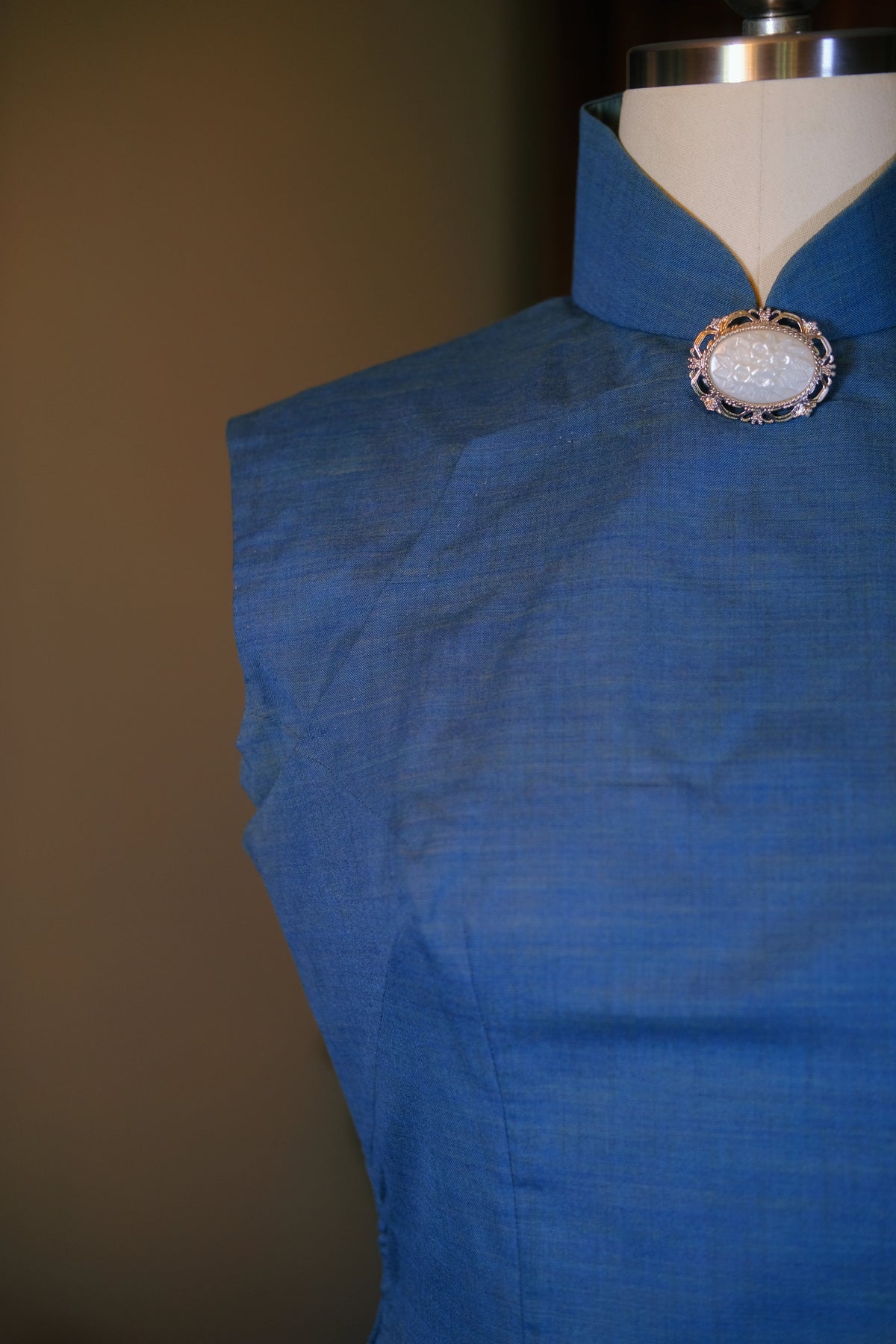
观其形,它深得当时“尖身材旗袍”之精髓。高而挺的立领,勾勒出端庄的颈线;利落的削肩与收腰设计,将女性的柔美曲线展露无遗,却又无丝毫张扬。其剪裁的合体与精妙,正如《诗经》所云:“有美一人,婉如清扬。” 它勾勒出的是一种克制的优雅,一份从容的风度。
再看其质,摒弃了丝绸的华贵与刺绣的繁复,选用了质朴的素色蓝布。这种“布衣”的选择,非但没有减损其美,反而赋予其一种“清水出芙蓉,天然去雕饰”的清新脱俗。它褪去了浮华,留下的是知识女性的干练、素净与内心的丰盈。这抹淡蓝,如同雨后初晴的天空,又似远山的薄雾,含蓄而内敛。
最后点睛之笔,莫过于领口那枚精雕细琢的白玉胸针。古人以玉喻君子,所谓“言念君子,温其如玉”。这枚胸针,不仅是东方审美中画龙点睛的配饰,更是一种品格的无声流露。它静静地卧在蓝色的衣襟上,与布料的素雅相互映衬,平添了几分温润与高洁,恰如一位腹有诗书的女子,不言不语,自有光华。
这身衣裳,早已超越了衣物的范畴,它是一个时代的缩影,一种文化的沉淀,一首关于“得体”与“风骨”的视觉诗篇。
Jade Like Scholar's Robes: The Scholarly Years of the 1960s Captured in a Blue Cotton Qipao
"This Qipao resembles a quatrain preserved by time—uttering not a single word, yet capturing the height of grace."
Inspired by the female educators of 1960s Hong Kong, this ensemble echoes the "golden age" when the Qipao reigned as daily attire. During that era, Shanghai tailors migrating south merged Shanghai-style (Haipai) charm with Western structural draping, cultivating the distinct aesthetic of the Hong Kong Qipao. Departing from mere traditional inheritance, it emerged as professional attire through which independent women projected elegance and strength in the workplace.
Examining its form, it captures the ultimate essence of the "sculpted-waist Qipao" silhouette of the era. The high, upright standing collar outlines a dignified neckline, while the clean shoulder contours and precise waist suppression unreservedly reveal feminine curves—yet without the slightest hint of ostentation. The impeccable fit and tailoring recall the Classic of Poetry: "There is a lady so fair, with clear eyes and graceful bearing." It contours a beauty of restrained elegance and unhurried composure.
Observing its material, it eschews the luxury of silk and the elaboration of embroidery in favor of modest plain blue cotton. This choice of simple cloth detracts nothing from its beauty; rather, it endows the garment with an unadorned freshness—recalling the poetic adage of lotus blossoms rising untouched from clear water. Stripping away superficial pomp, it preserves the efficiency, pristine clarity, and inner richness of the educated woman. This subtle shade of blue resembles a rain-cleared sky or morning mist over distant mountains—reserved and introverted.
The defining masterstroke rests in the intricately carved white jade brooch pinned at the collar. Ancients likened jade to the noble scholar, observing: "When I think of the noble gentleman, he is gentle as jade." This brooch acts not merely as a finishing touch within Eastern aesthetic styling, but as a silent testament to personal character. Resting quietly against the blue placket, its interaction with the humble fabric adds a layer of gentle warmth and nobility—much like a woman steeped in literature, radiating natural brilliance without uttering a word.
This attire long ago transcended the realm of mere clothing. It stands as an epitome of an era, a condensation of culture, and a visual poem dedicated to decorum and inner fortitude.