深圳溯源
无法加载取货服务可用情况
衣服尺寸:
胸围/腰围/臀围:90/68/92 厘米
衣长:108 厘米
细节描述:
一、纹样考释:秩序与野性的博弈
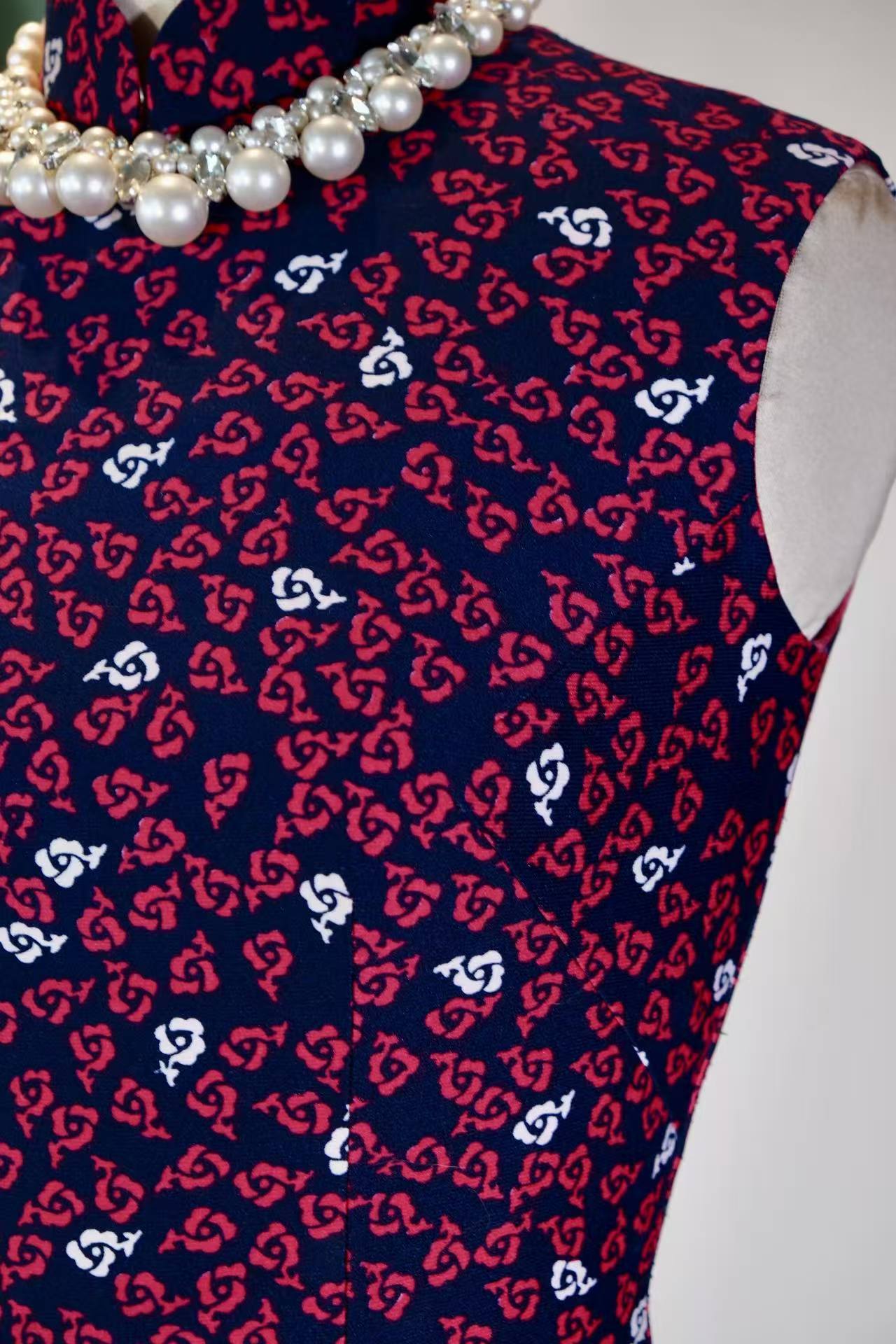
这件旗袍最引人入胜之处,在于其表面看似繁复实则严谨的“几何小碎花”纹样。这绝非普通意义上的田园碎花,而是一次关于“传统与现代”的视觉实验。
- 图腾解构: 请凑近细看这些红白相间的小花。它们并非自然主义的花朵描摹,而是被提炼成了回旋钩连纹的几何形态。这种设计手法深受当时西方欧普艺术(Op Art)的影响,试图通过重复的几何单元制造视觉上的流动感。
- 色彩心理: 底色选用了极为沉稳的藏青(Navy Blue),这是六十年代职业女性最爱的颜色,象征着理智与克制。然而,设计师却在上面铺满了高饱和度的朱红与纯白小花。这种“底色冷峻,花纹热烈”的反差,恰恰隐喻了那个时代香港女性的双重特质:在职场上如深蓝般冷静干练,内心却依旧保留着如红花般鲜活的生命力。
- 布局美学: 这是一种典型的“满地锦”布局。花朵虽小,但排列极其紧密,不留余地。在中国传统服饰美学中,这叫“富贵不断头”,但在六十年代的语境下,它更像是一种对繁荣未来的急切渴望与热烈拥抱。
二、形制与工艺:立体剪裁下的东方身段
从服装史的维度来看,这件旗袍是“海派剪裁”在香港落地生根后的成熟果实。
- 省道(Darts)的艺术: 请注意观察胸部与腰部的线条。这件衣服完全脱离了传统平裁的束缚,采用了精准的西式立体剪裁。胸省与腰省的巧妙运用,如同建筑中的承重墙,支撑起了面料的张力,将女性的S型曲线勾勒得淋漓尽致,却又含蓄不露。
- 手工的温度: 这种小碎花在当时多采用手工丝网印或木版印。由于是手工操作,每一朵花的边缘都带着微微的晕染和不规则的呼吸感,这是工业数码印花无法复制的“瑕疵美”。这种质感,让衣服有了温度,仿佛能触摸到六十年代那个午后的阳光。
三、历史回响:张爱玲与《花样年华》的互文
苏青曾说:“衣服是女人的第二层皮肤。”而这件衣服,无疑是那个黄金年代最迷人的一层皮肤。
想象一下,1960年代的香港,电车叮当响过皇后大道中。穿着这件旗袍的女子,或许正走在去中环上班的路上,或是准备赴一场浅水湾的晚宴。这种小碎花旗袍,既不像大牡丹那样过于隆重隆重,也不像素色那样过于清冷。它恰到好处地拿捏了“摩登”与“家常”的平衡。
正如王安忆在《长恨歌》中所描绘的那种精致与务实并存的生活态度。这件旗袍不仅是一件衣物,它是那个动荡又充满希望的年代的见证者。它告诉我们,即便是在最繁忙的都市生活中,女性依然愿意将自己包裹在这样一层繁复而美丽的印花之中,以此对抗岁月的平庸。
【收藏价值】
市面上常见的六十年代旗袍多为素色或大花卉,像这样保存完好、花色独特且极具波普风格的小碎花实属凤毛麟角。它不仅是一件可穿着的古董,更是一段可以被触摸的时尚断代史。
Measurements / Size Guide:
Bust / Waist / Hips: 90/68/92 cm
Total Length: 108 cm
Detailed Description:
The most captivating aspect of this qipao lies in its "geometric ditsy floral" pattern, which appears intricate at first glance but is actually meticulously organized. This is by no means an ordinary pastoral floral print; rather, it represents a deliberate visual experiment exploring the boundary between tradition and modernity.
Deconstruction of the Totem: A closer inspection of these red-and-white blossoms reveals that they are not naturalistic depictions of flowers. Instead, they have been refined into geometric, interlocking scroll-like forms. This design approach was heavily influenced by the global rise of Op Art (Optical Art) in the 1960s, which sought to generate a sense of visual movement and vibration through the repetition of geometric units.
Color Psychology: The background features a deeply grounded navy blue—a favored hue among 1960s professional women that symbolized intellect, restraint, and professionalism. However, the designer juxtaposed this solemn base by overlaying it with densely packed, highly saturated vermilion and crisp white blossoms. This contrast of a "cool, disciplined background with fiery, vibrant patterns" serves as an apt metaphor for the dual nature of mid-century Hong Kong women: calm, capable, and practical in the public sphere, yet retaining a vivid, passionate vitality within.
The Aesthetic of Layout: The composition follows a classic Mandijin (all-over tapestry) layout. Though the individual flowers are small, they are arranged so tightly that almost no negative space remains. In traditional Chinese textile aesthetics, this continuous layout signifies fugui buduantou (unending wealth and prosperity). Yet, within the cultural context of the 1960s, it feels more like an eager embrace and bold celebration of a bustling, prosperous future.
From the perspective of fashion history, this garment is a mature fruit of Haipai (Shanghai-style) tailoring after it took root and evolved in Hong Kong.
The Art of Darting: The lines along the bust and waist completely break away from the flat-cutting constraints of early traditional Chinese attire, embracing precise Western three-dimensional tailoring instead. The masterful execution of bust and waist darts acts like the load-bearing architecture of the garment, supporting the natural tension of the fabric. It beautifully contours the woman's S-curve silhouette, achieving a look that is deeply sensuous yet perfectly dignified.
The Warmth of Handwork: During this era, such dense floral prints were primarily executed using manual silkscreen or woodblock printing techniques. Because it relied on human hands, the edges of each tiny flower bear subtle, unique irregularities and bleeding. This slight variation creates a organic "beauty of imperfection" that industrial digital printing can never replicate. This tactile texture gives the fabric a distinct warmth, as if it has captured the physical essence of a 1960s afternoon.
The writer Su Qing once noted, "Clothing is a woman's second skin." This garment was undoubtedly one of the most enchanting outer skins of Hong Kong's golden era.
Picture Hong Kong in the 1960s: the clanging of double-decker trams echoing down Queen's Road Central. A woman wearing this very qipao might have been navigating her morning commute to an office in Central, or preparing for a twilight dinner in Repulse Bay. A ditsy floral qipao of this caliber struck a flawless balance between the "avant-garde" and the "domestic"—it was neither as imposing as large peony brocades nor as austere as solid-colored silks.
It perfectly encapsulates the blend of exquisite refinement and pragmatism that author Wang Anyi described in Song of Everlasting Sorrow. This dress is not merely an article of clothing; it is a physical witness to a turbulent yet hopeful epoch. It reminds us that even within the relentless pace of a bustling metropolis, women chose to wrap themselves in complex, beautiful prints as a poetic rebellion against the mundanity of time.
While most surviving 1960s qipaos found on the market feature solid colors or large-scale floral motifs, a tightly patterned, geometric ditsy floral piece preserved in such pristine condition is exceptionally rare. It stands not only as a wearable antique, but as a tangible, living archive of mid-century fashion history.