溯源
无法加载取货服务可用情况
衣服尺寸:
胸围/腰围/臀围/衣长:100/90/108/102 厘米
细节描述:
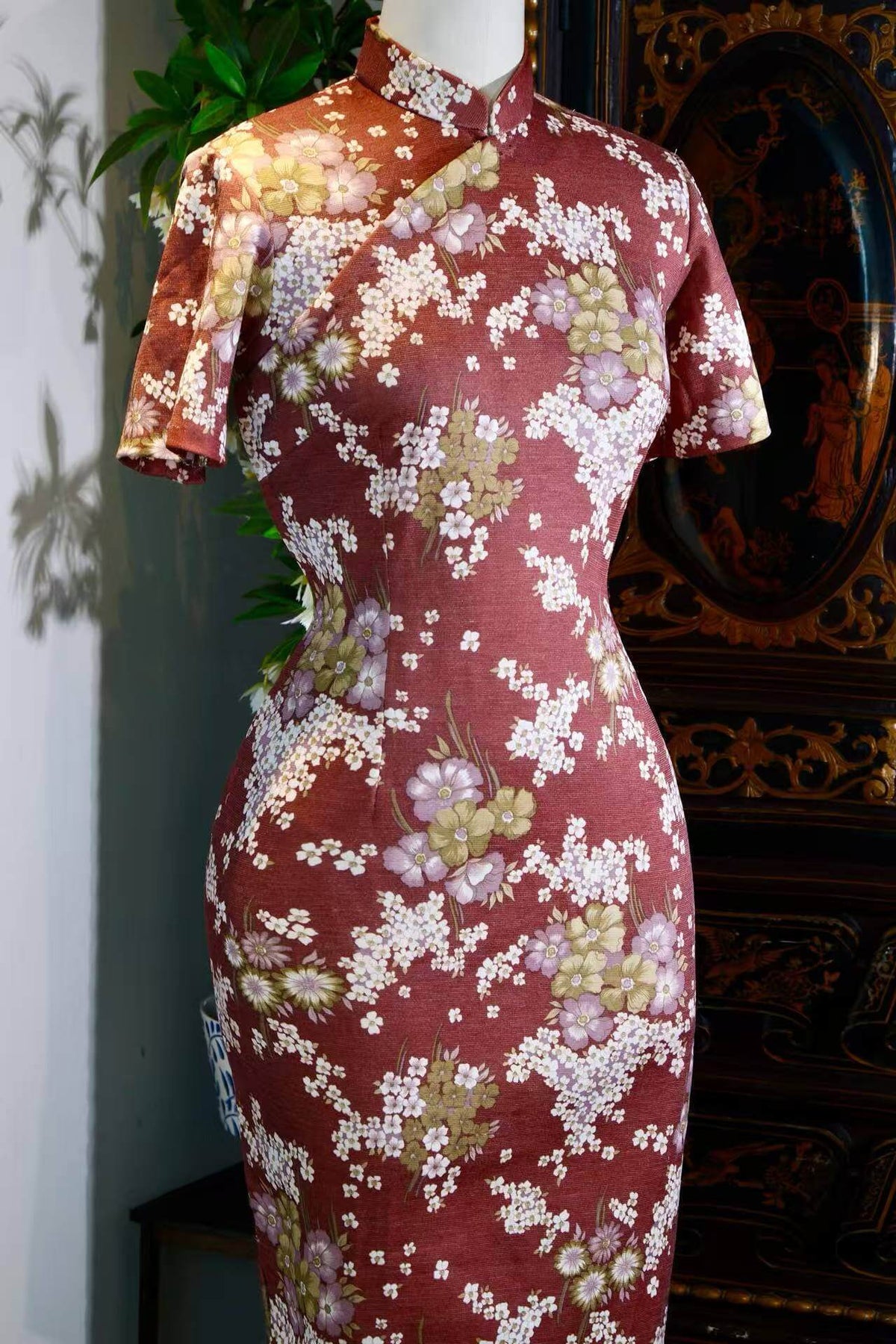
纹样考释:南洋风情的视觉转译
这件旗袍最引人注目的特征在于其面料图案。不同于传统苏绣或京绣的具象花鸟,它采用了典型的“南洋碎花”风格。
- 色彩美学:底色选用了沉稳而怀旧的赭石红(或称铁锈红)。这种颜色在60年代的台湾纺织业中颇为流行,既保留了中式传统的庄重,又比正红更具生活气息和现代感。
- 花卉意象:图案并非传统的牡丹或梅兰竹菊,而是细碎的、类似野蔷薇或不知名热带小花的组合。花朵呈簇状分布,色彩以淡紫、鹅黄、月白为主,点缀以墨绿枝叶。这种布局打破了传统旗袍的大面积留白或对称构图,呈现出一种“满底印花”的视觉张力。
- 文化隐喻:这种碎花风格深受当时东南亚(特别是新加坡、马来西亚等地)“峇峇娘惹”文化及西方波普艺术萌芽的影响。它是热带风情与中式剪裁的一次大胆碰撞,象征着那个时代台湾社会对外来文化的包容与重构。
形制与工艺:六十年代的黄金剪裁
从服装史的角度看,这件旗袍处于“海派旗袍”向“台式改良旗袍”过渡的成熟期。
- 立体剪裁:请注意其腰身的收省(Darts)处理。相比40年代上海的宽松,60年代的台湾旗袍更强调女性的S型曲线,这得益于西式立体剪裁技术的全面引入。其肩部线条圆润自然,袖口略短且微翘,这是为了适应亚热带气候及当时流行的生活方式(如骑摩托车、办公)而做的功能性改良。
历史语境:张爱玲笔下的“细节”与时代记忆
张爱玲在《更衣记》中曾写道:“对于不会说话的人,衣服是一种语言,随身带着一种袖珍戏剧。”
这件旗袍正是那个年代“袖珍戏剧”的载体。
- 时代背景:1960年代的台湾,正处于经济起飞的酝酿期。当时的女性开始走出家庭,进入职场或学校。她们不再满足于仅仅作为被观赏的对象,而是追求一种“得体的摩登”。
- 穿着场景:想象一下,在那个没有空调的年代,一位受过良好教育的女性,穿着这件透气的棉麻混纺碎花旗袍,或许是在台北的师范学校任教,或许是在荣星花园散步。它不像晚宴旗袍那样咄咄逼人,却透着一种“岁月静好”的知性美。它是日常生活的诗意化,是那个动荡年代里人们对安稳生活的一种向往。
稀缺性与艺术价值:不可复制的孤品
作为古董衣收藏,这件作品的稀缺性体现在以下几点:
1. 面料的绝版:这种高支数的复古印花棉麻/人造丝混纺面料,随着台湾纺织业的转型(转向化纤和出口加工),早已停止生产。现代的数码印花无法还原那种经过岁月沉淀后的“哑光质感”和色彩的温润度。
2. 保存状况:历经60年岁月,这件旗袍色泽依然饱满,无明显破损,这在纺织品收藏中属于“极美品”。
3. 审美断层:当下的旗袍市场多复刻30年代海派旗袍,而这种“60年代台式南洋风”正处于审美的盲区,懂的人极少,因此更具收藏潜力和独特的辨识度。
Measurements / Size Guide:
Bust / Waist / Hips / Total Length: 100/90/108/102 cm
Detailed Description:
Pattern Analysis: Visual Translation of Nanyang Aesthetics
The most striking feature of this cheongsam is its fabric design. Moving away from the concrete flora and fauna of traditional Su or Jing embroidery, it embraces a signature "Nanyang Dainty Floral" style.
Color Aesthetics: The base hue is a deep, nostalgic ochre red (or rust red). Extremely popular in Taiwan’s 1960s textile industry, this tone balances traditional Chinese composure with a more approachable, modern everyday feel compared to classic bright red.
Floral Imagery: Rather than traditional peonies, plum blossoms, orchids, or bamboo, the print features delicate clusters of wild roses or nameless tropical wildflowers. Soft purples, pale primrose yellows, and moonlight whites bloom against dark green foliage. This layout swaps the generous negative space and symmetrical compositions of traditional cheongsams for an all-over print charged with visual vibrancy.
Cultural Metaphor: This micro-floral style was heavily influenced by the Peranakan (Baba Nyonya) culture of Southeast Asia (particularly Singapore and Malaysia) as well as the emerging Western Pop Art movement. It represents a bold collision between tropical flair and Chinese tailoring, embodying the openness and creative reinterpretation of foreign influences in 1960s Taiwanese society.
Silhouettes & Craftsmanship: The Golden Tailoring of the Sixties
From a fashion history perspective, this garment comes from the mature transitional phase where "Shanghainese Cheongsam" evolved into "Taiwanese Modernized Cheongsam."
3D Tailoring: Note the strategic placement of the waist darts. Unlike the relaxed fits of 1940s Shanghai, 1960s Taiwanese cheongsams emphasized an hourglass S-curve, enabled by the widespread adoption of Western three-dimensional tailoring techniques.
Functional Adjustments: The shoulder line is naturally rounded, while the sleeves are cut slightly shorter and flared upward at the cuff—practical modifications suited for the subtropical climate and the active lifestyles of the era, such as riding scooters or working in office settings.
Historical Context: Eileen Chang's "Details" and Era Memories
As Eileen Chang wrote in A Record of Changing Clothes: "To those who cannot speak, clothes are a language, carrying with them a pocket-sized drama wherever they go."
This cheongsam is precisely the vessel for such a pocket-sized drama.
Era Background: Taiwan in the 1960s was on the cusp of an economic boom. Women were increasingly entering the workforce and higher education, seeking an aesthetic that was chic, modern, and respectable rather than purely decorative.
Wearing Scenario: Picture a well-educated woman of that era—perhaps teaching at a normal university in Taipei or strolling through Rongxing Garden—wearing this breathable cotton-linen blend floral cheongsam in an era before widespread air conditioning. Less aggressive than a formal evening gown, it exudes an intellectual grace and quiet warmth—a poetic reflection of daily life and a longing for stability amidst changing times.
Rarity & Artistic Value: An Irreplaceable One-of-a-Kind Piece
As a vintage collectible, the rarity of this piece stands out in several key ways:
Extinct Fabric: This high-count retro printed cotton-linen/viscose blend fabric ceased production as Taiwan’s textile industry shifted toward synthetic fibers and export processing. Modern digital printing simply cannot replicate the subtle matte texture and warm color depth that only time can cure.
State of Preservation: After six decades, the colors remain vibrant and the fabric is free of significant damage, placing it in the "Exceptional Fine Condition" tier of textile collecting.
Aesthetic Gap: While today's cheongsam market frequently revives 1930s Shanghai styles, this "1960s Taiwanese Nanyang Style" occupies a rare, underrated niche. Appreciated by true connoisseurs, it offers exceptional collection potential and an unmistakable identity.