深圳溯源
无法加载取货服务可用情况
这套上世纪二十年代民国Art Nouveau烧花丝绒倒大袖上衣与手工法国蕾丝筒裙套装,
一、衣裳上的“新艺术”诗篇:图案与工艺的双重奏
上衣:流动的火焰与花卉
上衣采用珍贵的烧花丝绒面料,这是当时最奢华的材质之一。
- 图案解读:花卉的形态并非写实,而是经过艺术化处理,花瓣舒展,
- 工艺细节:“烧花”工艺是将丝绒表面的绒毛部分腐蚀,
裙子:蕾丝上的“洛可可”梦境
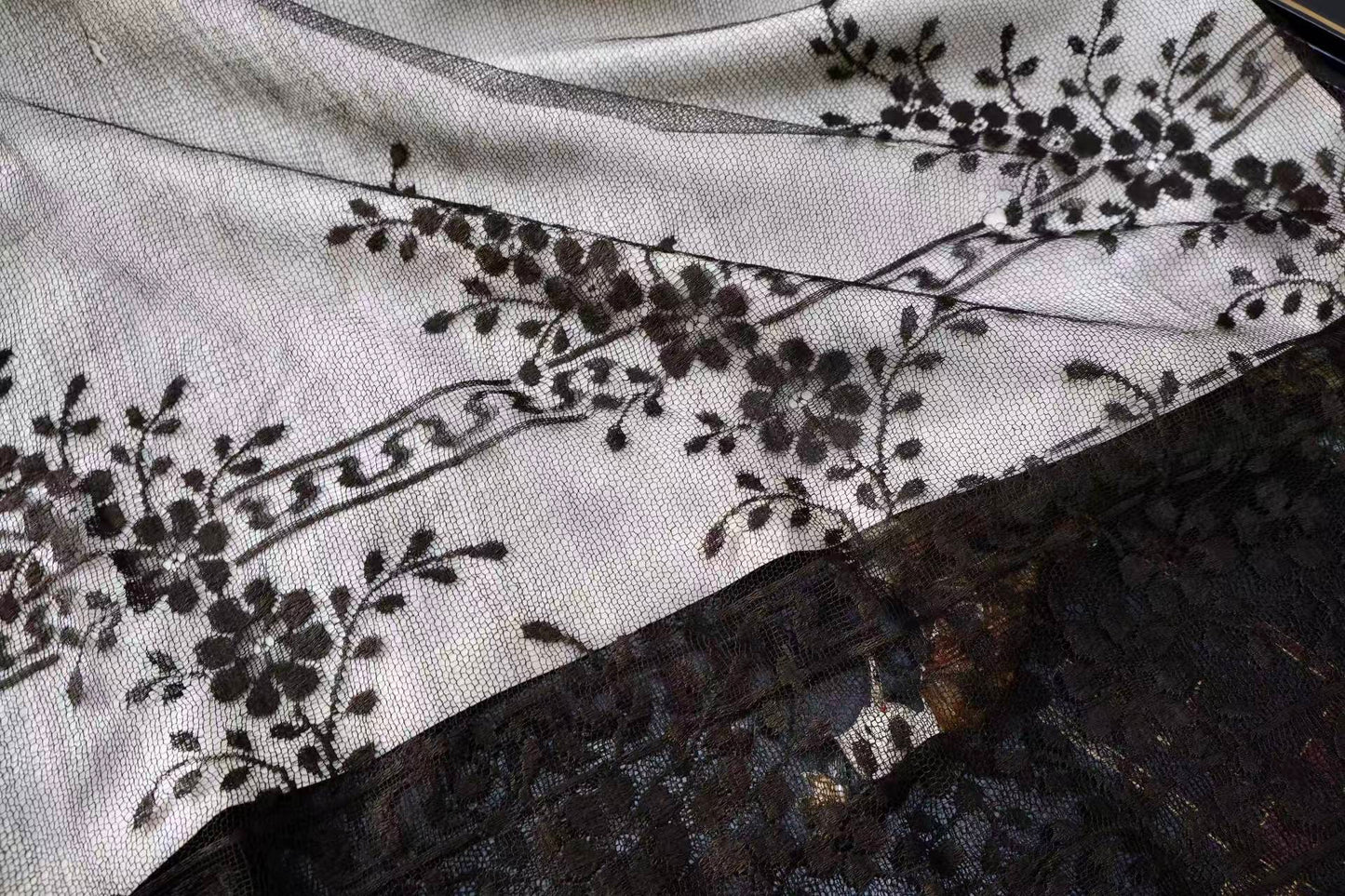
下身的手工法国蕾丝筒裙,则展现了另一种极致的精致。
- 图案解读:裙摆处的刺绣图案是纤细的枝叶与小花,线条轻盈,
- 工艺细节:法国蕾丝以其精细的手工编织技艺闻名于世。
二、古董衣的故事:从闺阁到舞池
这套服装的诞生,正值中国社会剧烈变革的1920年代。
- “倒大袖”的革命:上衣的“倒大袖”设计(袖口宽大,袖身收紧)
- 蕾丝与丝绒的“混搭”:将欧洲进口的蕾丝与本土的丝绒结合,
在当时的上海滩,这样的套装可能是某位名媛在舞会、社交场合的“
三、艺术风格与稀缺性:不可复制的“民国风华”
这套服装的艺术价值,不仅在于其精湛的工艺,
- 中西合璧的审美:它既有中国传统服饰的含蓄与典雅(如立领、
- 手工工艺的绝唱:烧花丝绒与手工蕾丝,都是极度依赖人工的工艺。
- 历史的见证者:它见证了中国女性从“三寸金莲”到“天足”、从“
正如张爱玲在《更衣记》中所写:“对于不会说话的人,
价格信息:
Art Nouveau烧花丝绒倒大袖上衣 - $3100 CAD
手工法国蕾丝筒裙 - $1958 CAD
This 1920s Republican-era ensemble, featuring an Art Nouveau devoré velvet "inverted large sleeve" (dao-da-xiu) top paired with a handmade French lace column skirt, stands as a vivid material witness to the golden age of East-meets-West fusion. It is more than a garment; it is a frozen fragment of history—a silent poem celebrating female liberation, aesthetic awakening, and the zenith of craftsmanship.
The Top: Fluid Flames and Flora Crafted from precious devoré velvet (burnt-out velvet), one of the most luxurious materials of its time, the top features signature Art Nouveau motifs. Flowing, sinuous curves delineate bold and intricate blossoms, resembling vines growing wildly in the night, pulsing with natural vitality.
Aesthetic Interpretation: The floral forms are stylized rather than realistic, with unfurling petals and entwining stems creating a rhythmic visual flow. This style, deeply influenced by the European Art Nouveau movement, emphasizes "curvilinear beauty" and "naturalism," creating a fascinating dialogue with traditional Chinese auspicious patterns like the interlocking lotus.
Craftsmanship: The "devoré" technique involves chemically dissolving the velvet pile to create patterns of varying depths, giving the flowers a three-dimensional, sculptural effect under the light. The deep crimson base contrasts sharply with the lighter floral motifs, exuding opulence with a touch of ethereal grace.
The Skirt: A Rococo Dream in Lace The handmade French lace column skirt showcases an alternative peak of refinement. The lace is sheer and airy, finished with a black lace trim at the hem for added mystery and elegance.
Aesthetic Interpretation: The embroidery at the hem features delicate sprigs and tiny florets. Its light, airy lines provide a visual counterweight to the "heaviness" of the velvet top—a perfect balance of visual weight. These patterns carry echoes of Rococo art, emphasizing delicacy, softness, and femininity.
Craftsmanship: Renowned for its exquisite hand-weaving, the French lace integrates the mesh structure with the embroidered motifs seamlessly. It offers breathability while revealing glimpses of skin as the wearer moves, embodying the bold pursuit of beauty by women of that era.
This ensemble was born in the 1920s, a period of radical social transformation in China. Shanghai, the "Paris of the East," was the vibrant frontline where Eastern and Western cultures collided.
The "Inverted Large Sleeve" (Dao-da-xiu) Revolution: The wide, bell-shaped sleeve was a major innovation. By breaking away from the constraints of traditional Chinese attire and borrowing from Western tailoring, it granted women freedom of movement for their arms. This was not just an aesthetic shift; it was a symbol of bodily liberation.
The "Mixing" of Lace and Velvet: Combining imported European lace with indigenous velvet was the ultimate fashion statement for the modern woman (Modeng Nvlang). No longer satisfied with traditional silk, they embraced new materials from the West. This "hybrid" style defines the essence of "Haipai" (Shanghai-style) culture—all-embracing and fearlessly innovative.
In the legendary ballrooms of old Shanghai, such an ensemble might have been the "battle dress" of a socialite. Imagine her under the lights of the Paramount Ballroom, dancing to the rhythm of jazz, as the luster of velvet and the lightness of lace intertwined in a whirl—the most captivating sight of an era.
East-meets-West Aesthetics: It retains the subtle elegance of traditional Chinese dress (standing collars, frog buttons) while infusing the uninhibited freedom of Western modern art.
The Swan Song of Hand-Craftsmanship: Devoré velvet and handmade lace are techniques that rely heavily on manual labor. In today’s age of mass production, such precision is nearly extinct. Each piece is a unique work of art.
Witness to History: It chronicles the transition from bound feet to "natural feet," and from restrictive robes to the form-fitting Qipao.
As Eileen Chang wrote in Chronicle of Changing Clothes: "To those who cannot speak, clothes are a language, a pocket drama one carries with them." This ensemble is the most magnificent act of that "pocket drama," reminding us that true fashion is the perfect fusion of culture, art, and humanity.
Pricing Information:
Art Nouveau Devoré Velvet Top: $3,100 CAD
Handmade French Lace Column Skirt: $1,958 CAD