30年代 - 翡翠流光:三十年代三重渐变绲边花扣上袄的艺术考释 | 1930s - Emerald Radiance: An Artistic Examination of a 1930s Upper Garment with Triple-Gradient Binding and Floral Frog Buttons
Emerald Radiance: An Artistic Examination of a 1930s Upper Garment with Triple-Gradient Binding and Floral Frog Buttons
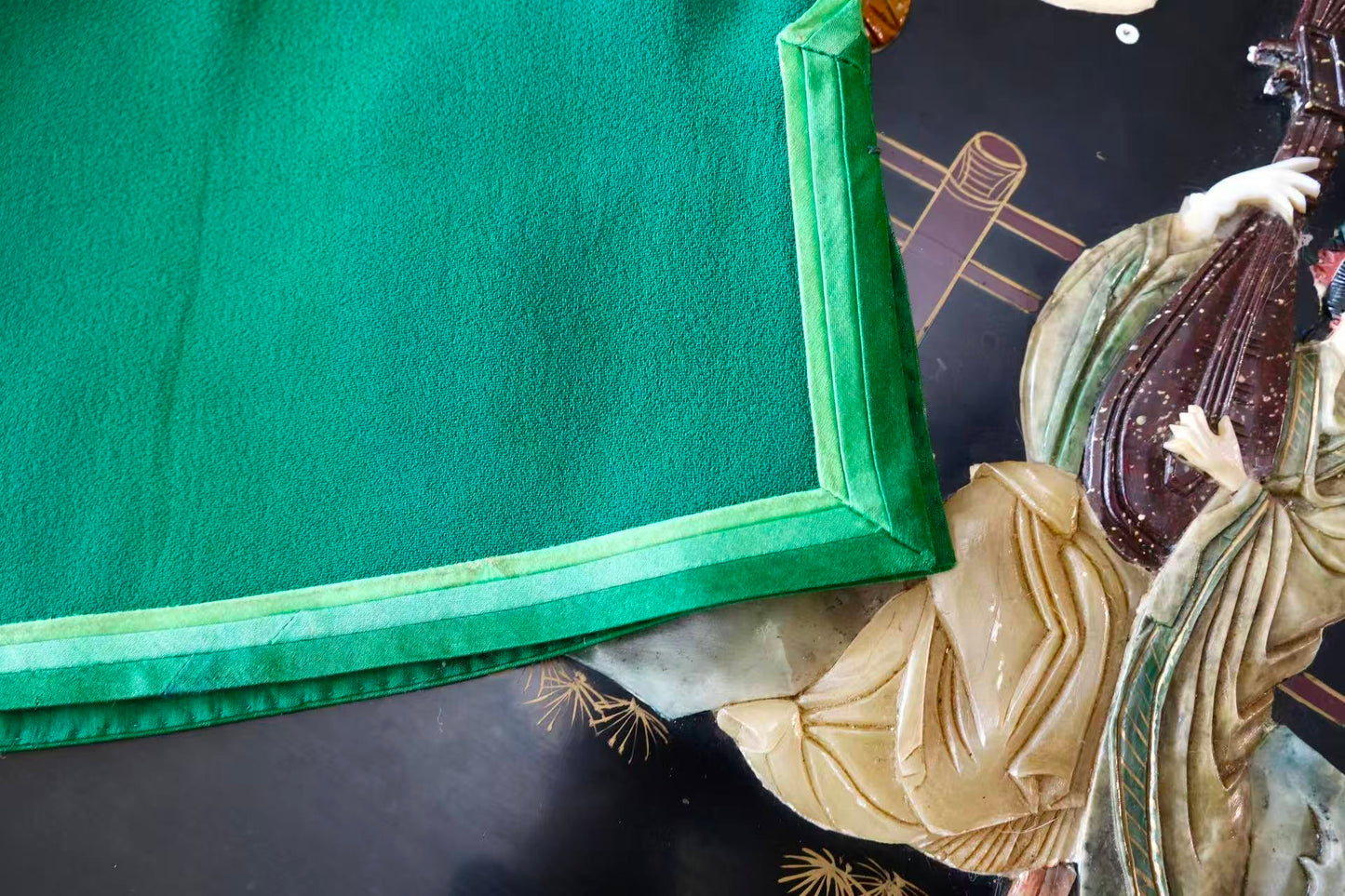
The Visual Rhetoric of Gradient Aesthetics Within the genealogy of Republic-era attire, this peacock green upper garment (shang’ao) resembles a manuscript leaf sealed by time. It uses fabric as its paper and needlework as its ink to sketch the peak aesthetics of Shanghai Modernity. Its most captivating feature is the triple-gradient piping (gunbian) along the edges—transitioning from deep ink green to emerald and finally to a pale spring jade. This evokes the imagery of West Lake's waters reflecting misty mountains, a material realization of the "brilliance of silken robes" described in the Ode to the Goddess of the Luo River. This gradient technique inherits the Qing Dynasty’s "Three-Blue Embroidery" tradition yet utilizes modern dyeing to break monochromatic limits, serving as a miniature specimen of Sino-Western fusion.
Semiotics of the Floral Closures The intricate floral frog buttons (pankou) are not merely decorative; they function as a form of "visual rhetoric" in a semiotic sense. Their form traces back to the honeysuckle (Rendong) motifs found in Dunhuang caisson ceilings, while echoing the auspicious metaphors of "growth like bamboo and pine" from the Classic of Poetry. Five pairs of buttons are meticulously arranged along the curve of the left-facing bodice (zuoren), creating a dialogue between the solemnity of the Chinese standing collar and the delicate Western lace inlay—a vivid sartorial manifestation of the "Chinese essence with Western utility" (Zhongti Xiyong) ideology of the era.
The Provenance of "Daxiangbao" and Rare Design The label inside the garment—"Guangzhou Xiajiu Daxiangbao Silk and Satin Bureau"—is a vital key to its rarity. The "suspender-style" (back-strap) design is exceptionally rare; originally a vestige of the traditional kanjian (waistcoat), it evolved during the Republic period into a form that combined decorative elegance with functional utility, found exclusively in the bespoke wardrobes of Shanghai’s elite socialites.
Conclusion: A Narrative of Enduring Beauty When viewed within the long scroll of modern sartorial evolution, this garment's value becomes even more prominent. It inherits the legacy of the traditional jacket and skirt system while boldly absorbing the geometric aesthetics of Art Deco. It freezes the "Oriental Paris" atmosphere of 1930s Shanghai within its exquisite craftsmanship. After eighty years, the garment remains in pristine condition—"Emerald light flows, not a thread out of place." It carries not just the legend of a single dress, but a profound historical narrative of beauty itself.