四十年代撞色绲边古董旗袍:时光沉淀的东方美学
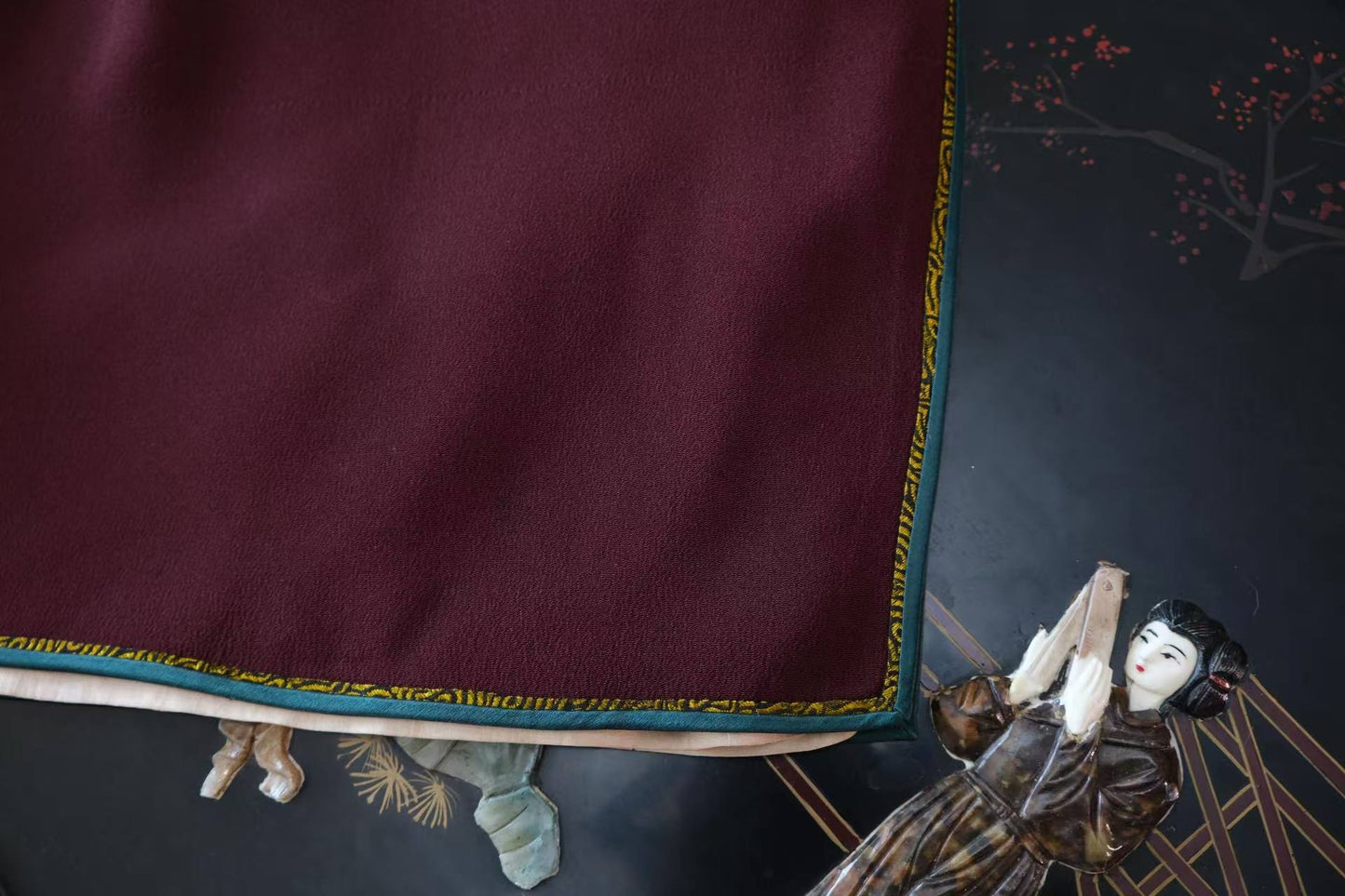
在民国服饰的谱系中,上世纪四十年代的旗袍堪称“黄金时代”的缩影。这件藏品以咖红素绉为地,撞色青绿绲边勾勒轮廓,辅以明黄线纹点缀,恰似一幅流动的《仕女图》,在时光的流转中沉淀下独特的艺术气质与历史价值。
四十年代的旗袍设计,正处于传统与现代的交汇点。这件旗袍采用无袖设计,贴合当时的审美潮流,同时保留了立领、一字扣等经典元素,彰显出东方服饰的含蓄之美。咖红色缎面沉稳贵气,与青绿色绲边形成鲜明对比,这种撞色手法在《礼记·玉藻》中早有“衣正色,裳间色”的典故,而民国设计师将其转化为时尚语言,赋予传统色彩以现代活力。
旗袍的绲边工艺堪称一绝。青绿缎带沿领口、袖笼、下摆蜿蜒而行,明黄线纹如丝缕般勾勒边缘,每一针每一线都凝聚着手艺人的匠心。这种手工绲边技艺在民国时期已臻成熟,据《上海服装志》记载,当时的旗袍作坊“以细绲为贵,一寸之边,需耗工时半日”,足见其工艺之精湛。盘扣采用传统一字结,与撞色绲边相呼应,既实用又美观,成为整件旗袍的点睛之笔。
旗袍的红与青绿,不仅是色彩的碰撞,更是文化的交融。咖红象征着东方的典雅,青绿则暗合《千里江山图》中的山水意境,二者结合,恰如苏轼所言“浓妆淡抹总相宜”,展现出东方美学的包容与灵动。这种设计理念,在当代依然具有强大的生命力,成为连接传统与现代的桥梁。
这件上世纪四十年代的撞色绲边古董旗袍,不仅是一件服饰,更是一段历史的见证。它以精湛的工艺、独特的设计和深厚的文化底蕴,向我们诉说着那个时代的风华与魅力。在当下,当我们重新审视这件藏品时,它依然能够激发我们对东方美学的思考与传承。
1940s Color-Blocked Binding Antique Qipao: Oriental Aesthetics Precipitated by Time
A Synthesis of Heritage and Modernity Within the genealogy of Republic-era attire, the qipao of the 1940s stands as a microcosm of a "Golden Era." This collection piece, crafted from coffee-red crepe de chine and framed by contrasting cyan-green piping with bright yellow linear accents, resembles a flowing Lady’s Portrait (Shinv Tu). It has precipitated a unique artistic temperament and historical value through the passage of time.
The Geometry of Contrast The 1940s represented a pivotal intersection of tradition and modernity. This qipao features a sleeveless design—aligning with the era's lean towards Western minimalism—while preserving classic elements like the standing collar and straight frog buttons (yizi kou). The deep, composed coffee-red satin exudes nobility, starkly contrasting with the cyan-green binding. This color-blocking technique traces back to the ancient "Primary and Intermediary Colors" theory in the Book of Rites, which Republic-era designers masterfully reinterpreted into a modern fashion language.
The Craft of "Thin Binding" (Xi Gun) The binding craft on this garment is a masterpiece in itself. The cyan-green ribbon meanders along the collar, armholes, and hem, while bright yellow threads outline the edges like gossamer. Each stitch embodies the artisan's soul. During the Republic period, manual piping reached its zenith; as the Shanghai Costume Annals records: "Thin binding was held in the highest esteem; a single inch of edging could take half a day's labor." The straight frog buttons, matching the contrasting piping, serve as the "finishing touch" that balances utility with exquisite beauty.
A Cultural Dialogue of Crimson and Cyan The juxtaposition of coffee-red and cyan-green is not merely a chromatic clash, but a cultural dialogue. The red symbolizes Eastern elegance, while the cyan-green echoes the landscape imagery of A Thousand Li of Rivers and Mountains. Their union captures Su Shi’s poetic sentiment: "Whether in heavy makeup or light dabs, she is always alluring." This design philosophy remains a vital bridge connecting tradition to contemporary life.
Conclusion: A Witness to Elegance This 1940s color-blocked qipao is more than a garment; it is a witness to history. Through its superb craftsmanship and profound cultural depth, it narrates the grace and charm of a bygone era. Today, it continues to inspire our reflection on and inheritance of Oriental aesthetics.