乱世锦绣:四十年代回纹旗袍的百年孤寂
衣服尺寸:
胸围/腰围/臀围:82/74/94 厘米
衣长:117 厘米
细节描述:
民国三十四年的上海,苏州河畔的梧桐叶落了又长。这件真丝提花缎旗袍,便是在这样的时空褶皱里,藏着一段被岁月摩挲得发亮的故事。
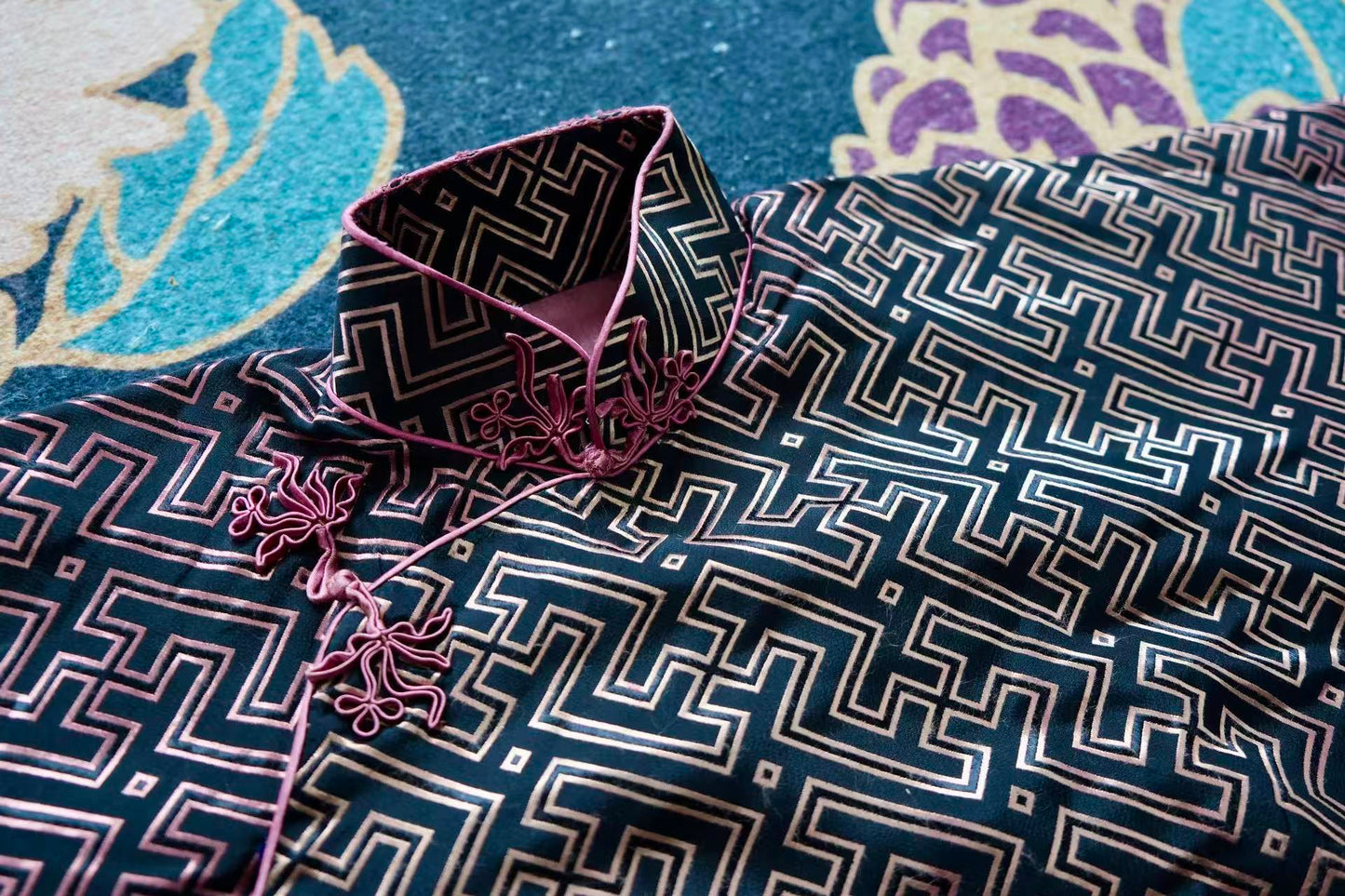
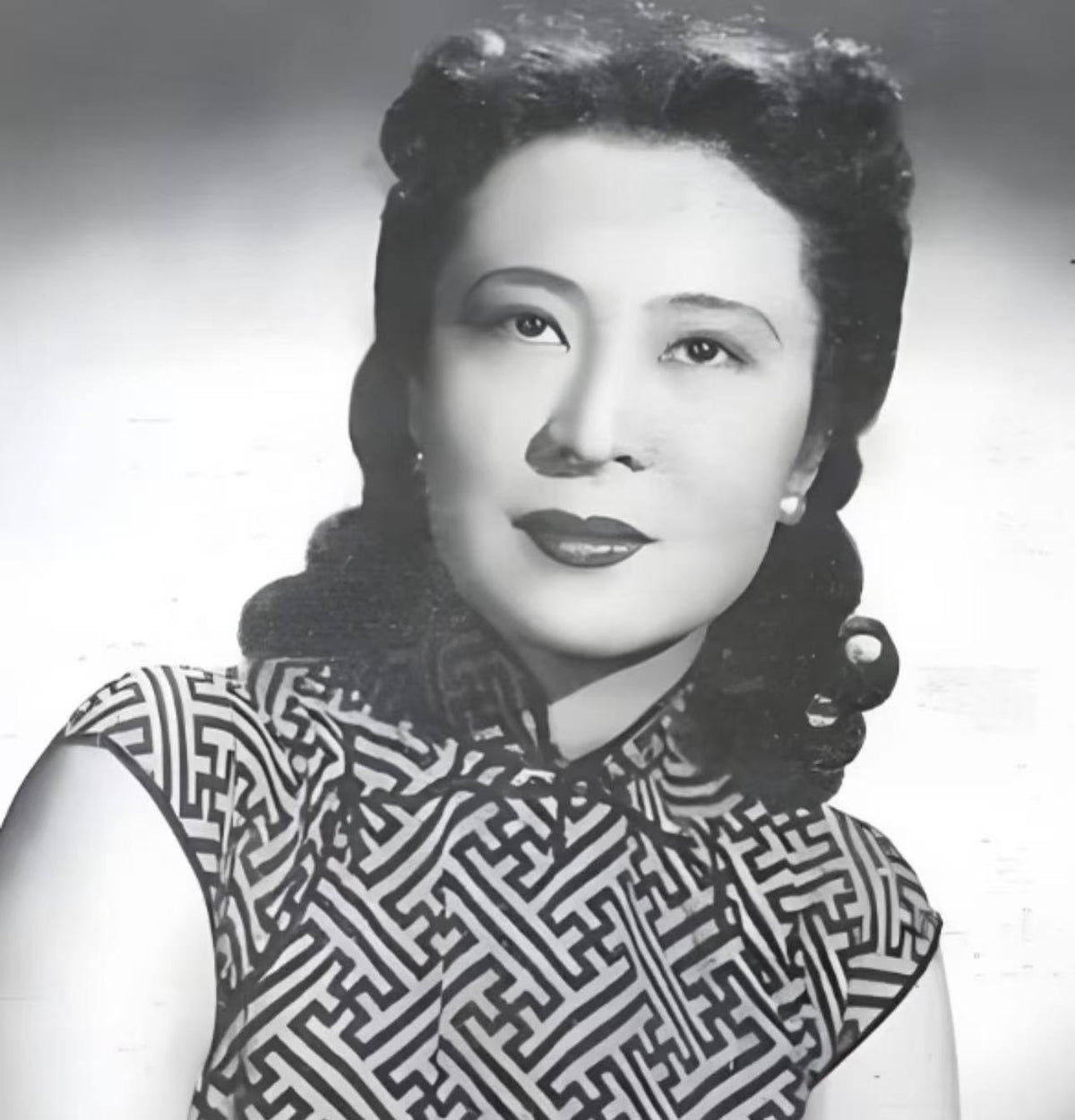
衣料是当时沪上最矜贵的“软烟罗”提花缎,深紫底色上浮着回纹交织的暗纹,像极了张爱玲笔下“华丽而苍凉”的生命底色。那些细密的经纬线,是江南织娘在煤油灯下数着更漏织就的,每一寸都浸着“寸锦寸金”的匠心。领口与袖口的线香绲,窄若一线,却需匠人以特制骨针穿引丝线,一针一线皆是“慢工出细活”的极致。
回纹是这件旗袍的灵魂。它源自商周青铜器上的“云雷纹”,在汉代化为“富贵不断头”的吉祥符号,至民国时,已演变成中西合璧的审美意象。这件旗袍上的回纹,以丝线勾勒,曲折往复,如迷宫般缠绕,既暗合《周易》“反复其道,七日来复”的循环哲学,又呼应着四十年代上海滩“东方巴黎”的摩登气韵。那些看似重复的几何线条,实则是乱世中人们对“绵延不绝”的隐秘祈愿——在战火纷飞的年代,一件旗袍上的回纹,或许就是一位女子对“岁岁平安”的全部想象。
旗袍的主人,或许是某位弄堂深处的闺秀。她在霞飞路上的裁缝铺里,指尖划过一匹匹洋布,最终选中了这匹带着旧时光温度的提花缎。裁缝师傅根据她的身量,量体裁衣,将旗袍的腰身收得恰到好处,既显出女子的婀娜,又保留着大家闺秀的端庄。她在旗袍上缀上紫红色的盘扣,那是当时最流行的“蝴蝶扣”,象征着“比翼双飞”的美好愿景。这件旗袍,或许曾陪她走过外滩的钟声,听过百乐门的爵士乐,也在防空洞的黑暗里,紧紧裹住过她颤抖的身躯。
岁月流转,旗袍的主人早已湮没在历史的尘埃里,但这件衣服却像一位沉默的见证者,将四十年代的风云变幻,都化作了衣料上的纹路。如今,当我们轻轻抚摸这件古董旗袍,指尖触到的不仅是真丝的柔滑,更是那段“长的是磨难,短的是人生”的沧桑。它像一首无声的诗,诉说着乱世中的繁华与落寞,也让我们在百年后的今天,依然能感受到那份属于民国的“精致与坚韧”。
这件旗袍,是民国的“活化石”,是乱世中开出的一朵“寂寞之花”。它告诉我们,真正的美,从不畏惧时间的侵蚀,反而会在岁月的沉淀中,愈发熠熠生辉。
Splendor Amidst Chaos: The Century-Long Solitude of a 1940s Fret-Pattern Qipao
Measurements / Size Guide:
Bust / Waist / Hips: 82/74/94 cm
Total Length: 117 cm
Detailed Description:
In the Shanghai of 1945 (the 34th year of the Republic), the plane tree leaves along the Suzhou Creek fell and regrew season after season. Within the folds of that specific time and space, this silk jacquard satin qipao hides a story polished to a shine by the passage of years.
The fabric is the most precious "Soft Smoke Gauze" (Ruan Yan Luo) jacquard satin of old Shanghai. Floating atop a deep violet base are subtle interlocking fret patterns (Huiwen), resembling the "magnificent yet desolate" backdrop of life often depicted by Eileen Chang. Those dense warps and wefts were woven by Jiangnan weavers counting the hours by kerosene lamps; every inch is imbued with the ingenuity of "an inch of brocade, an inch of gold." The piping (Gun) on the collar and cuffs is as narrow as a single thread, yet required artisans to use specialized bone needles to lead the silk—a pinnacle of the "slow work for fine results" philosophy.
The fret pattern is the soul of this qipao. Originating from the "Cloud and Thunder" motifs on Shang and Zhou dynasty bronzes, it evolved into the Han Dynasty auspicious symbol of "unending wealth and honor." By the Republican era, it had transformed into an aesthetic imagery blending East and West. On this qipao, the fret patterns are outlined in silk thread, winding back and forth like a labyrinth. It aligns with the philosophy of the I Ching—"The Way is repetitive; after seven days comes the return"—while echoing the modern flair of 1940s Shanghai, the "Paris of the East." These seemingly repetitive geometric lines were, in truth, a hidden prayer for "continuity" amidst the chaos of war—a woman’s entire imagination of "eternal peace" captured in a pattern.
The owner of this qipao might have been a lady from the depths of a longtang (alleyway). In a tailor shop on Avenue Joffre, her fingers brushed past rolls of imported fabrics before finally selecting this jacquard satin with the warmth of old times. The master tailor measured her silhouette, tapering the waist just enough to reveal her lithe form while preserving the dignity of a well-bred daughter. She adorned the qipao with purplish-red frog fasteners in the then-popular "Butterfly" style, symbolizing the beautiful vision of "flying wing to wing." This qipao may have accompanied her through the tolling bells of the Bund and the jazz of the Paramount, or clung tightly to her trembling frame in the darkness of an air-raid shelter.
As time flowed, the owner vanished into the dust of history, yet this garment remains like a silent witness, transforming the turbulent clouds of the 1940s into the textures of the fabric. Today, as we gently touch this antique qipao, our fingertips feel not just the smoothness of silk, but the vicissitudes of an era where "tribulations are long, and life is short." It is a silent poem narrating the prosperity and loneliness amidst chaos, allowing us, a century later, to still feel the "refinement and resilience" belonging to the Republican era.
This qipao is a "living fossil" of the Republic, a "solitary flower" blooming in troubled times. It tells us that true beauty never fears the erosion of time; instead, it shines ever more brilliantly through the sedimentation of the years.