深圳溯源
无法加载取货服务可用情况
衣服尺寸:
胸围/腰围/臀围:86/72/92 厘米
衣长:109 厘米
细节描述:
这件来自加拿大的民国四十年代羊毛刺绣旗袍,不仅是一件古董衣物,更是一段凝固的华侨史与时尚史的交汇。这件旗袍的珍贵之处,在于它完美融合了中西剪裁、独特的材质应用以及精湛的手工刺绣,其流传海外的经历更增添了历史的厚重感。
海上生明月,天涯共此时
这不仅仅是一件衣裳,这是一段跨越太平洋的民国旧梦。
这件诞生于上世纪四十年代的羊毛刺绣旗袍,静静地诉说着那个“孤岛”时期上海滩的摩登与战乱年代的坚韧。它来自一位加拿大华人女性,是那个动荡年代里,海外游子对故土文化的深情回望与身份认同。在那个年代,旗袍不仅是女性的日常装束,更是一种行走的文化图腾,正如张爱玲所言:“对于不会说话的人,衣服是一种语言,随身带着的是袖珍戏剧。”
翠袖红裙,锦绣未央
让我们将目光聚焦于这件旗袍的绝美细节,它打破了传统丝绸旗袍的温婉印象,以一种更为硬朗而华贵的姿态登场。
材质与廓形:战时的摩登
四十年代的旗袍风格由宽转窄,线条趋于简洁利落。但这件旗袍最引人注目的,是其羊毛材质的运用。在那个化纤尚未普及、丝绸虽美却易皱易损的年代,羊毛面料不仅保暖,更因其挺括的特性,能够完美支撑起当时风靡全球的“大垫肩”设计。这种受好莱坞电影影响的西式剪裁,赋予了东方女性一种前所未有的力量感与建筑美感,肩部线条平直宽阔,宛如“耸肩如裁”,彰显了战时女性独立自主的精神风貌。
刺绣纹样:指尖上的繁花
衣身胸前的刺绣是整件作品的灵魂所在。
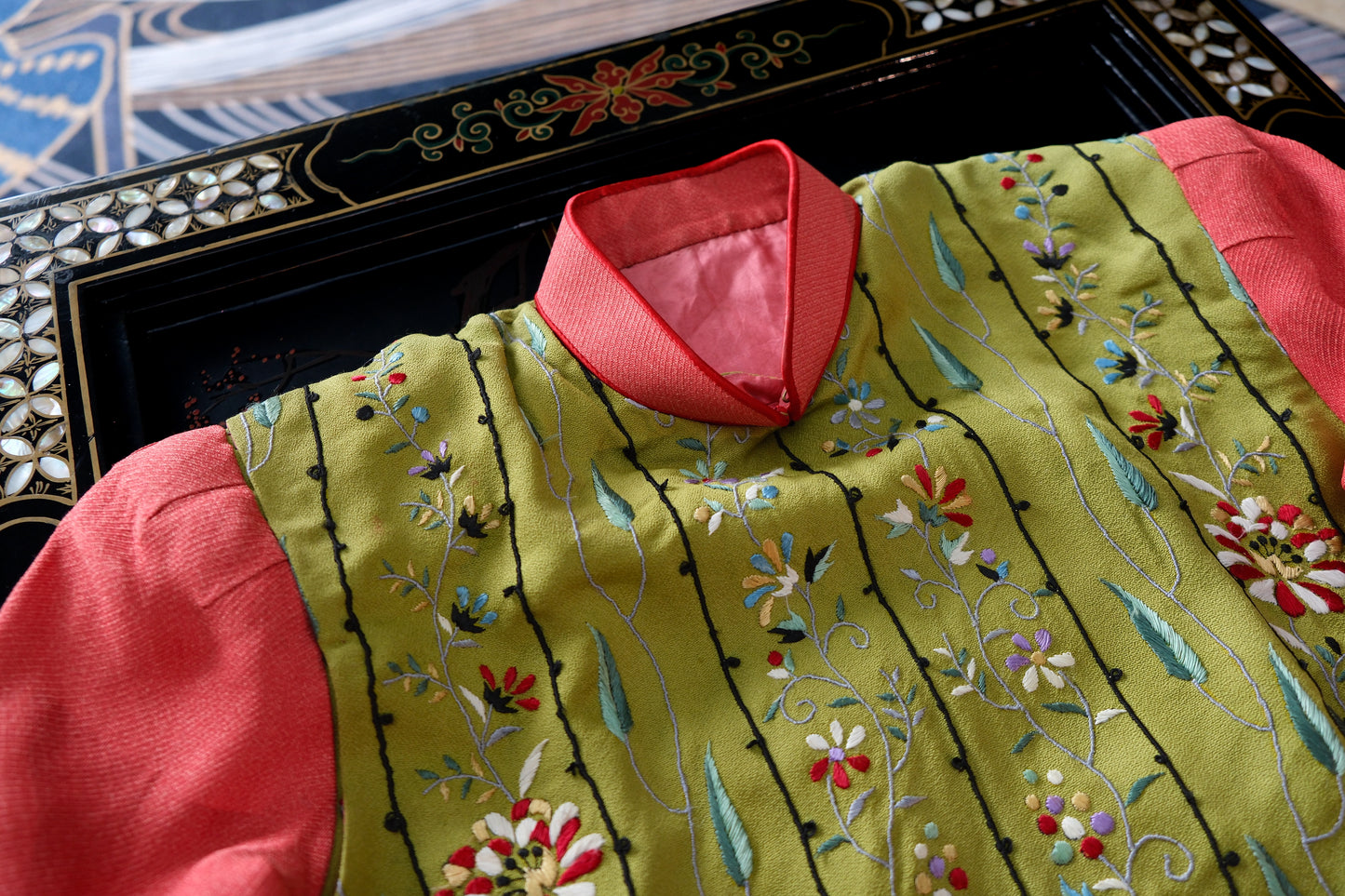
- 底色与构图:上半身采用了橄榄绿的羊毛面料作为底布,这种颜色沉稳而复古,极具高级感。刺绣部分采用了垂直条纹式的构图,视觉上拉长了身形,与下半身纯色的珊瑚红裙身形成了鲜明的“假两件”式撞色效果。
- 花卉寓意:绣工精湛,针法细密。图案以缠枝花卉为主,枝叶蜿蜒向上,寓意生生不息。花朵色彩斑斓,红、白、蓝、紫点缀其间,既有牡丹的富贵,又有野菊的清雅。这种繁复的“满地绣”风格,是对传统苏绣技法的致敬,也是在异国他乡对“繁花似锦”故土生活的渴望。
- 几何边饰:刺绣区域的下摆采用了锯齿状(波浪形)的几何边缘设计,这是典型的装饰艺术运动风格的遗韵,将东方的柔美与西方的现代几何美学完美融合。
沧海遗珠,孤本难寻
在古董衣收藏界,四十年代的羊毛旗袍存世量极低。
稀缺性解析
- 材质的考验:羊毛面料在几十年的保存中极易虫蛀或变形,能完好保存至今且刺绣色泽依然鲜亮者,实属凤毛麟角。
- 历史的见证:这件旗袍来自加拿大华人,它见证了早期华人在北美生活的艰辛与荣耀。它不是流水线上的商品,而是当年某位华侨裁缝为一位体面的华人女性量身定制的“战袍”,或许曾出现在温哥华或维多利亚的某个春节晚宴上,惊艳四座。
艺术价值
它打破了人们对民国旗袍“丝绸、盘扣、素雅”的刻板印象。它热烈、大胆、色彩浓郁,像是一杯陈年的红酒,既有东方的含蓄(立领、修身),又有西方的奔放(撞色、垫肩)。
“衣不如新,人不如故。”但这件古董旗袍,却因岁月的沉淀而愈发迷人。它是一件可穿戴的博物馆级藏品,等待着下一位懂得欣赏它的主人,续写这段跨越世纪的传奇。
Measurements / Size Guide:
Bust / Waist / Hips: 86/72/92 cm
Total Length: 109 cm
Detailed Description:
This 1940s antique wool embroidered Qipao from Canada is more than an antique garment; it is a frozen intersection of Chinese diaspora history and fashion evolution. Its preciousness lies in the perfect fusion of Eastern and Western tailoring, unique material application, and exquisite hand embroidery, while its journey overseas adds a profound layer of historical depth.
"The Moon Rises Over the Sea; We Share This Moment Across the World" This is not merely a dress; it is a 1940s Republic of China dream that spanned the Pacific.
Born in the 1940s, this wool embroidered Qipao quietly narrates the modern flair of the "Orphan Island" period in Shanghai and the resilience of a war-torn era. Sourced from a Chinese-Canadian woman, it represents a deep cultural backward glance and identity yearning from an overseas traveler toward their ancestral home during those turbulent years. In that era, the Qipao was not just daily attire but a walking cultural totem. As Eileen Chang once said: "To those who cannot speak, clothes are a language; what one carries along is a pocket drama."
"Green Sleeves and Red Skirts: Splendor Without End" Let us focus on the stunning details of this Qipao. It shatters the gentle impression of traditional silk Qipaos, appearing with a firmer and more magnificent posture.
Material and Silhouette: Wartime Modernity In the 1940s, Qipao styles shifted from wide to narrow, with lines becoming cleaner and sharper. However, the most striking feature of this piece is its use of wool. In an age before synthetic fibers were common, and while silk was beautiful but prone to wrinkling and damage, wool fabric was not only warm but also provided the structural integrity to support the "bold shoulder pads" that were then sweeping the globe. This Western tailoring, influenced by Hollywood cinema, endowed Oriental women with an unprecedented sense of power and architectural beauty. The shoulder lines are straight and broad, as if "carved into a sharp rise," manifesting the independent spirit of wartime women.
Embroidery Patterns: Blossoms at the Fingertips The embroidery on the chest is the soul of the entire work.
Base Color and Composition: The upper body utilizes an olive-green wool base—a color that is steady, vintage, and highly sophisticated. The embroidery features a vertical striped composition that visually elongates the silhouette, creating a striking "faux two-piece" color-blocking effect against the solid coral-red skirt of the lower body.
Floral Symbolism: The craftsmanship is superb, with fine and dense stitching. The pattern centers on intertwining floral vines, with branches meandering upward to symbolize endless life. The flowers are vibrant, with red, white, blue, and purple accents, possessing both the opulence of the peony and the elegance of the wild chrysanthemum. This intricate "all-over embroidery" (mandi xiu) is a tribute to traditional Su embroidery techniques and a longing for the "blossoming" life of the homeland while in a foreign land.
Geometric Borders: The lower edge of the embroidered area features a zigzag (wavy) geometric design, a classic vestige of the Art Deco movement, perfectly merging Oriental softness with Western modern geometric aesthetics.
A Pearl Lost in the Sea: A Unique Specimen Hard to Find In the world of antique clothing collection, wool Qipaos from the 1940s are extremely rare.
Analysis of Rarity
The Test of Material: Wool fabrics are highly susceptible to moth damage or deformation over decades. To find a piece preserved so well, with embroidery colors that remain vibrant, is truly one in a million.
A Witness to History: Coming from a Chinese-Canadian family, it bears witness to the hardships and glories of early Chinese life in North America. This was not a mass-produced commodity but a "battle robe" custom-made by a skilled diaspora tailor for a dignified Chinese woman. It might have once graced a Lunar New Year banquet in Vancouver or Victoria, stunning all in attendance.
Artistic Value It breaks the stereotypical image of Republic-era Qipaos being exclusively "silk, frog buttons, and understated." It is passionate, bold, and richly colored—like a vintage wine that possesses both Oriental reserve (high collar, slim fit) and Western exuberance (color-blocking, padded shoulders).
"For clothes, the new is better; for people, the old is better." Yet, this antique Qipao only grows more charming with the sediment of time. It is a museum-grade wearable collectible, waiting for its next appreciative owner to continue this century-spanning legend.