墨夜流金,梦回廿年——一件“复古”的加拿大华侨透纱旗袍
衣服尺寸:
胸围/腰围/臀围:82/68/90 厘米
衣长:120 厘米
细节描述:
在民国旗袍的浩瀚星河中,这件来自加拿大华侨女性的黑色透纱旗袍,无疑是一颗独特而神秘的星辰。它打破了四十年代旗袍的常规叙事,以一种近乎“穿越”的姿态,将我们带回了那个纸醉金迷、中西交融的黄金年代。
墨色蝉翼,指尖星河
这件旗袍最令人惊叹的,莫过于其大胆而前卫的面料与工艺。
通体采用极薄的黑色透纱,轻盈如蝉翼,朦胧似烟雾。这种“耐梅装”的设计,在民国时期是极为大胆的尝试,它不仅需要穿着者拥有超凡的自信与气度,更需要一种对“美”的极致追求。黑色,在中国传统语境中并非喜庆之色,但在西方时尚中,它却是“优雅”与“神秘”的代名词。这件旗袍,正是这种文化碰撞的产物。
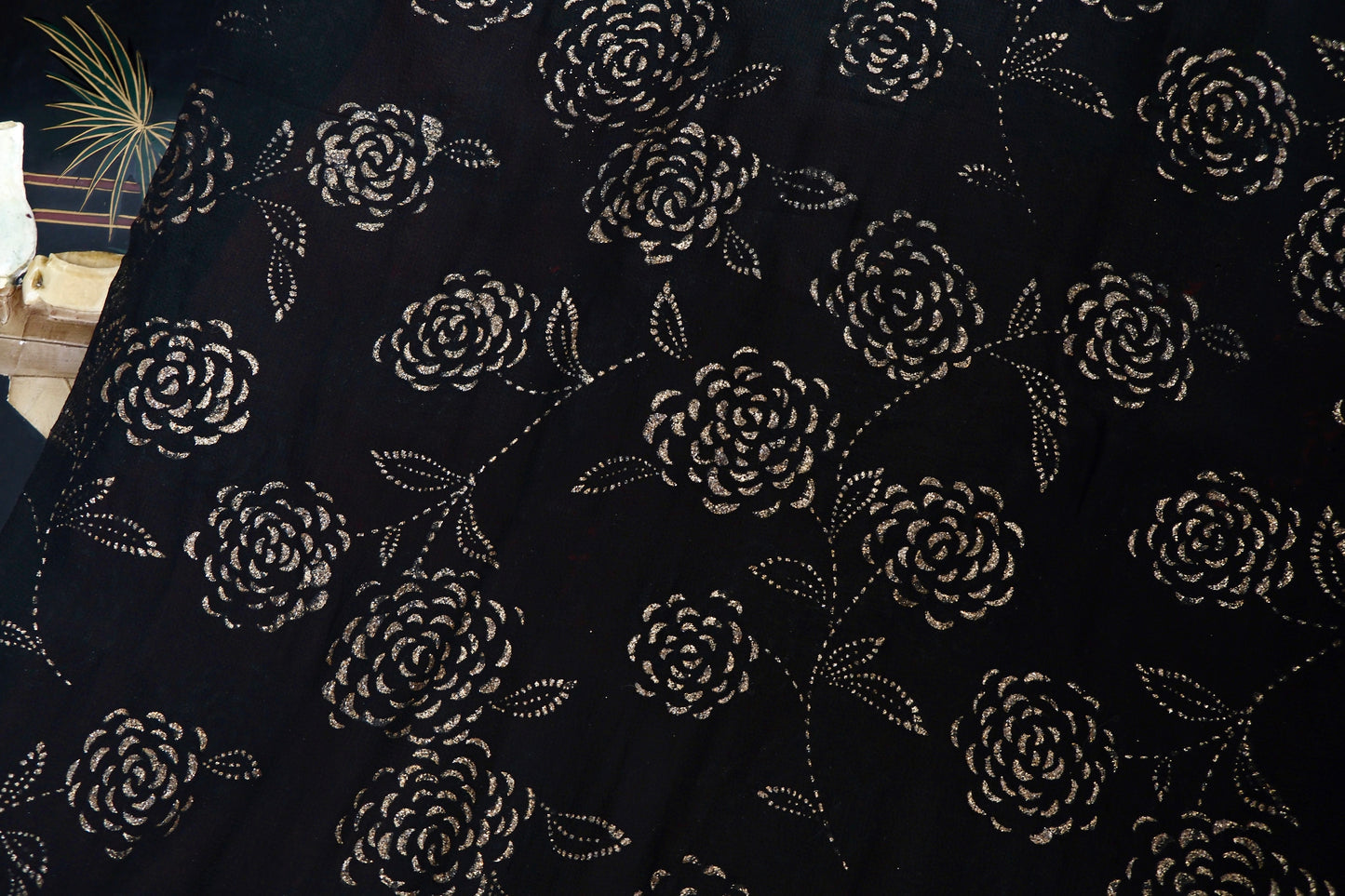
面料上的花纹并非传统的刺绣或印染,而是用金色的闪片(或金粉)手工绘制而成。每一朵玫瑰、每一片叶子,都由无数细小的金点构成,宛如夜空中闪烁的星辰,又似月光下流淌的溪流。这种工艺在当时极为罕见,它不仅需要极高的技艺,更需要极大的耐心与匠心。金与黑的搭配,既奢华又内敛,既热烈又冷静,完美诠释了“低调的奢华”这一时尚真谛。
廿年遗韵,复古之风
如果说面料是这件旗袍的灵魂,那么其领型则是它的“叛逆”之处。
在四十年代,旗袍的领型早已从二十年代的“低领”演变为强调颈部线条的“V型立领”。但这件旗袍却反其道而行之,采用了二十年代流行的“筒子领”。
筒子领:这种领型的特点是领子本身较低,且呈圆筒状,包裹住颈部。它源于二十年代的“Flapper”风格,旨在解放女性的颈部,展现一种中性化的、独立自主的气质。在四十年代的背景下,这种领型显得尤为复古和独特。
这件旗袍,是那位加拿大华侨女性的“战袍”,也是她对故土文化的深情回望。在异国他乡,她穿着这件旗袍,仿佛穿越时空,回到了那个繁华的上海滩。她不是在模仿西方,而是在用自己的方式,诠释着东方的优雅与现代。
它是一件艺术品,更是一段历史。它见证了那个时代的开放与包容,也见证了海外华人对文化的坚守与创新。
Ink Night & Flowing Gold, Dreaming Back Twenty Years — A "Retro" Sheer Qipao from a Canadian Overseas Chinese
Measurements / Size Guide:
Bust / Waist / Hips: 82/68/90cm
Total Length: 120 cm
Detailed Description:
In the vast galaxy of Republic-era Qipaos, this black sheer Qipao belonging to a Chinese-Canadian woman is undoubtedly a unique and mysterious star. It breaks the conventional narrative of 1940s Qipaos, adopting a near "time-traveling" posture that carries us back to that golden age of glitz, glamour, and East-West fusion.
Ink-Colored Cicada Wings, A Galaxy at the Fingertips The most stunning aspect of this Qipao is its bold and avant-garde fabric and craftsmanship.
The entire garment is made of extremely thin black sheer gauze, light as cicada wings and hazy as mist. This "Naimei" (transparent) style was an incredibly bold attempt during the Republic period; it required not only extraordinary confidence and poise from the wearer but also an ultimate pursuit of "beauty." While black was not a traditional color for celebration in the Chinese context, it stood as a synonym for "elegance" and "mystery" in Western fashion. This Qipao is the very product of that cultural collision.
The patterns on the fabric are not traditional embroidery or printing, but are hand-drawn using golden sequins (or gold powder). Every rose and every leaf consists of countless tiny golden dots, like twinkling stars in the night sky or a flowing stream under moonlight. This technique was extremely rare at the time, requiring not only immense skill but also great patience and ingenuity. The combination of gold and black is both luxurious and restrained, passionate yet calm—a perfect interpretation of the fashion mantra, "understated luxury."
Twenty Years of Lingering Charm, The Wind of Retro If the fabric is the soul of this Qipao, then its collar is its "rebellious" streak.
By the 1940s, Qipao collars had evolved from the "low collars" of the 1920s into "V-shaped standing collars" that emphasized the neckline. This Qipao, however, went against the grain, adopting the "Tubular Collar" (Tongzi Ling) popular in the 1920s.
-
The Tubular Collar: The characteristic of this collar is that it is relatively low and cylindrical, encircling the neck. Originating from the 1920s "Flapper" style, it aimed to liberate the female neck and showcase a neutralized, independent temperament. In the context of the 1940s, this collar style appears exceptionally retro and unique.
This Qipao was the "battle robe" of that Chinese-Canadian woman, as well as her soulful backward glance at her ancestral culture. In a foreign land, wearing this Qipao felt like traveling through time and space back to the bustling Bund of Shanghai. She was not merely imitating the West; she was using her own way to interpret Oriental elegance and modernity.
It is an artwork and, moreover, a segment of history. It witnessed the openness and inclusivity of that era, as well as the persistence and innovation of overseas Chinese toward their culture.